
Articles


Where to Eat in Cork: Markets, Cafés and the Restaurants Locals Love
TRAVEL GUIDE
Cork’s food identity remains rooted in the English Market and the exceptional produce grown, caught and made across the county, but the way the city eats has changed. From historic market stalls and neighbourhood cafés to Palestinian cooking, Louisiana comfort food and destination tasting menus, this is where to eat your way through Cork today.
Some articles on Culinary Travels may contain affiliate links, meaning I may earn a small commission at no extra cost to you. I only recommend places, experiences and products that fit the editorial tone and standards of the publication.
Photograph: Clare Keogh
The English Market is still the natural place to begin any exploration of Cork’s food scene.
Owner-chef Dermot O’Sullivan of Greenwich Café describes it as “the foundation of Cork’s food culture”, and it is difficult to disagree. For generations, its traders have supplied the city with meat, fish, cheese, bread, fruit and vegetables, while the businesses gathered beneath its ornate roof tell a wider story about Cork’s appetite, traditions and sense of place.
But stop at the market doors and you will miss how much the city has changed.
Cork’s long-established restaurants and food institutions now sit alongside specialist coffee shops, street-food traders, international kitchens and a growing collection of neighbourhood cafés beyond the traditional visitor circuit. Marina Market has become a new centre for informal dining, while Palestinian, Levantine, Latin American and Southern US influences have become part of the city’s everyday food culture.
A new generation is also shaping some of Cork’s best-known restaurants. At Paradiso, a chef-and-grower partnership continues the close farm-to-kitchen relationship that has defined the restaurant for more than 30 years. Within the English Market itself, established traders are drawing on generations of knowledge to create contemporary food-to-go businesses.
This is a selective guide rather than an exhaustive directory. It brings together places that offer a distinctive experience, help tell the story of the city or simply provide exactly what you need at a particular point in the day—whether that is a quiet breakfast, a substantial sandwich, dinner somewhere special or hot food after a few pints.
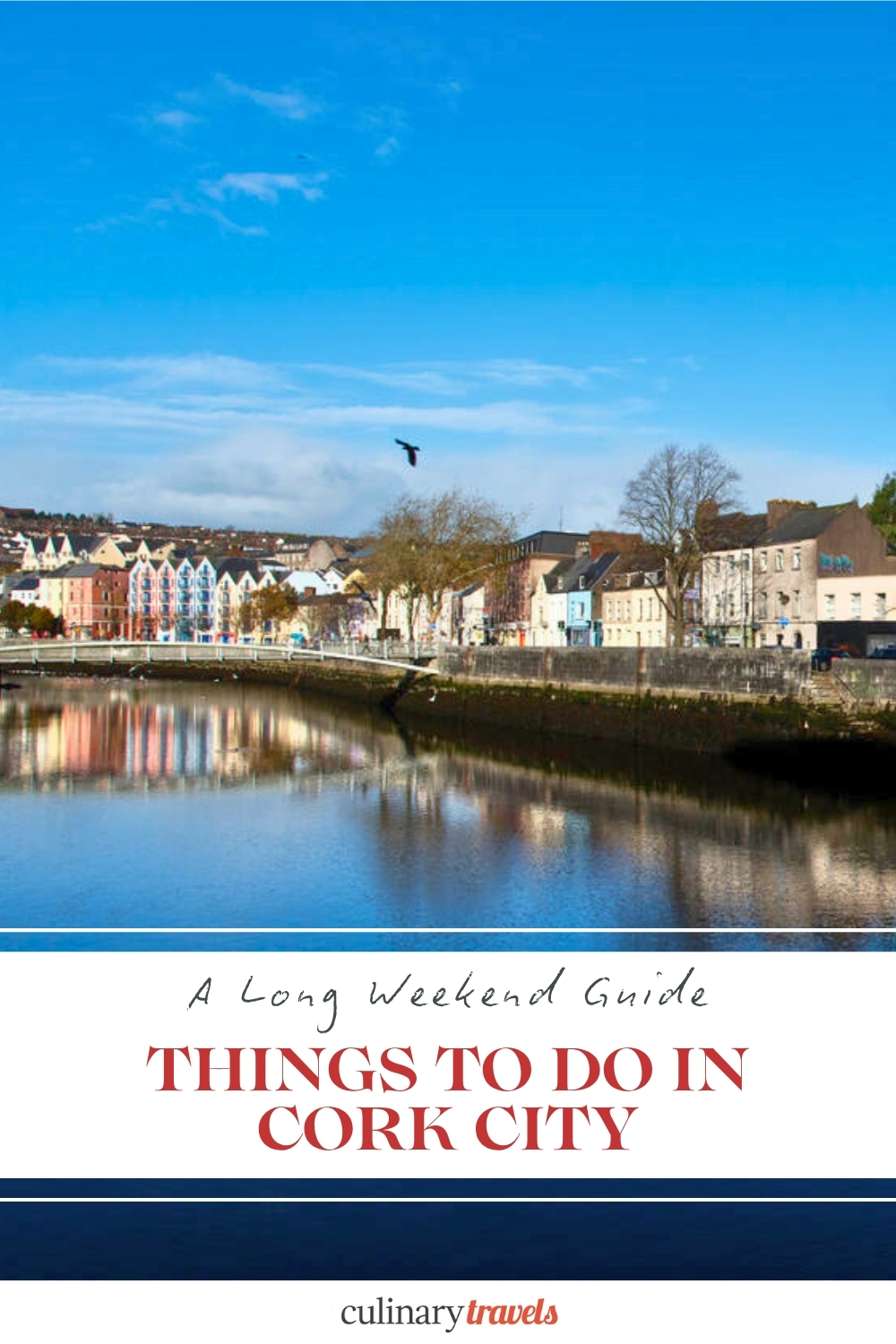
For help fitting those meals into a wider visit, see my guide to spending a long weekend in Cork.
In this guide
1. Start with the English Market
2. Breakfast, brunch and neighbourhood cafés
3. Coffee, cakes and something sweet
4. Quick lunches and Cork favourites
5. Fish and seafood in Cork
6. International flavours in Cork
7. Where to book for dinner in Cork
8. Hotel dining worth seeking out in Cork
9. Vegetable-led and vegetarian dining
10. Late-night food in Cork
11. Afternoon tea in Cork
12. Practical tips for eating in Cork
13. FAQs
Start with the English Market
Cork’s covered food market has been part of city life since 1788, but it is not preserved as a museum piece. This remains a working market where people shop for dinner, pick up lunch, meet for coffee and maintain relationships with traders their families may have visited for generations.
Allow time to wander rather than treating the market as a quick photo stop. Look beyond the most famous displays, talk to the traders when they are not rushed and notice how often one business supplies another. The English Market is not merely a collection of stalls; it is an interconnected food community.
Farmgate Café
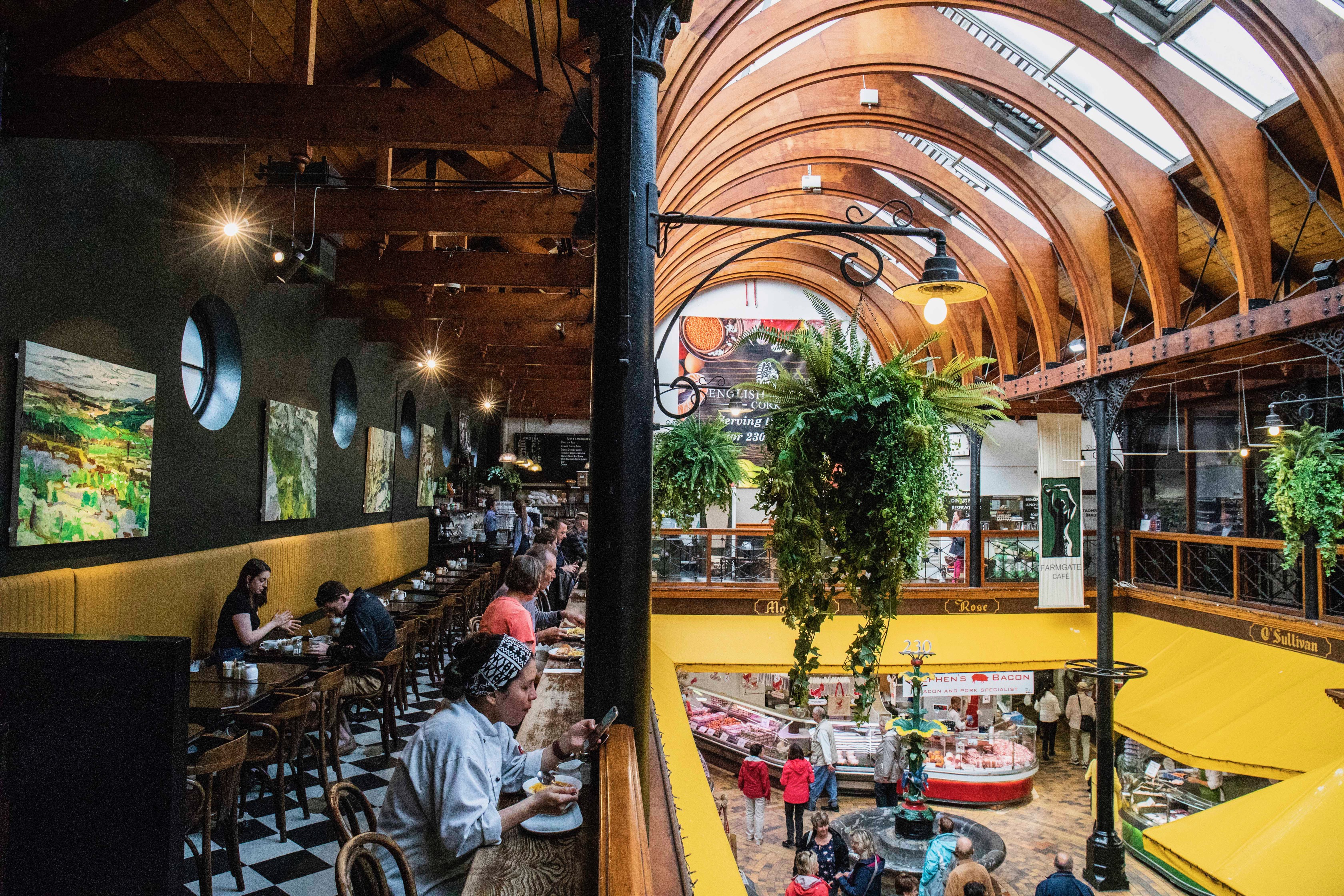
Upstairs above the market, Farmgate Café offers one of the clearest introductions to Cork’s relationship with local ingredients.
Its position overlooking the stalls matters. Farmgate is not borrowing the English Market as an attractive backdrop; it is part of the same ecosystem, turning produce from the counters below into traditional Cork dishes, seasonal lunches, sandwiches and baked goods.
Photograph: Joleen Cronin
The U-shaped gallery offers two quite different ways to eat. In the dining room, you can settle in for full table service, with starters, main courses and desserts. On the more informal side, order at the counter and find a place along the balcony for breakfast rolls, sandwiches, scones and other baked goods.
The casual area is one of my favourite places to pause and absorb the market. Be prepared to share a table, bring a book if you are alone, listen to the Cork chatter drifting around you and spend some time people-watching over coffee and something warm from the counter.
Best for: Experiencing the English Market as both a working food hall and somewhere to eat.
Don’t miss: The breakfast rolls, homemade scones and traditional dishes shaped by produce from the market below.
Good to know: Book ahead if you want lunch in the dining room. The more casual counter and balcony area is walk-in, so you may need to wait for a seat or embrace a little table-sharing.
O’Flynn’s Gourmet Sausages
O’Flynn’s Gourmet Sausages has been feeding Cork since 1921.
The fourth-generation family business makes its sausages close to the city centre and serves its gourmet sausage sandwiches from a stall inside the English Market, as well as at its Winthrop Street and Western Road restaurants.
The market stall is the most atmospheric option for visitors. It offers a hot, satisfying and unmistakably Cork lunch without requiring a lengthy sit-down meal, while the family history gives it considerably more character than an ordinary grab-and-go sandwich.
O’Flynn’s is also a useful reminder that local food culture is not confined to tasting menus and destination restaurants. Sometimes what you need is something flavourful and easy to eat before heading back out into the city.
Best for: A quick, filling Cork lunch with genuine local roots.
Local tip: The English Market stall makes it easy to combine lunch with a wider wander through the market.
On the Hoof
One of the market’s newer arrivals, On the Hoof shows how Cork’s established food businesses continue to evolve.
Tom Bradley opened the food-to-go stall near the Grand Parade entrance in November 2025 as a sister business to Tom Bradley Bacon & Pork, which has traded inside the English Market for decades. Working with Cork chef Eoin Beville, Bradley turned the stall’s experience of curing, smoking and preparing meat into a contemporary menu of sandwiches, soups and salads.
More than 90% of On the Hoof’s ingredients are sourced from fellow English Market traders, creating a particularly direct connection between the market’s produce and the finished lunch.
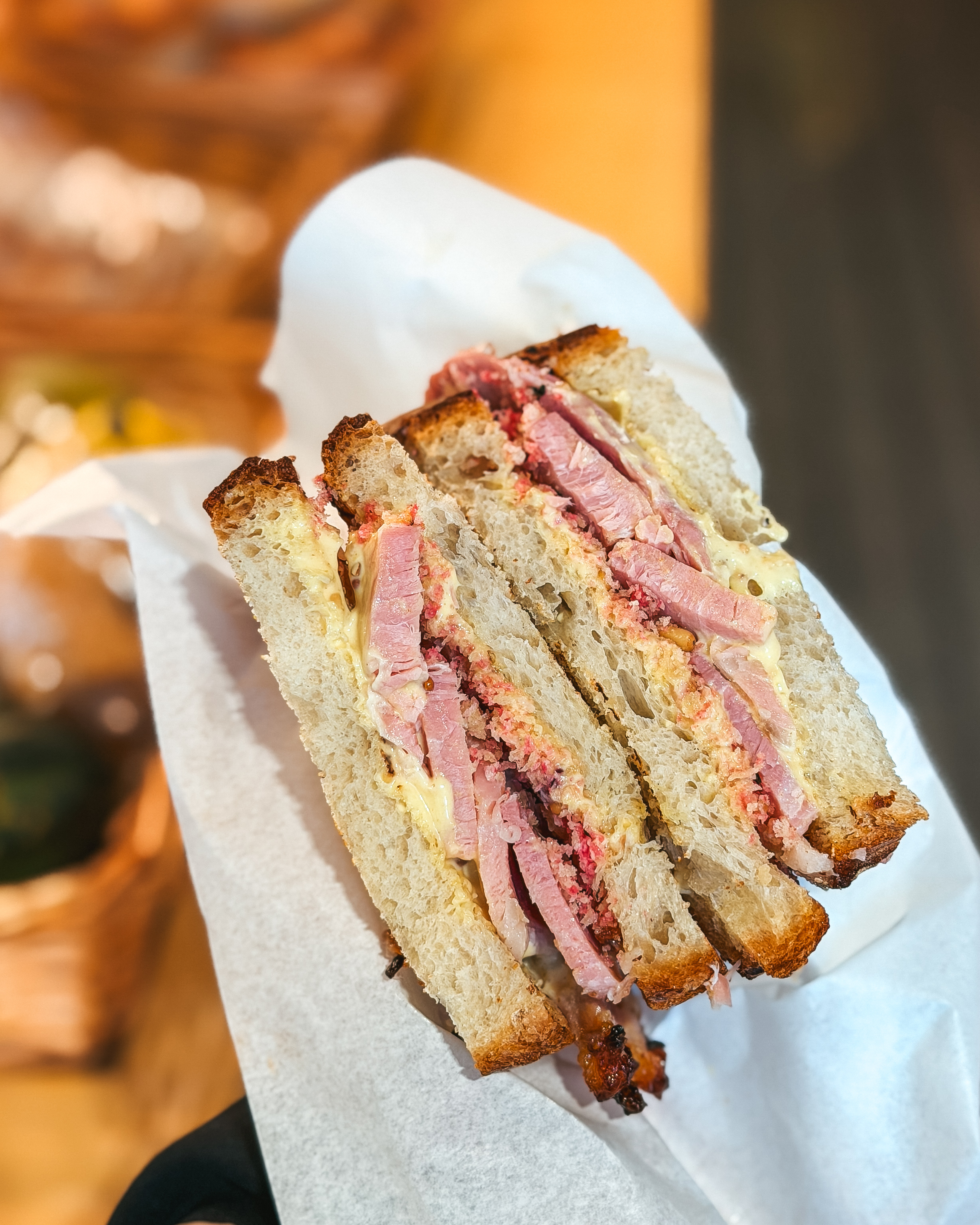
The salt beef bagel uses local brisket cured in-house and slow-cooked for 18 hours. The bánh mì combines pork belly from Tom Bradley with chicken-liver pâté from On the Pigs Back, while The Bradley layers hand-carved gammon with sharp North Cork cheddar.
It is a contemporary food-to-go business firmly built on the knowledge, suppliers and relationships already found within the market.
Don’t miss: The Bradley for a distinctly Cork take on a ham-and-cheese sandwich.
Best for: A substantial lunch to take away and eat nearby.
Photograph: On the Hoof
Build your own Cork picnic lunch
On the Hoof is not the only place to assemble a lunch for the park. The joy of the English Market is being able to choose according to your appetite and build a picnic from several different traders.
For a filled baguette: Café Marius works closely with County Cork farmers and fellow market traders. Its market-spiced-beef baguette, made with Tom Durcan spiced beef, is outstanding, but you will also find Cork-led combinations featuring ingredients such as Gubbeen cheese and chorizo, alongside baked goods, soups and stews to take away.
For cheese, charcuterie and picky bits: Stop at On the Pigs Back for farmhouse cheeses, artisan bread, olives, charcuterie, quiches and pâtés. It is particularly useful when you would rather graze on a selection than commit to one large sandwich.
For fruit, preserves and a chat: The Roughty Foodie celebrates produce from Cork and across Ireland. Look out for seasonal fruit, salads, Coolea cheese and homemade jams or preserves—and make time for a conversation with stall owner Margo Ann, whose recommendations are always worth hearing.
Once you have assembled lunch, leave the market through the Grand Parade entrance and pick up a speciality coffee from Three Fools Coffee. Then cross over to Bishop Lucey Park—still widely known locally as the People’s Park—and find somewhere to sit before continuing your exploration of the city.
The park reopened after a major redevelopment in November 2025, making this short route a neat introduction to both old and new Cork: a historic food market, an independent coffee shop and a reimagined public space, all within a few minutes’ walk.
Explore Cork’s food scene with a local guide
If you would prefer some local context while exploring, this guided Cork culinary tour combines tastings with stories from the city’s markets, streets and pubs.
The approximately three-hour walking tour includes the English Market and several central Cork stops, with a changing selection of local food and drink along the way. It is a useful option for first-time visitors who want an introduction to both the city’s food culture and its history before exploring independently.
Good to know: The current listing states that the tour is not wheelchair accessible and may be unsuitable for travellers who have difficulty standing or walking. It is also listed as unsuitable for vegans and people with food allergies, so read the latest accessibility and dietary information carefully before booking.
Check availability for the Cork culinary tour
Breakfast, brunch and neighbourhood cafés
Cork does breakfast and brunch particularly well, but its best daytime addresses are not interchangeable. Some suit a lingering weekend meal; others are better for an early start, a quiet coffee or a stop woven into a day of sightseeing.
They also provide a reason to explore different parts of the city. Greenwich hides among the historic streets of the centre, Salt draws visitors towards the Marina, and Good Day Deli and Nádúr offer brunch and lunch within the peaceful grounds of Nano Nagle Place.
Greenwich Café
Tucked away on Caroline Street, close to Brown Thomas, Greenwich Café feels more like a neighbourhood favourite than a central Cork address.
Owner and head chef Dermot O’Sullivan describes Greenwich as a small neighbourhood café and calls it “a hidden gem, a historic one”. The building retains original sash windows and much of its character, while O’Sullivan’s direct involvement in sourcing, cooking and speaking with customers gives the café a personal quality that can be difficult to preserve in the middle of a busy city.
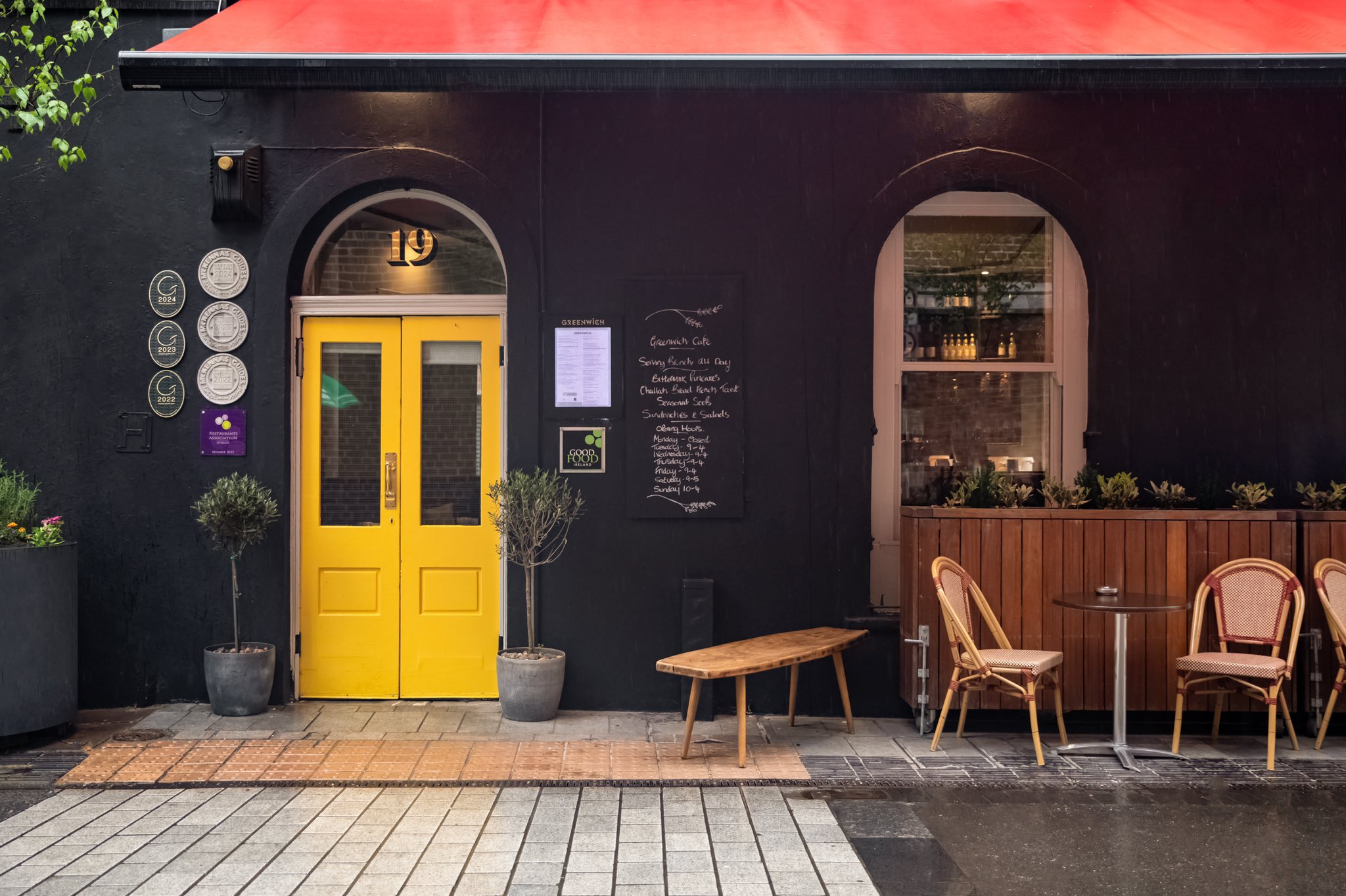
Photograph: Greenwich
His Ballymaloe training shaped an approach grounded in seasonality, local produce and traditional cooking methods. Proximity to the English Market is another advantage, giving the kitchen direct access to some of the county’s best-known producers and ingredients.
Greenwich was named Best Café in Munster at the 2024 regional Irish Restaurant Awards, but its strongest recommendation is the loyal local following that returns for the consistent cooking and welcome.
The mushrooms on toast are one of the café’s signature dishes, combining local sourdough with basil pesto, mushrooms, slow-roasted tomatoes and Parmesan, with the option of adding an egg. Save room for the homemade cakes, particularly the lemon curd or coffee and walnut.
Best for: A relaxed breakfast or lunch in an independent café hiding in plain sight.
Don’t miss: The mushrooms on toast and a slice of homemade cake.
Liberty Grill
Liberty Grill has long been one of Cork’s dependable brunch addresses.
Its Washington Street location is central and convenient, but the appeal goes beyond geography. The menu moves easily between classic brunch dishes, burgers, salads and seafood, making it particularly useful for groups whose idea of breakfast ranges from French toast to something far more substantial.
The restaurant serves food across much of the day, so it also works when a late breakfast has quietly become lunch. Seasonal ingredients and produce sourced close to Cork help distinguish it from a generic all-day brunch menu.
Best for: A lively central brunch with enough choice for mixed appetites.
Good to know: Weekday brunch can be booked online, but current service days and reservation arrangements should be checked before visiting.
Salt
A little beyond Cork’s traditional visitor circuit, Salt is a neighbourhood brunch and lunch spot worth building into a morning around the Marina.
Its Victoria Road location is particularly convenient for the Marina Walk and Marina Market, while the atmosphere feels more like a local favourite than somewhere designed specifically for visitors.
Scones, cakes and pastries are baked in-house, while the daytime menu moves from eggs on sourdough and French toast to baked eggs, sandwiches, salads and bowls. Vegetarian choices run throughout rather than appearing as a token separate option.
On my visit, I loved Salt’s morning bun: an artisan sourdough roll filled with softly scrambled eggs, Basquaise sauce and flakes of Manchego. It is substantial enough to fuel a walk without taking over the rest of the day.
The kitchen works with Cork and Irish suppliers including Kilbrack Organic Farm, On the Pigs Back, K. O’Connell and Toons Bridge. Salt also offers evening bistro service on selected days, although brunch and lunch remain the clearest reasons to seek it out.
Best for: A local brunch before exploring the Marina side of the city.
Don’t miss: The morning bun.
Value: A relaxed daytime option with accessible choices, rather than a meal that needs to be treated as a major occasion.
Good Day Deli and Nádúr at Nano Nagle Place
Within the tranquil gardens of Nano Nagle Place, two related daytime venues make an excellent escape from the busier city streets.
Good Day Deli is an award-winning sustainable food café run by Clare Condon and Kristin Makirere. Its bright glass dining room looks into the gardens, while the menus centre on local, seasonal, organic and fairly traded ingredients.
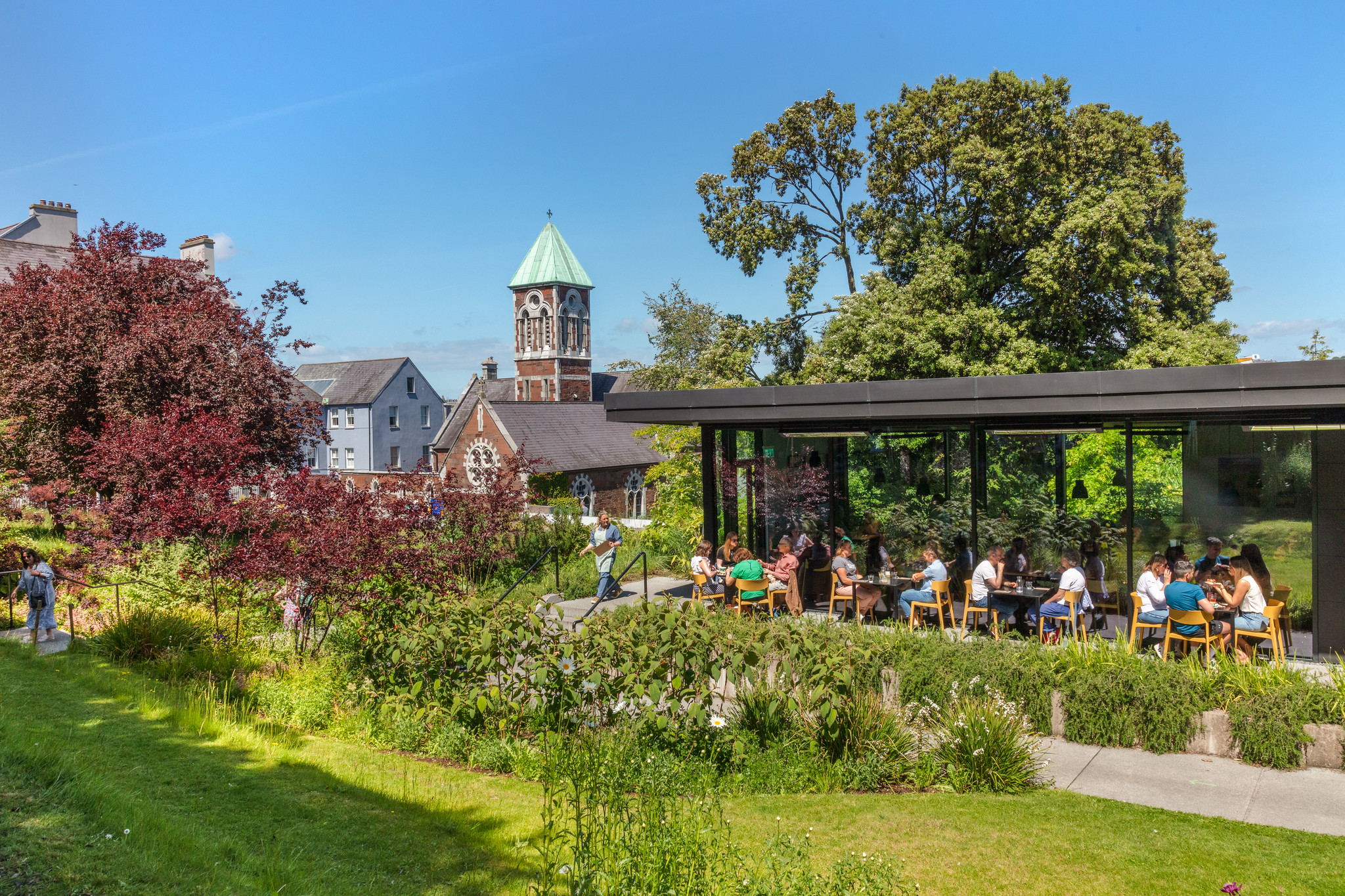
Photograph: Good Day Deli and Nano Nagle Place
The cooking is colourful and globally influenced, moving through brunch and lunch dishes that give vegetables, herbs and spices as much attention as meat or fish. The setting is a significant part of the experience: peaceful, green and contemplative, despite being within walking distance of the city centre.
At the front of Nano Nagle Place, Nádúr Deli offers a smaller and more informal alternative, with breakfast and lunch dishes, excellent baking and al fresco tables on the plaza. Its weekend opening pattern and menu can differ from Good Day Deli, so check which venue best suits the day of your visit.
Best for: Sustainable brunch or lunch in one of Cork’s most peaceful settings.
Local tip: Leave time to explore the museum and gardens rather than visiting only for the cafés.
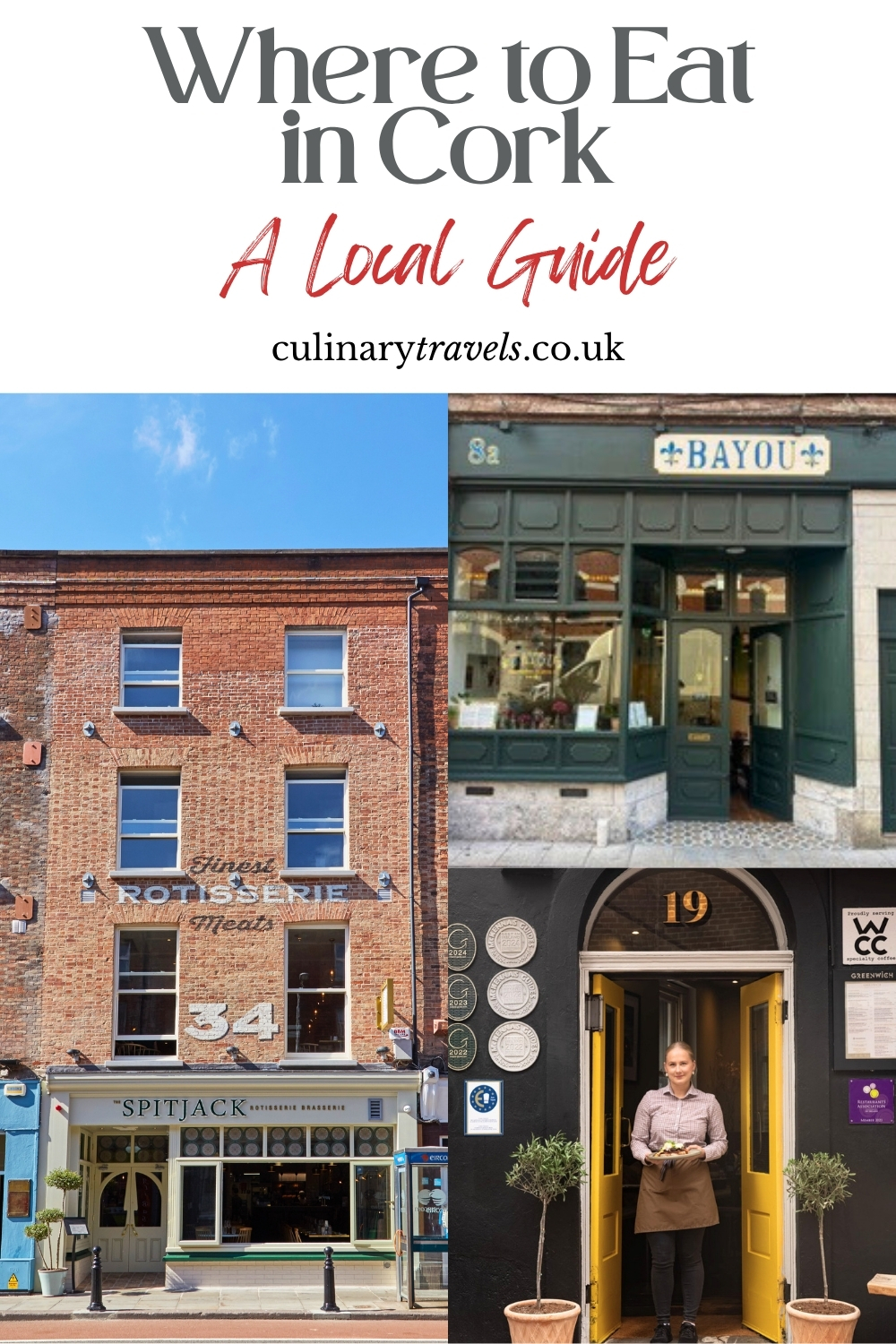
The SpitJack
The SpitJack is a useful all-day address when a group cannot agree whether it wants brunch, a large sandwich or something built around the rotisserie.
Set across two floors of a restored 1850s building on Washington Street, it was opened in 2017 by husband-and-wife team Richard and Laura to showcase Irish produce through rotisserie cooking.
The morning menu includes Eggs Benedict, full Irish and vegetarian breakfasts, pancakes and French toast. Later, generous sandwiches and rotisserie dishes take over, while Sunday lunch brings heartier options such as chicken and porchetta.
Best for: A substantial brunch or lunch with plenty of choice.
Good to know: This is more restaurant than coffee shop, making it a useful choice when you want a full sit-down meal.
Tria Café
Tria Café occupies an enviable position inside Fitzgerald’s Park, tucked behind Cork Public Museum on the banks of the River Lee.
Run by the team behind The SpitJack, it takes a more relaxed approach, serving speciality coffee and creative drinks alongside sandwiches, soups, salads, pancakes and sweet treats.
The brekkie bap, rotisserie ham and cheese melt and falafel ciabatta suit an informal lunch, while açaí bowls and homemade cakes provide lighter choices.
Its chief attraction is the location. Tria gives families, dog walkers and museum visitors somewhere to pause without leaving the park, and it fits naturally into a walk towards University College Cork or along the River Lee.
Best for: Coffee or a casual lunch during a walk through Fitzgerald’s Park.
Good to know: Tria is dog-friendly and currently operates seven days a week, but recheck the latest hours before travelling.
Coffee, cakes and something sweet
Cork has the familiar international coffee chains, but there is rarely any need to rely on them. The city is full of independent cafés where the beans, brewing method and welcome receive as much attention as the drink itself.
Supporting those businesses also makes coffee part of the travel experience rather than simply a source of caffeine. Ask what the team recommends, try a different roast, order the pastry you have been eyeing up and leave enough time to enjoy where you are.
Three Fools Coffee
Three Fools Coffee on Grand Parade is one of my favourite places to stop when I want the coffee itself to matter.
The menu offers a wide choice of coffee styles and other drinks, and the team is always happy to talk through the options, right down to the beans being used. You do not need to arrive already knowing the difference between every roast or brewing method; ask for a recommendation and let them guide you towards something that suits your taste.
Its position close to the English Market and Bishop Lucey Park makes it especially useful after picking up a market lunch, but Three Fools is worth visiting in its own right.
If you are drinking in, find a seat, bring a newspaper or book and enjoy the people-watching on Grand Parade. The atmosphere is pleasantly unhurried, although it can become busy because the café is deservedly popular.
Best for: Speciality coffee, knowledgeable recommendations and a little time watching Cork pass by.
Local tip: Combine it with the build-your-own English Market picnic described earlier in this guide.
Greenwich for homemade cake
Greenwich earns its main place in the breakfast and brunch section, but it is equally well suited to the quieter pleasure of coffee and cake.
The cakes are made in-house, with lemon curd and coffee and walnut among owner-chef Dermot O’Sullivan’s recommendations.
The small historic dining room makes it a particularly appealing refuge when Cork’s weather turns or the city centre becomes busy.
Best for: Homemade cake in a characterful independent café.
Tria for a park-side coffee
For coffee with greenery rather than city-centre bustle, Tria is the obvious choice.
Its position in Fitzgerald’s Park makes it ideal for a takeaway drink during a walk, although the sandwiches, açaí bowls and homemade sweet treats make it easy to stay longer than planned.
Best for: Coffee before or after Cork Public Museum, University College Cork or a riverside walk.
There are far more independent cafés across Cork than one guide could reasonably include. Rather than trying to rank every coffee counter, seek out places that add something to the day: a knowledgeable conversation about the beans, a slice of cake baked on site, a good view for people-watching or a reason to pause in a quieter corner of the city.
Quick lunches and Cork favourites
Not every good meal in Cork needs to involve a reservation, several courses or an evening set aside for dinner.
Some of the city’s most useful food stops are the places Corkonians turn to for a substantial sandwich, something hot between appointments or a comforting bite after the pub. These casual favourites are as much a part of Cork’s food culture as its tasting menus and destination restaurants.
Hillbilly’s
For a quick bite with distinctly Cork roots, Hillbilly’s is the home-grown alternative to the familiar international fast-food chains.
The business began in 1997 as a six-seat restaurant on Grand Parade and built its following around its Secret Recipe Chicken, Breast in a Bun and freshly made signature gravy.
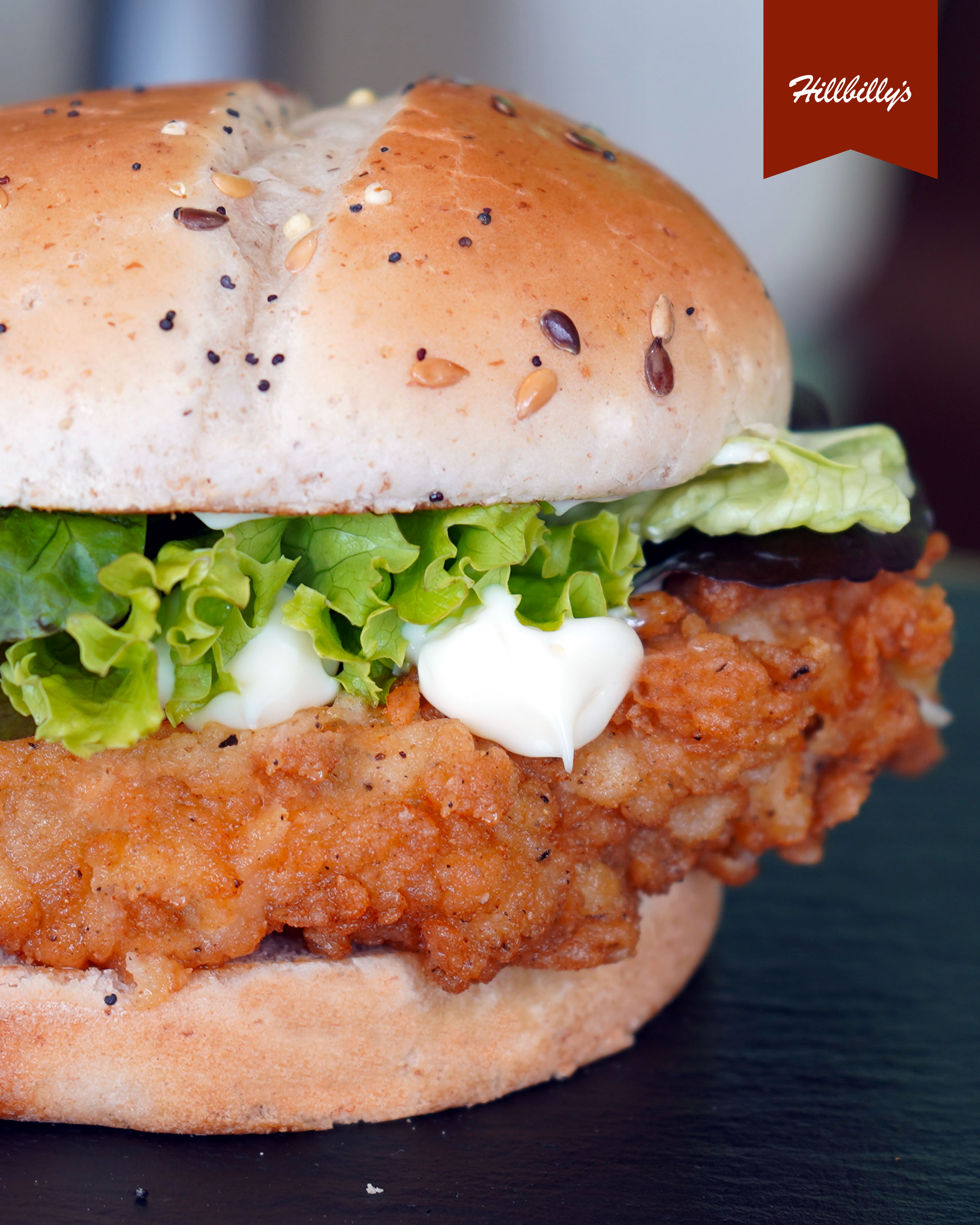
Photograph: Hillbilly's
The chicken is prepared fresh in store rather than arriving frozen, while the burgers are made using whole-muscle Irish beef minced on site. It remains unapologetically fast food, but with a stronger local identity and history than the global names nearby.
Best for: Cork-born fast food and an easy, uncomplicated lunch.
Don’t miss: The Breast in a Bun or fried chicken with the gravy made fresh each day.
Good to know: Check the current hours of the individual branch before relying on it for a late meal.
Marina Market
Marina Market is one of the clearest signs of how Cork’s casual food scene has changed.
The vast indoor and outdoor space brings together independent food and drink traders serving cuisines from Cork, Ireland and around the world. It is particularly useful for groups who cannot agree on one kind of meal: one person can choose Korean barbecue, another pizza or falafel, while someone else settles in with coffee and something sweet.
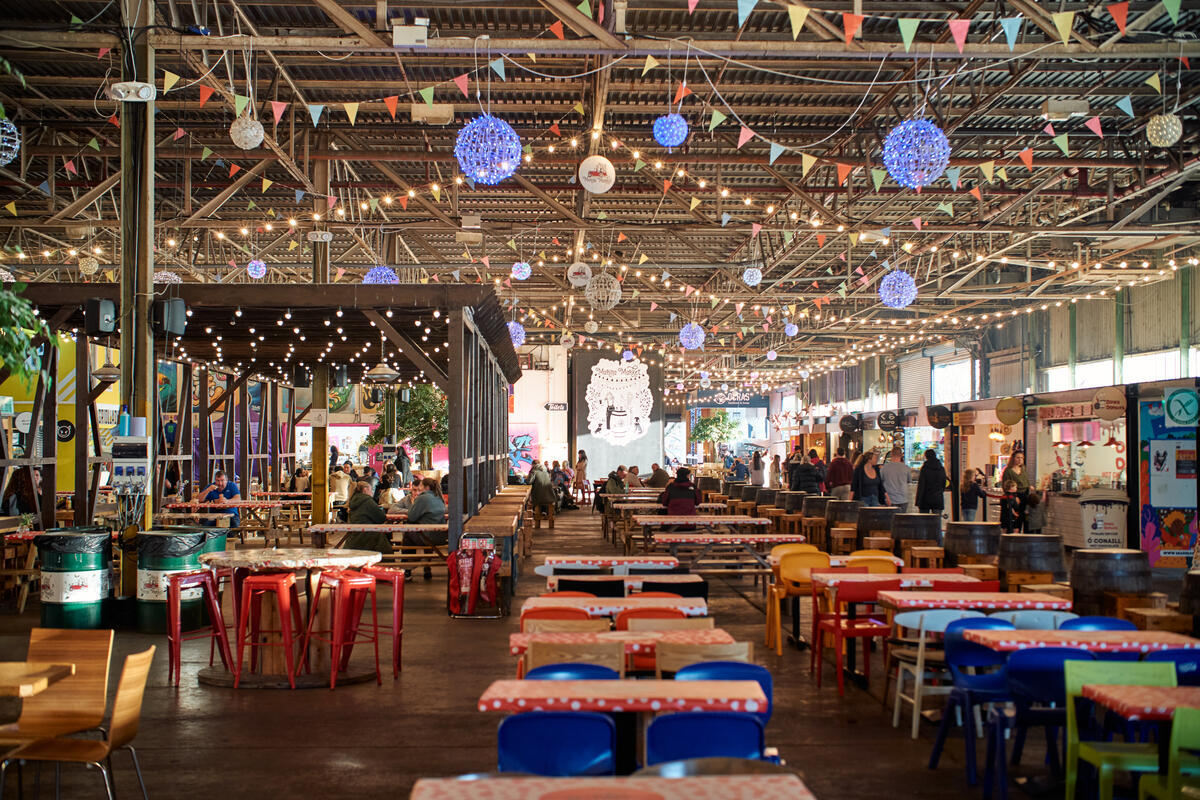
Photograph: Islander (Fáilte Ireland)
Its location draws visitors beyond the traditional city-centre circuit. Rather than treating the market as an isolated food stop, combine it with a walk along the Marina or continue towards Blackrock.
The trader line-up evolves, so choose Marina Market for its variety and atmosphere, and check the current vendor list before travelling for one business in particular.
Prátaí
One of my personal Marina Market favourites is Prátaí, a Cork business devoted to celebrating the humble Irish potato.
Using Irish potatoes, the menu moves between freshly cut chips, baked potatoes and potato latkes, finished with seasonal toppings, slow-cooked meats and generous sauces. It is familiar comfort food approached with considerably more imagination than a standard portion of chips.
I love that something as everyday and deeply Irish as the potato is treated as the main event rather than an accompaniment.
Best for: Loaded chips, baked potatoes and satisfying food centred on Irish produce.
Local tip: Marina Market is dog-friendly and has on-site parking, although walking or cycling along the Marina makes the visit feel more connected to the surrounding area.
The Long Valley
The Long Valley belongs more fully in my forthcoming guide to Cork’s pubs, but its sandwiches deserve a brief mention here.
This is an old-school pub lunch rather than a polished café experience: generously filled doorstep sandwiches served in one of the city’s best-known traditional drinking spots.
Choose it when the atmosphere of the pub matters as much as the food, perhaps lingering over the newspaper and a pint rather than rushing back onto the sightseeing trail.
Best for: A substantial sandwich in a traditional Cork pub.
Fish and seafood in Cork
Cork city’s food story is inseparable from the water around it. The River Lee runs through the centre, Cork Harbour opens towards the Atlantic, and fishing communities along the county’s coast continue to supply the city with fresh fish and shellfish.
That connection appears at several levels of Cork dining. You can book an evening built around the catch from small East Cork boats, settle into a casual seafood bar for chowder and fish and chips, or pick up something hot from a city chipper.
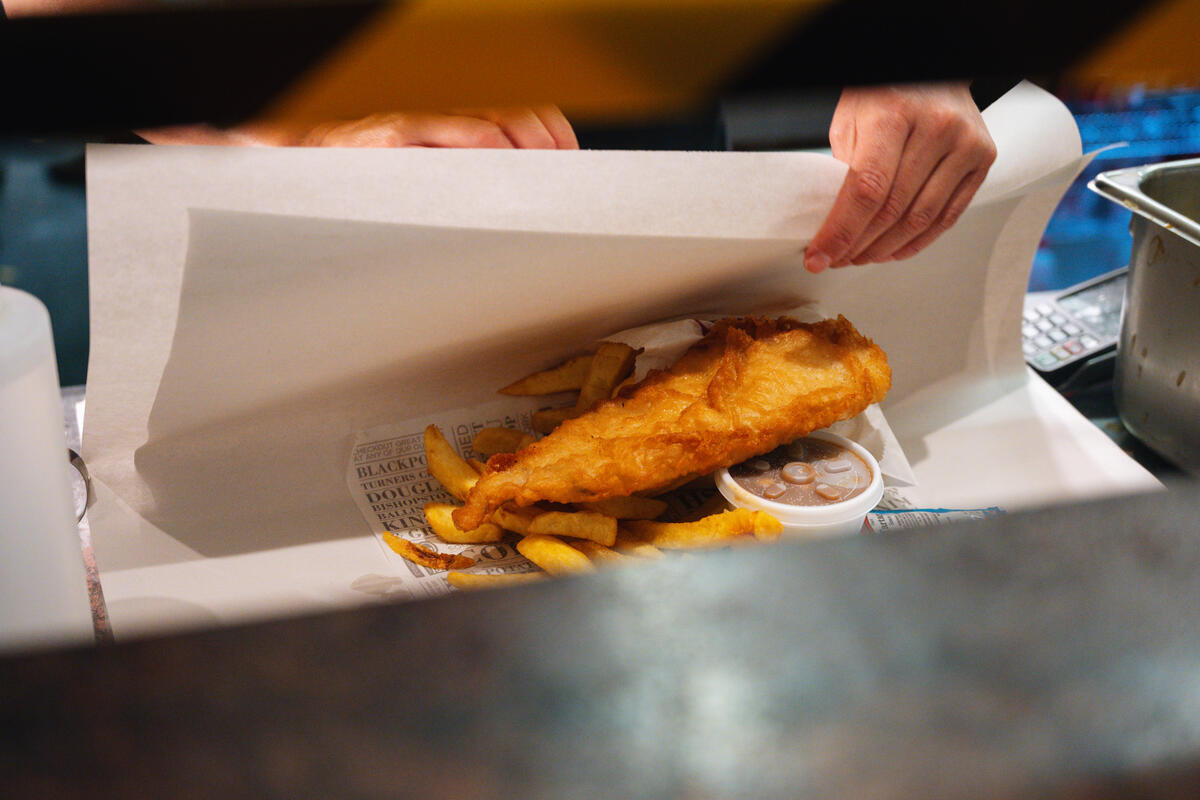
Photograph: Joshua McMichael (Tourism Ireland)
Fish and chips may be the most familiar choice, but it is only one part of the story. The strongest seafood restaurants pay attention to what has actually been landed, use a wider range of species and allow availability to shape the menu.
Goldie
Goldie is a small, lively seafood restaurant on Oliver Plunkett Street and one of Cork’s most distinctive places to book for dinner.
The kitchen buys from small day boats fishing out of Ballycotton in East Cork and follows a whole-catch policy: what the boats land helps determine what appears on the menu. As a result, the dishes change daily rather than relying on a fixed selection of familiar fillets.
Goldie’s “gill-to-fin” approach makes thoughtful use of the catch, including cuts and species that may receive less attention elsewhere.
Snacks, small plates and larger dishes combine Irish seafood with energetic international flavours, while the compact dining room keeps the atmosphere animated rather than formal.
The restaurant currently holds a Michelin Bib Gourmand, recognising the strength of its cooking and overall value. At Goldie, that value comes from the quality of the seafood, the kitchen’s whole-catch approach and the imagination behind each dish.
Best for: A destination seafood dinner driven by the daily catch.
Why book: Goldie offers one of the clearest expressions of the relationship between Cork’s small fishing boats, seasonal availability and contemporary restaurant cooking.
Good to know: The restaurant is compact and currently opens for dinner on a limited number of days each week, so reserve ahead and recheck the latest service pattern.
Quinlan’s Seafood Bar
Quinlan’s Seafood Bar on Princes Street is the place to choose when you want excellent fish and chips but do not want the seafood options to end there.
Quinlan’s is part of a family fishing and seafood business, with fresh fish delivered from the company’s own boats. The daily selection and specials reflect what has recently been landed and what is in season.
The fish and chips are deservedly popular, with fish cooked in a light house batter and served with freshly prepared chips. Depending on availability, the wider menu may also include grilled or pan-fried fish, oysters, mussels, squid, prawns and seafood chowder.
The atmosphere is casual and accessible rather than occasion-led, making Quinlan’s useful for lunch, an early dinner or a meal with someone who wants fresh seafood without the structure or cost of a destination restaurant.
Best for: Fresh fish and chips alongside a broader choice of Irish seafood.
Local tip: Check the day’s specials before automatically ordering the most familiar fish on the menu.
Good to know: Walk-ins are accepted when space permits, but the Princes Street restaurant can become busy, so booking is sensible when timings matter.
Eco Fish
Eco Fish on MacCurtain Street takes the familiar Cork chipper and gives it a more contemporary edge.
Traditional battered fish and chunky chips remain central, with choices that may include the fish of the day, haddock, smoked haddock, cod or hake. The menu also stretches into fish burgers, scampi and fish spice boxes, alongside non-seafood choices for mixed groups.
This is the casual end of Cork’s seafood spectrum: food to collect, eat without ceremony or turn to when a restaurant reservation is neither necessary nor desirable. The emphasis remains on doing a deceptively simple combination of fish and chips with care.
Best for: A city chipper, takeaway fish and chips or something hot later in the evening.
Don’t miss: The fish of the day when available, particularly if you would like to try something beyond the default cod or haddock.
Good to know: Opening hours can change across the week, so check before relying on Eco Fish for a later meal.
Together, these three addresses show the range of Cork’s seafood culture. Goldie turns the daily catch into a destination dinner, Quinlan’s connects its seafood bar directly with a family fishing business, and Eco Fish keeps the city’s chipper tradition lively and accessible.
International flavours in Cork
One of the most striking changes in Cork’s food scene has been the growing confidence and visibility of its international kitchens.
This is not simply a matter of adding more cuisines to a list. The strongest places bring their own stories, traditions and styles of hospitality into the city, often working with the same Irish produce and local suppliers that underpin Cork’s longer-established restaurants.
Izz Cafe
Izz Cafe is one of the warmest and most generous places to eat in Cork.
Run by husband-and-wife team Izzedeen and Eman, the café introduces visitors to Palestinian food through mezze-style platters, falafel, manoushet and dishes made for sharing.
The hummus is outstanding: silky, deeply flavoured and reason enough to visit on its own. A sharing platter is an excellent choice for a first meal, particularly if you want to try several dishes rather than committing to one.
Just as memorable as the food is the welcome. Izzedeen, Eman and the wider team are genuinely hospitable and happy to explain unfamiliar dishes, talk through the menu and share more about Palestinian cuisine.
This makes Izz Cafe particularly rewarding for curious diners. You are not simply choosing lunch; you are being invited to understand something of the food and culture behind it.
Best for: Palestinian food, generous sharing plates and exceptionally warm hospitality.
Don’t miss: The hummus, falafel and a mezze-style platter for the table.
Good to know: Ask the team for guidance if you are unfamiliar with the menu. Their recommendations are part of the experience.
ORSO
ORSO brings Levantine flavours together with seasonal produce from Cork growers, producers and the English Market.
Vegetables, herbs, fruit and spices take centre stage, while bread is baked fresh to order and sauces, dressings and cocktail syrups are prepared in-house.
Although ORSO has long been known as a daytime destination, it has developed into an equally appealing evening restaurant. Vegetarian dishes remain central to the menu, but there are also thoughtful choices built around local meat and fish.
The relationship between Levantine cooking and Cork ingredients is what makes ORSO distinctive. Rather than reproducing a fixed menu regardless of place or season, the kitchen adapts its ideas around what local growers and suppliers can provide.
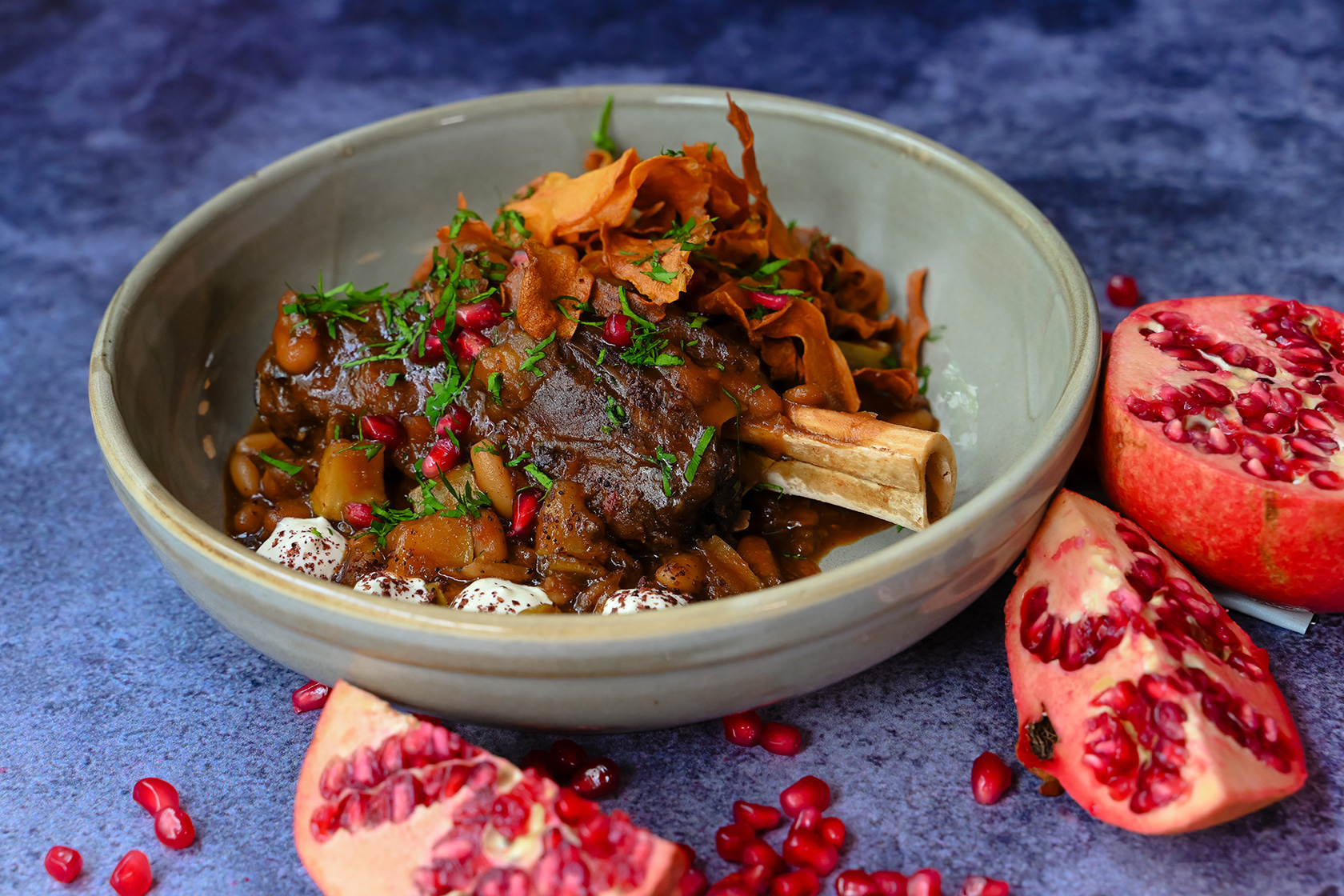
Photograph: ORSO
Best for: A colourful lunch or relaxed dinner shaped by Levantine flavours and local produce.
Good to know: ORSO is part of the local Market Lane Restaurant Group, alongside Market Lane, Elbow Lane, Goldie and Blackrock Castle Café.
Bayou
Bayou brings the food of the American South, particularly Louisiana, to Cork in a relaxed and unpretentious setting.
The restaurant was founded by Corkonians Wesley and Josh Crawford with Arkansan Kate Crawford. Its menu moves through chicken and andouille gumbo, jambalaya, po’ boy sandwiches, buttermilk biscuits and fried chicken, with a changing specials board that may feature shrimp étouffée, smoked tasso, biscuits and gravy or red beans and rice.
Almost everything is made from scratch on the premises, and the team uses local and Irish produce wherever possible. Even the andouille is sourced from an Irish smokehouse.
As co-founder Josh Crawford puts it, the aim is “to bring a taste of the American South, especially Louisiana, to Cork” while creating “a warm and welcoming atmosphere serving comforting food at reasonable prices”.
Best for: Casual comfort food, bold flavours and something different from the usual city-centre lunch.
Don’t miss: Gumbo, jambalaya or a po’ boy, depending on the day’s menu.
Two ways to experience Japanese cooking from Takashi and Stephanie Miyazaki
Chef Takashi Miyazaki and his wife Stephanie are behind two sister establishments that offer very different ways to experience Japanese food in Cork.
Miyazaki
Miyazaki on Evergreen Street is the smaller, more informal original: a compact takeaway and counter-style restaurant that opened in 2015.
The changing menu is built around casual Japanese dishes such as donburi rice bowls, noodles and seasonal specials. It is the choice for a quick lunch or relaxed takeaway when the food matters more than ceremony.
Best for: Informal Japanese cooking, rice bowls and a casual meal on the south side of the city.
Good to know: The space is small and individual dishes change, so check the current menu rather than arriving for one particular special.
Ichigo Ichie Bistro & Natural Wine
Ichigo Ichie Bistro & Natural Wine is the more expansive sit-down expression of Takashi Miyazaki’s cooking.
The restaurant has evolved from its original formal tasting-menu format into a relaxed Japanese bistro, serving small and sharing plates, rice dishes and handmade teuchi soba, accompanied by a carefully chosen natural-wine list.
It currently holds a Michelin Bib Gourmand, but the atmosphere is lively and approachable rather than stiff. This is somewhere to book when you want the evening to revolve around Japanese food, good wine and several dishes shared across the table.
Best for: A lively Japanese dinner, handmade soba and natural wine.
Good to know: Readers may still associate Ichigo Ichie with its former Michelin-starred tasting-menu incarnation, but the current restaurant is a more casual bistro concept.
Paladar
Paladar combines Latin American-inspired sharing plates with one of Cork’s livelier cocktail-bar atmospheres.
Located on Bridge Street in the Victorian Quarter, its menus draw broadly on the flavours and food cultures of Latin America. Small plates are designed to be shared, while the drinks menu receives just as much attention as the food.
Music, hospitality and atmosphere are central to the experience, so this is a better choice for a sociable evening than a quiet dinner. It works particularly well when a group wants to order several dishes, try cocktails and stay longer than originally planned.
The team describes Paladar as a place built around the warmth, generosity and celebratory spirit associated with both Latin America and Ireland. That sense of conviviality is its strongest selling point.
Best for: Sharing plates, cocktails and a lively evening in the Victorian Quarter.
Good to know: The experience is as much about drinks, music and atmosphere as the food itself.
Da Mirco Osteria
Da Mirco Osteria is one of my reliable Cork choices for traditional Northern Italian cooking and warm, unforced hospitality.
Mirco Fondrini draws on the food of his native Valtellina in the Italian Alps, combining selected cheeses, cured meats, buckwheat and polenta from the region with seasonal ingredients from Cork farms, fishers and English Market traders.
The menu is deliberately compact and changes with the seasons, allowing handmade pasta, local vegetables and carefully sourced meat and seafood to remain central to the cooking.
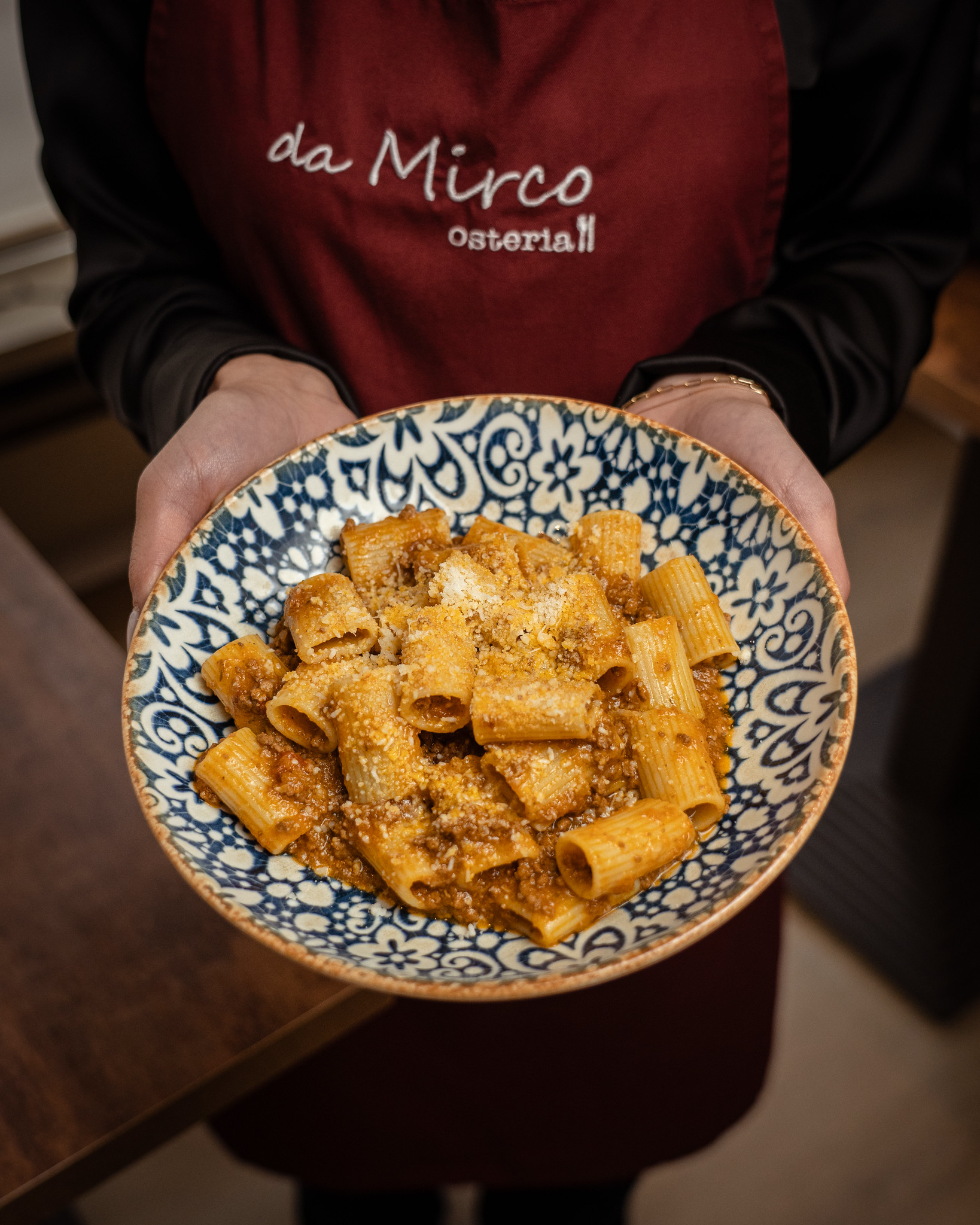
Photograph: Da Mirco Osteria
It feels relaxed enough for an easy evening meal, but the personal welcome, regional wines and strong sense of place make dinner feel like more than a convenient plate of pasta.
Best for: Northern Italian cooking, handmade pasta and a convivial dinner in the Victorian Quarter.
Together, these restaurants show how confidently Cork now embraces international food traditions while retaining its close relationship with Irish produce, seasonality and independent hospitality.
Where to book for dinner in Cork
Dinner is where Cork’s relationship with its surrounding producers becomes particularly visible.
The city’s strongest restaurants do more than add local ingredients to a menu. They draw on Cork’s market culture, historic buildings, growers, fishers, butchers, cheesemakers, brewers and distillers to create experiences that could not simply be transplanted unchanged to another city.
These are places to consider when dinner is the evening’s main event rather than somewhere to eat between activities.
The Glass Curtain
The Glass Curtain occupies part of the former Thompson’s Bakery, a Cork culinary institution dating back to 1826.
The bakery was reportedly capable of producing a mile of Swiss roll each day. The restaurant’s name comes from a local story that the building was nicknamed “the Glass Curtain” during the 1960s because of its progressive glass-walled architecture. The team readily acknowledges that the story may be hearsay, but it is too good a piece of Cork folklore not to embrace.
The setting provides an immediate sense of place, but the cooking is contemporary rather than nostalgic. Menus follow the seasons and draw inspiration from the team’s travels, using produce from Cork farmers, growers, butchers, fishmongers, cheesemakers, brewers and distillers.
Some dishes are cooked over flame, and the restaurant describes its approach as food cooked with grá—the Irish word for love. It is an appealingly concise description of cooking that looks outward for inspiration while remaining firmly connected to Cork.
Best for: A contemporary Cork dinner in a building with genuine food history.
Why book: The combination of local producers, travel-inspired cooking and the former bakery setting makes this a destination rather than merely a convenient city-centre restaurant.
Value: Choose it for an evening when dinner is the experience, rather than a quick meal before moving elsewhere.
Greenes
Greenes has one of Cork’s most memorable restaurant settings.
Part of the Hotel Isaacs complex in the Victorian Quarter, it occupies a converted eighteenth-century warehouse beside a cascading waterfall hidden from the surrounding city streets. The effect is unexpectedly tranquil given how centrally located the restaurant is.
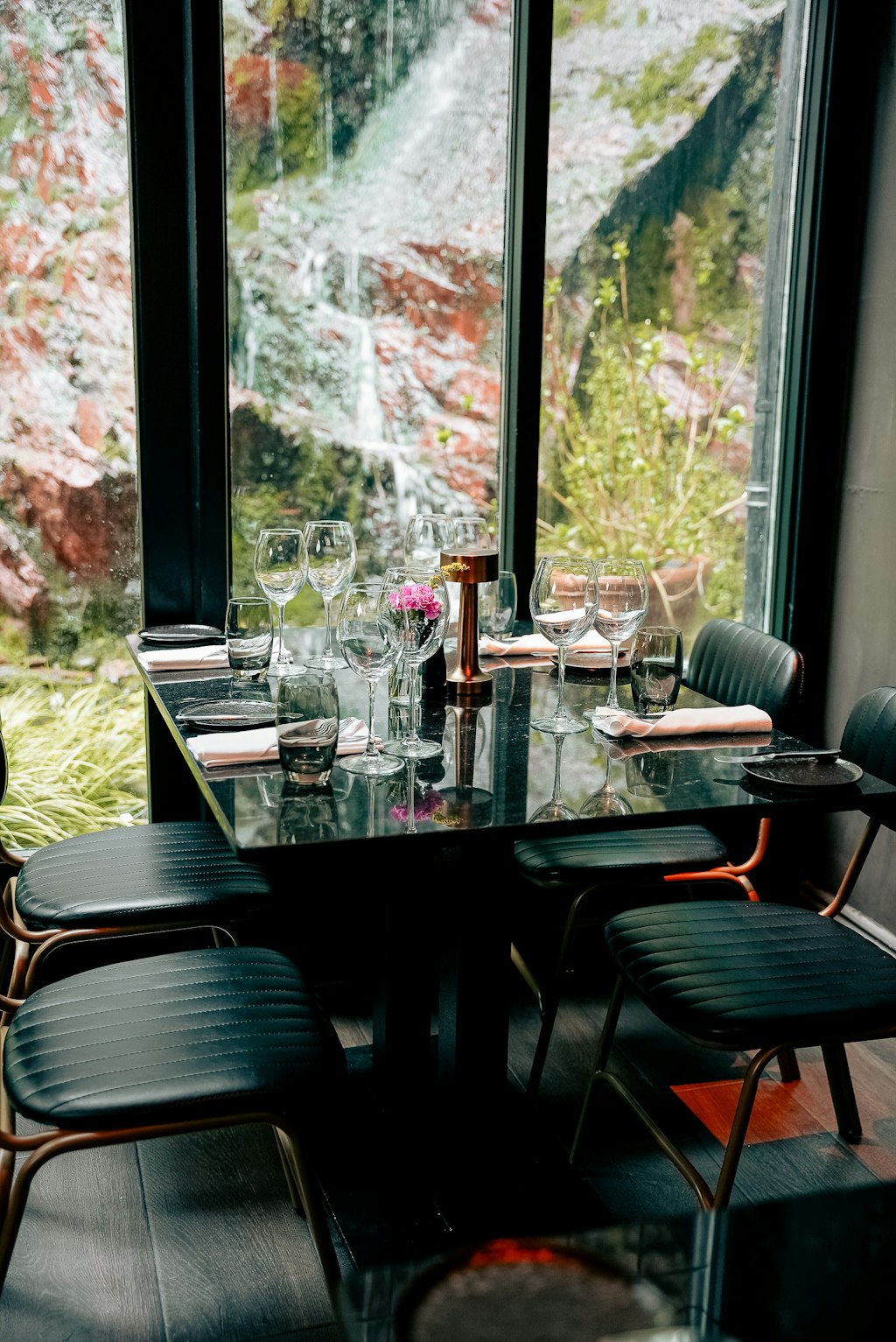
Photograph: Greenes Restaurant
The menus focus on modern Irish cooking, drawing on seasonal ingredients from local growers, fishers and artisan producers. Traditional flavours are present, but the presentation and dining room are polished and contemporary.
Greenes works well for a celebration, but it need not be reserved solely for anniversaries and birthdays. The historic building, waterfall and attentive service create a natural sense of occasion without making the experience feel excessively formal.
Best for: Modern Irish cooking in one of Cork’s most distinctive settings.
Don’t miss: Time in the courtyard beside the waterfall, particularly if you arrive early enough for a drink.
Value: The overall experience includes the unusual setting and atmosphere as well as the meal itself.
A drink at Cask
Across the courtyard, Cask is known for inventive seasonal cocktails built around Irish ingredients, fermented elements and less familiar flavours.
The drinks sit towards the upper end of Cork’s cocktail market, but you are paying for skilled preparation, original recipes and one of the city’s most atmospheric bars. Small plates are also available, although Cask is primarily somewhere I would choose for a carefully made drink before or after dinner at Greenes.
I will cover Cask more fully in my separate guide to Cork’s pubs, bars and drinking culture.
Elbow Lane Smokehouse & Brewery
Elbow Lane Smokehouse & Brewery combines an intimate restaurant, a smokehouse and an on-site nano-brewery at the end of Oliver Plunkett Street.
The kitchen centres on smoke, fire and local produce, with aged Irish beef, ribs, seafood and vegetables cooked over the grill. The restaurant’s beers are brewed in-house with the food in mind, making them an integral part of the meal rather than an unrelated drinks list.
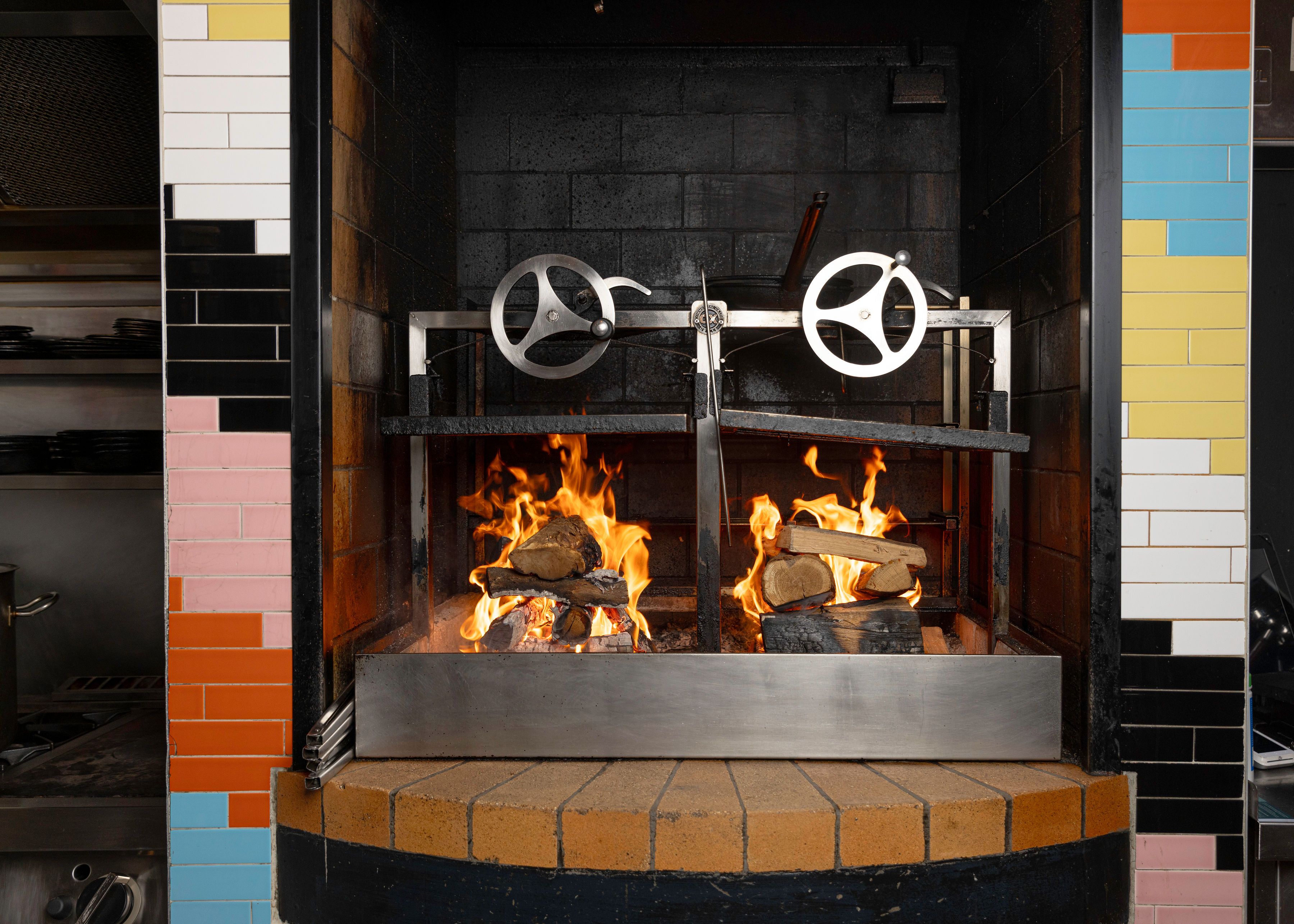
Photograph: Elbow Lane Smokehouse & Brewery
Elbow Lane was one of the names that appeared repeatedly when I asked readers to share their Cork favourites. Some praised the atmosphere, others the food, while one response offered the wonderfully emphatic explanation: “because STEAK!!!!”
That enthusiasm captures much of its appeal. The room is compact and lively, the cooking is robust and food-led, and dinner feels convivial rather than ceremonious.
Best for: Steak, smokehouse cooking, house-brewed beer and a lively evening.
Good to know: The restaurant is small and popular, so book ahead rather than relying on a walk-in table.
Market Lane
Market Lane is one of Cork’s established city-centre choices for lunch and dinner, with enough breadth to suit mixed groups without losing its focus on Irish produce.
The restaurant takes its name and much of its inspiration from the nearby English Market, which remains a principal source for ingredients including meat, fish, bread, spices, olives and cheese. Its wider network of suppliers reaches across Cork and Munster.
The atmosphere is lively rather than hushed, making Market Lane a dependable choice when you want a full dinner without the formality of a tasting-menu restaurant. The menu’s balance of meat, seafood and vegetable-led dishes also makes it useful when the table has varied tastes.
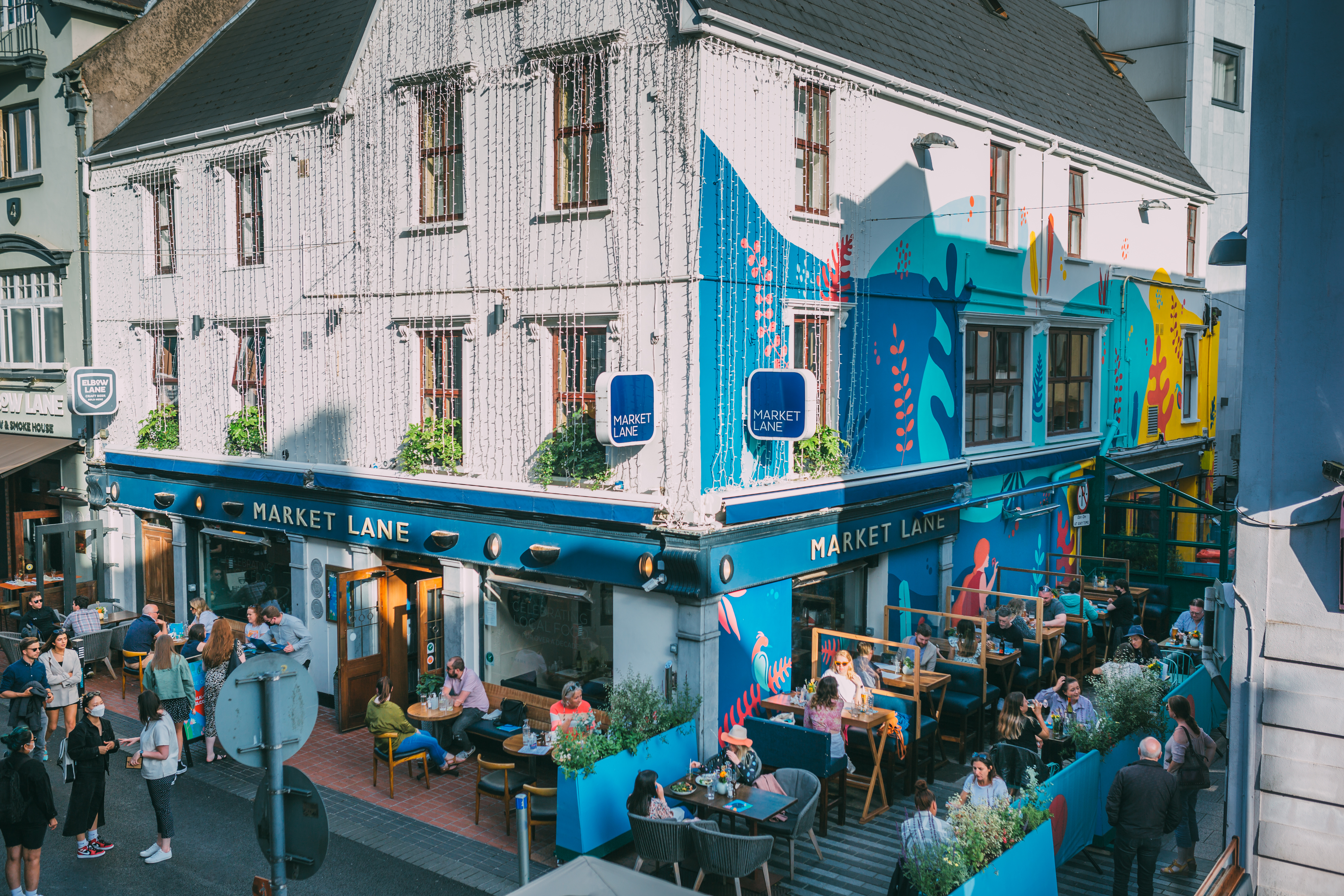
Photograph: Ruth Calder Potts
Market Lane belongs to the same independent Cork restaurant group as ORSO, Elbow Lane, Goldie and Blackrock Castle Café, but each has a sufficiently distinct identity to warrant consideration in its own right.
Best for: A central, produce-led dinner with broad appeal.
Good to know: Its popularity with both Cork diners and visitors means booking ahead is sensible, particularly at weekends.
Hotel dining worth seeking out in Cork
Hotel restaurants are sometimes treated as fallback options: useful when you have arrived late, the weather is poor or nobody wants to venture far from the room. Several of Cork’s hotels deserve more consideration than that.
The strongest have their own identity, draw on local and seasonal produce and make use of settings that independent city-centre restaurants cannot easily replicate. You do not need to be staying at the hotel to book a table.
NORTH at The Address Cork
NORTH is the independently branded restaurant and bar inside The Address Cork, set above the city on Military Hill.
Its elevated position provides wide views across Cork, giving diners a reason to make the journey uphill even when they are staying closer to the centre. The atmosphere is casual and contemporary rather than traditionally formal, with lunch flowing into dinner and drinks.
The menu combines Irish produce with broader international influences, guided by seasonality, locality and sustainability. Alongside larger meat, fish and vegetable dishes, there are light bites and relaxed options for diners who want the setting without committing to a lengthy evening meal.
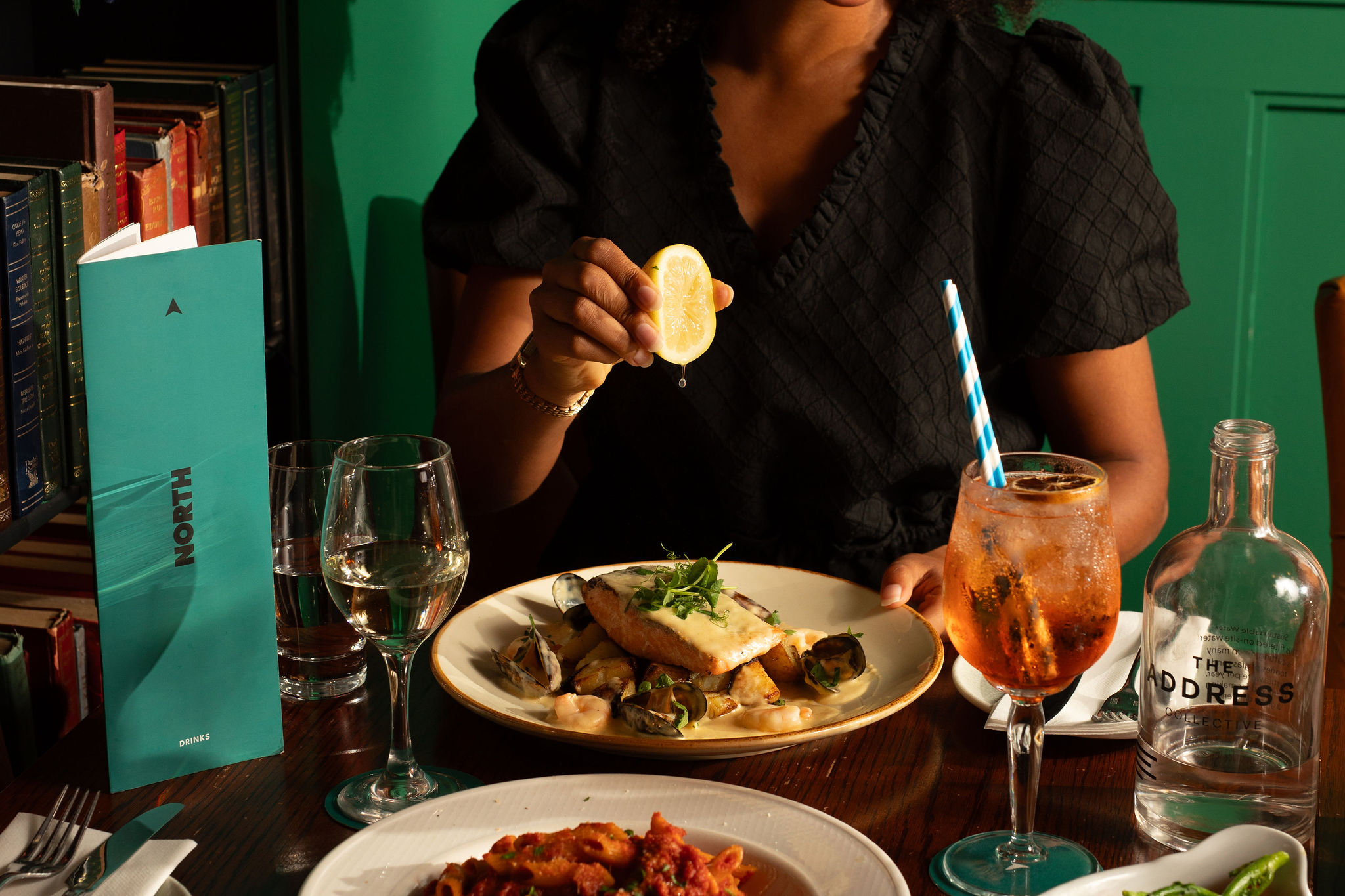
Photograph: Naomi Vance (Vance Studios for The Address Collective)
The drinks offering is also part of the appeal, with cocktails, craft beers and a broad wine selection making NORTH suitable for an unhurried dinner or drinks overlooking the city.
Best for: Relaxed hotel dining, cocktails and elevated views across Cork.
Good to know: The Address sits above the city centre in St Luke’s. Allow for the uphill journey or consider taking a taxi if the climb does not suit your plans.
Panorama at The Montenotte
Panorama Restaurant makes full use of The Montenotte’s position high above Cork and the River Lee.
The floor-to-ceiling views and terrace are central to the experience, particularly as daylight fades and the city begins to light up below. This is hotel dining that feels like a destination in its own right rather than simply a restaurant attached to the accommodation upstairs.
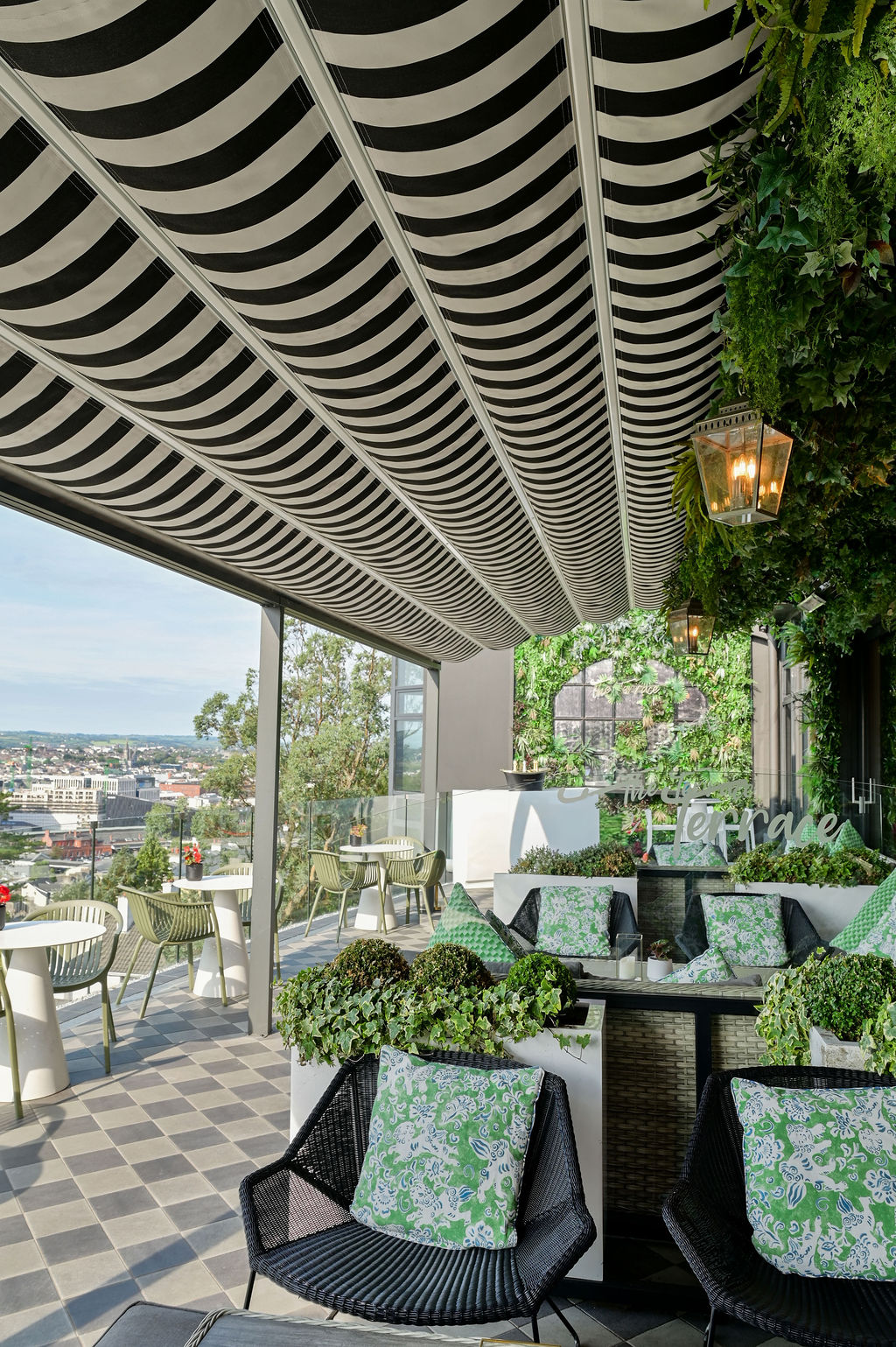
Photograph: The Montenotte
The seasonal menu uses local Irish produce within contemporary European cooking, with international influences appearing across fish, meat and vegetable dishes. You can book for lunch or dinner, while a separate bar menu offers a more flexible way to enjoy the setting.
Live piano music on selected evenings and Sunday afternoons adds to the sense of occasion without turning the dining room overly formal.
Best for: A polished lunch or dinner with some of Cork’s finest city views.
Why book: The setting, terrace and atmosphere make Panorama particularly appealing for a celebration or a final evening in Cork.
Good to know: Restaurant reservations are essential, particularly when you want a table positioned to make the most of the view. Check the current live-music schedule when booking.
A drink at The Glasshouse
Elsewhere in The Montenotte’s gardens, The Glasshouse is a striking standalone cocktail bar reached by a staircase and footbridge.
Its glass walls, pink terrace and views across Cork make it an atmospheric choice for a drink before or after dinner at Panorama. The focus is primarily on cocktails and socialising, so I will return to it more fully in my separate Cork pubs and bars guide.
The Springboard at The Kingsley
The Springboard is The Kingsley’s smart but relaxed restaurant beside the River Lee, west of the immediate city centre.
Its name recalls the site’s former life as Cork’s Lee Baths, which operated from 1934 until 1986. The restaurant pays particular tribute to lifeguard and high-board diver Andy O’Brien, giving an otherwise contemporary hotel dining room an unexpected connection with local social history.
Menus overseen by executive head chef Tim Daly draw on produce from the surrounding region, including Irish seafood, local cheeses and vegetables from nearby farms. The approach is polished but approachable, making The Springboard useful for dinner, Sunday lunch or a meal combined with a walk along the river.
Best for: Contemporary Irish dining near the River Lee and University College Cork.
Local interest: The references to the former Lee Baths give the restaurant a genuine link with the history of its setting.
Good to know: Dinner and weekend-lunch service follow different schedules, so check the current opening pattern before visiting.
Helena’s and Lafayette’s at The Imperial Hotel
The Imperial offers two quite different ways to eat within one of Cork’s landmark city-centre hotels.
Helena’s Restaurant
Helena’s Restaurant is the more formal dining option, serving breakfast, lunch and dinner in an elegant, botanical-inspired room.
The menus combine seasonal, locally sourced ingredients with broader international influences and change regularly according to availability. Cocktails and wine also receive considerable attention, making Helena’s suitable for a full evening meal rather than simply somewhere convenient for hotel guests.
The atmosphere is refined but relaxed rather than stiff. It works equally well for a business lunch, dinner with friends or an occasion that calls for somewhere polished in the heart of the city.
Best for: An elegant city-centre lunch or dinner within one of Cork’s historic hotels.
Good to know: Helena’s offers both lunch and dinner, with an early-evening menu also available at selected times. Menus and service hours change, so check the current details when booking.
Lafayette’s
Lafayette’s is the more casual alternative, particularly well suited to breakfast, coffee, pastries or a light weekday lunch.
The menu includes sandwiches, lighter dishes, scones and cakes made by the hotel’s pastry team. The food may be informal, but the surroundings feel anything but ordinary.
Look up when you arrive: Lafayette’s ornate decorative ceiling is one of the details that turns a simple coffee or lunch into a more memorable stop.
Best for: Breakfast, coffee or a relaxed lunch in a grand city-centre room.
Don’t miss: The ceiling—it deserves at least as much attention as the pastry counter.
Good to know: Lafayette’s currently opens on weekdays and closes at weekends, with hours potentially changing around public holidays.
NORTH, The Montenotte, The Kingsley and The Imperial also appear in my guide to where to stay in Cork, with more detail about their locations, rooms and wider facilities.
Vegetable-led and vegetarian dining
Vegetarian diners are unusually well served in Cork, but the most interesting choices go far beyond removing meat or substituting it with an alternative.
At the city’s strongest vegetable-led restaurants and cafés, seasonal produce determines the shape of the dish. Elsewhere, Palestinian and Levantine kitchens offer naturally vegetarian food that belongs at the heart of the cuisine rather than being added reluctantly to the menu.
Paradiso
Paradiso has spent more than three decades challenging assumptions about what vegetarian dining can be.
When Denis Cotter opened Café Paradiso in October 1993, it traded from morning coffee and pastries through lunch and dinner. The idea of a vegetarian restaurant with serious culinary ambition was initially met with some scepticism, but Paradiso went on to become one of the defining names in Cork’s food story.
Its identity was shaped by Cotter’s long relationship with organic vegetable grower Ultan Walsh. Rather than designing dishes and then looking for produce to fill them, the kitchen developed its cooking around the vegetables arriving from the farm.
Paradiso now serves a six-course tasting menu composed of smaller, intricately constructed plates. This allows each vegetable to remain central to the dish rather than being treated as an accompaniment or used to bulk out a conventional main course.
The restaurant has recently experienced what proprietor Dave O’Mahony describes as “a changing of the guard”. Cotter retired at the beginning of 2026, with long-time restaurant manager O’Mahony taking over as proprietor. Head chef Miguel Frutos now works closely with organic grower Vincent Piel, continuing the chef-and-grower relationship that has shaped Paradiso for decades.
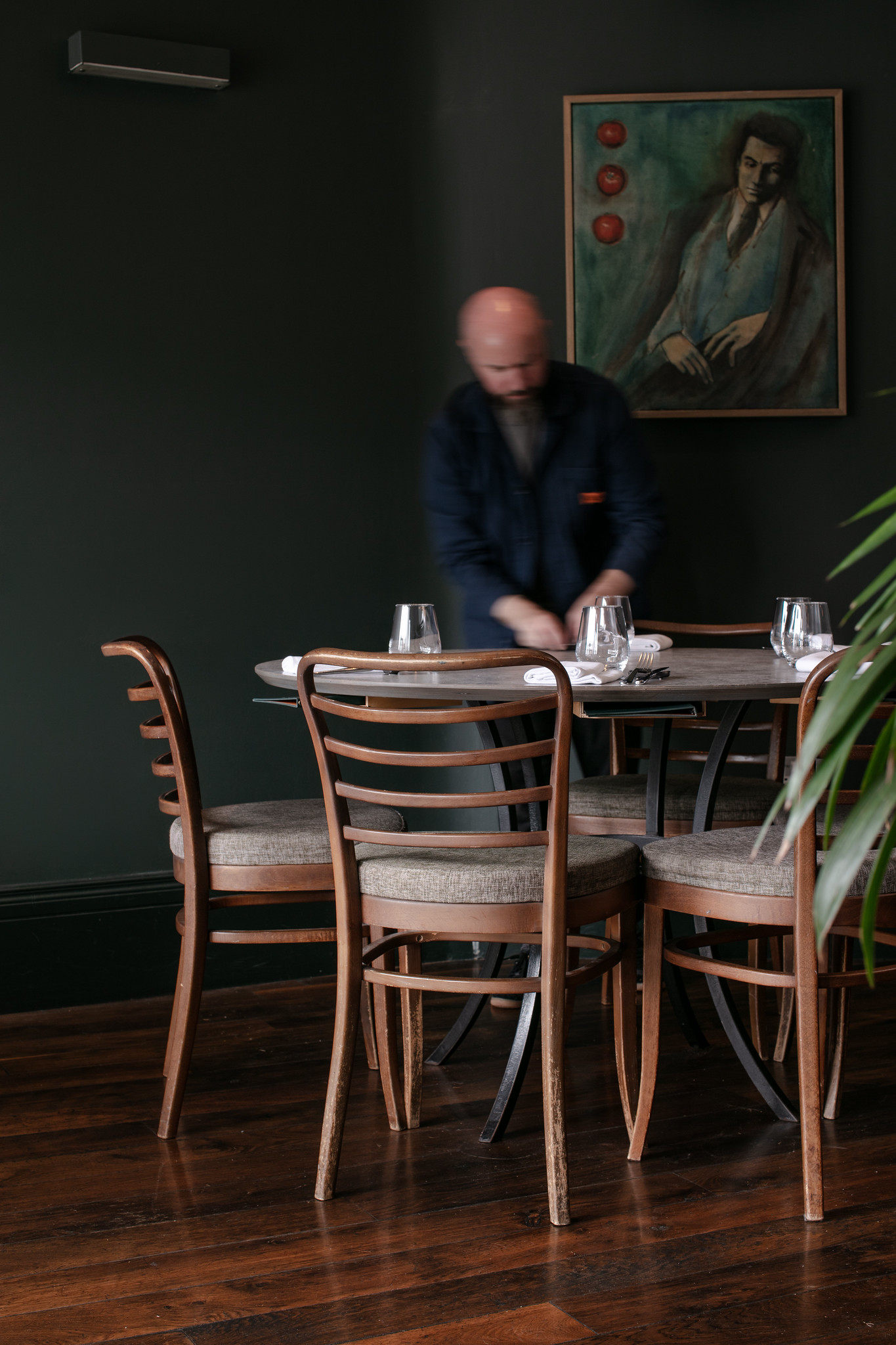
Photograph: Paradiso
The menu changes with the produce available. Recent summer dishes have included strawberry gazpacho, beetroot with orange and ginger, escabeche-marinated carrots with coconut and lime, and handmade tortellini filled with cavolo nero and chard.
Despite the intricacy of the cooking, first-time visitors should expect a warm welcome, a relaxed dining room and service that is knowledgeable and precise without becoming stiff.
Best for: A destination tasting menu built entirely around vegetables.
Why book: Paradiso is not merely a vegetarian option; it is one of Cork’s most significant restaurants.
Value: Treat this as a special-occasion experience worth planning and budgeting for rather than an inexpensive meat-free meal.
Good to know: A vegan version of the full menu is available with advance notice. Paradiso can also adapt the menu for some dietary needs, but anyone with allergies should contact the restaurant before booking rather than assuming every course can be changed.
Other strong vegetarian choices in Cork
You do not need to organise a separate vegetarian itinerary around one specialist restaurant. Several of the cafés and international kitchens covered earlier in this guide offer vegetable-led food as an integral part of what they do.
For sustainable brunch or lunch: Good Day Deli is predominantly vegetarian, with many dishes that are vegan or can be adapted. Local, seasonal, organic and fairly traded ingredients underpin the menu, while its garden setting at Nano Nagle Place makes the experience particularly distinctive.
For a mixed group: ORSO uses pulses, herbs, spices, fruit and seasonal vegetables throughout its Levantine-influenced menus. Vegetarian dishes sit naturally beside locally sourced meat and seafood, making it a strong choice when not everyone at the table eats in the same way.
For Palestinian sharing food: Many of Izz Cafe’s most appealing dishes are naturally vegetarian. Hummus, falafel, breads, salads, dips and mezze-style platters offer plenty of variety, particularly when several people are happy to order for the table.
For brunch near the Marina: Salt carries vegetarian choices throughout its daytime menu rather than relying on a single default option. It is particularly useful when you want a relaxed breakfast or lunch before exploring the Marina and surrounding neighbourhood.
Cork’s vegetarian food reflects the breadth of its wider dining scene: an ambitious tasting menu shaped by a grower, sustainable garden brunches, Palestinian mezze, Levantine flavours and everyday café dishes that give vegetables genuine attention.
Late-night food in Cork
Late-night food in Cork is not merely a diminished version of dinner. After an evening in the pub, the requirement is usually something hot, salty, generous and easy to carry rather than a carefully plated final course.
City-centre takeaways cover everything from fried chicken and fish and chips to curry chips, loaded boxes and one of modern Ireland’s most recognisable food creations: the spice bag.
Try an Irish spice bag
The spice bag emerged from Ireland’s Chinese takeaway culture and has become an icon in its own right. At its simplest, it combines chips and crispy chicken with peppers, onions, chilli and a salty spice mixture, usually accompanied by curry sauce.
It is crunchy, spicy, deeply savoury and exceptionally well suited to the end of a Cork night out. This is not refined dining, nor is it trying to be. It is one of those dishes that makes perfect sense in the precise moment you want it.
Two good city-centre places to look for one are Soba on Carey’s Lane and Freestyle Asia Food on North Main Street. Freestyle’s menu also includes meat-free spicy combinations, making it worth checking when not everyone wants the traditional crispy-chicken version.
Best for: A distinctly Irish takeaway experience after a few drinks.
Good to know: Spice bags vary considerably between takeaways. The seasoning, chicken, vegetables, sauces and portion size are all part of a particular kitchen’s interpretation.
Plan ahead: Do not assume every takeaway remains open until the pubs close. Check current collection or delivery hours earlier in the evening if a spice bag has become an essential part of the plan.
Hillbilly’s after the pub
Hillbilly’s appears earlier in this guide as a Cork-born fast-food institution, but its central locations also make it a useful option when you need something uncomplicated at the end of the night.
A Breast in a Bun, fried chicken and freshly made gravy may not be the meal you carefully planned before leaving home, but after several hours in a Cork pub it may be exactly the meal you want.
Best for: Familiar comfort food with stronger Cork roots than the international fried-chicken chains.
Good to know: Opening hours vary between branches and across the week, so recheck them rather than relying on an old listing.
Chippers, curry chips and loaded boxes
Cork’s chippers and Asian takeaways offer plenty of other late-evening possibilities. Alongside traditional fish and chips, look out for curry chips, garlic-and-cheese chips, salt-and-chilli chicken, spicy boxes and larger combinations designed for sharing.
The best choice at the end of the night may simply be the good independent takeaway closest to your pub or hotel. Check what is still cooking, ask what the house speciality is and order according to your appetite rather than trying to force a carefully researched restaurant itinerary beyond its natural limits.
I cover some of Cork’s best-known fish-and-chip and seafood addresses in the dedicated seafood section of this guide.
Afternoon tea in Cork
Afternoon tea may not be an everyday Cork meal, but it can be a lovely way to slow the pace of a city break, particularly when the weather turns or the occasion calls for something more indulgent than coffee and cake.
Three of Cork’s best-known hotels offer notably different versions. You do not need to be staying overnight to book, but advance reservations are essential or strongly advised.
Afternoon tea at The Imperial Hotel
Afternoon tea at The Imperial Hotel combines a traditional tiered service with the grandeur of one of Cork’s landmark city-centre hotels.
The Imperial has stood on South Mall for more than two centuries, and the historic surroundings are a significant part of the experience. When booking, check which of the hotel’s dining rooms is hosting the current seasonal afternoon-tea service.
The afternoon tea follows the traditional format of savouries, sandwiches, freshly baked scones and small pastries, accompanied by a choice of teas or coffee. The hotel's in-house pastry team gives the sweeter elements a distinctly individual character.
Its central location makes this particularly easy to fit into a day of sightseeing or shopping without travelling away from the heart of Cork.
Best for: Traditional afternoon tea in a grand city-centre setting.
Don’t miss: Take time to notice the hotel's historic interiors as well as the tiered stand.
Good to know: The Imperial’s afternoon tea can operate as a seasonal experience rather than a permanent year-round service. It must currently be booked at least 24 hours in advance, so check the latest dates before planning your visit.
Afternoon tea at The Metropole
The Metropole Hotel offers afternoon tea in the heart of Cork’s Victorian Quarter.
The historic hotel has been part of MacCurtain Street since the nineteenth century, but its refurbished lobby gives the experience a brighter, more contemporary feel than the traditional manor-house model.
Expect freshly prepared sandwiches and savouries, warm scones, pastries and desserts, served with tea or coffee. The atmosphere is polished but sociable, making it well suited to a catch-up, birthday or relaxed afternoon that does not need to feel excessively ceremonial.
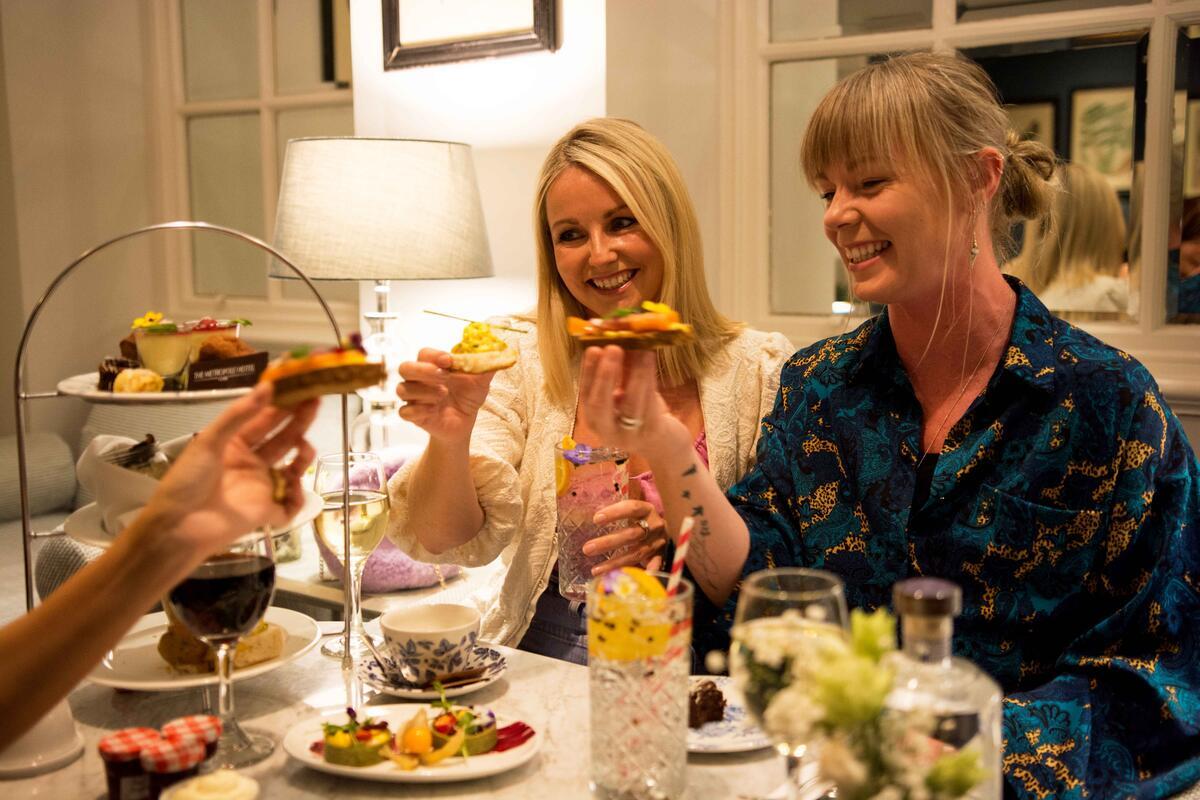
Photograph: Chani Anderson (Cork City Council)
The Metropole is also the most flexible of these three options in terms of its current service pattern, with afternoon tea offered across the week rather than only on selected days.
Best for: An accessible, centrally located afternoon tea in the Victorian Quarter.
Good to know: Vegetarian and gluten-free versions are available with notice. Afternoon tea must be booked at least 24 hours ahead, and any dietary requirements should be discussed at the time of reservation.
Afternoon tea at Hayfield Manor
Hayfield Manor offers the most overtly luxurious of Cork’s traditional afternoon teas.
The five-star hotel sits within private walled gardens close to University College Cork, creating the feeling of leaving the city behind even though the centre is only a short journey away.
Afternoon tea is served in the elegant surroundings of Orchids Restaurant, with finger sandwiches and savouries followed by warm scones, pastries and cakes. A Champagne version is also available for occasions that call for an additional flourish.
This is the option to choose when afternoon tea is the principal event rather than a short pause between attractions. Build in time to enjoy the hotel and gardens rather than arriving only long enough to eat and leave.
Best for: A celebration, romantic afternoon or full special-occasion experience.
Value: Hayfield Manor sits at the upper end of Cork’s afternoon-tea choices, but the five-star service, manor-house atmosphere and setting are integral to what you are booking.
Good to know: Afternoon tea currently operates from Thursday to Sunday at set sitting times, and advance booking is essential. A separate children’s afternoon tea is also available.
All three hotels are included in my guide to where to stay in Cork, but their afternoon teas can be booked independently by visitors staying elsewhere.
Practical tips for eating in Cork
Cork is compact and easy to explore on foot, but eating well still benefits from a little planning. Independent cafés, market traders and restaurants do not necessarily follow the long, seven-day schedules associated with larger chains.
A good approach is to reserve one or two dinners that matter to you, then leave space for market lunches, neighbourhood cafés and spontaneous recommendations.
Book destination dinners ahead
Paradiso, The Glass Curtain, Greenes, Elbow Lane and Ichigo Ichie are restaurants around which it is worth building an evening. Advance booking is particularly sensible for Friday and Saturday nights, special occasions and busy summer weekends.
Popular but less formal restaurants such as Market Lane and ORSO may offer more flexibility, but sought-after sittings can still fill. Even where walk-ins are accepted, a reservation removes the risk of spending part of the evening moving between full dining rooms.
Plan ahead for: Tasting menus, small restaurants, destination dinners and weekend evenings.
Keep flexible for: Coffee, market food, casual lunches and visits to Marina Market.
Check opening days as carefully as opening times
Some independent restaurants close early in the week, while cafés may finish service during the late afternoon. Others switch between daytime and evening menus or operate a different pattern at weekends.
Marina Market’s traders may also keep individual hours within the wider venue, so check that a particular business is serving before travelling specifically for it.
Use the restaurant’s own website or social channels shortly before your visit, especially when one venue is central to the day’s plans. Search listings and map results are useful, but they are not always updated immediately when service hours change.
Visit the English Market during the day
The English Market is a working daytime food market rather than an evening food hall. The building is open from 8am to 6pm, Monday to Saturday, and closes on Sundays and Bank Holidays.
Individual traders and cafés keep their own hours, however, and many begin trading from around 8.30am rather than as soon as the doors open. Arrive with enough time to browse before stalls begin packing away, particularly if you want to speak to traders or assemble lunch without rushing.
The Market works particularly well at the beginning of a daytime route: explore the stalls in the morning, stop for lunch and continue through Grand Parade towards Bishop Lucey Park and the surrounding streets. For opening times, what to eat and buy, Farmgate Café and more detailed visitor advice, see my full English Market Cork guide.
Discuss dietary requirements before arriving
Cork offers strong vegetarian choice, from Paradiso’s vegetable-led tasting menu to the naturally meat-free dishes at Izz Cafe, ORSO and Good Day Deli.
Vegetarian does not automatically mean vegan, gluten-free or suitable for a particular allergy. Menus change, shared kitchens are common and smaller restaurants may have practical limits on substitutions.
Contact the venue directly when a dietary requirement affects where you can safely eat, particularly for tasting menus and group bookings. Give the kitchen notice rather than waiting until you arrive, and be precise about whether something is a preference, intolerance or allergy.
Choose the experience rather than comparing prices alone
Budgets are personal, and exact menu prices date quickly. It is usually more helpful to decide what kind of meal you want and what is included in the overall experience.
Market sandwiches, Hillbilly’s and a spice bag meet a very different need from dinner at Greenes, The Glass Curtain or Paradiso. In the latter restaurants, the setting, service, sourcing, atmosphere and time involved are all part of what you are paying for.
The aim is not always to spend as little as possible. It is to choose the meals that feel worthwhile to you, balance them with more informal stops and avoid using a special-occasion restaurant when what you really want is chips and curry sauce.
Keep one meal unplanned
A guide can introduce Cork’s institutions, independent favourites and newer arrivals, but it should not remove every element of discovery from the trip.
Menus change, daily specials appear and new businesses continue to reshape the city. Ask market traders what is particularly good that morning, listen when café staff recommend a cake and pay attention to the places where locals are lingering.
Reserve the restaurants you would be genuinely disappointed to miss, but leave at least one lunch or coffee stop open. Cork is a city that rewards curiosity and conversation.
Where to eat in Cork: frequently asked questions
What food is Cork best known for?
Cork is closely associated with the English Market, farmhouse cheese, fresh seafood, spiced beef, sausages and produce grown, caught and made across the county.
Its contemporary food culture is much broader. Alongside those local foundations, you will find Palestinian mezze, Levantine cooking, Japanese food, Louisiana comfort food, speciality coffee, street-food traders and ambitious vegetable-led restaurants. For something distinctly modern and Irish after a night out, try a spice bag from one of the city’s Chinese or Asian takeaways.
Where should a first-time visitor eat in Cork?
Begin at the English Market to understand the foundations of Cork’s food culture. Explore the stalls, eat at Farmgate Café or pick up lunch from a market trader before continuing through the city.
For the rest of the trip, choose places that offer different sides of Cork: a neighbourhood café such as Greenwich or Salt, seafood at Goldie or Quinlan’s, international cooking at Izz Cafe or ORSO, and a restaurant such as Paradiso, The Glass Curtain, Greenes or Elbow Lane when dinner is the main event.
Do I need to book restaurants in Cork?
Book ahead for tasting menus, small dining rooms and destination restaurants, particularly on Friday and Saturday evenings. Paradiso, Goldie, The Glass Curtain, Greenes, Elbow Lane and Ichigo Ichie are all worth reserving in advance.
Market stalls, coffee shops and casual lunch stops can usually be approached more flexibly, although queues and limited seating are possible at popular times. Afternoon tea should also be booked ahead, with some hotels requiring at least 24 hours’ notice.
Where is the best seafood in Cork?
Goldie is the standout choice for a destination seafood dinner, using the daily catch from small East Cork boats and a whole-catch approach.
Quinlan’s Seafood Bar is better suited to a casual lunch or early dinner, with excellent fish and chips alongside chowder, shellfish and changing seafood specials. Eco Fish on MacCurtain Street offers the city-chipper end of the spectrum, including takeaway fish and chips and more contemporary fish boxes.
Is Cork good for vegetarian food?
Yes. Paradiso is one of Ireland’s defining vegetable-led restaurants and serves a six-course tasting menu built entirely around seasonal produce.
Good Day Deli is particularly strong for sustainable vegetarian brunch and lunch, while ORSO and Izz Cafe offer substantial meat-free choice that belongs naturally within Levantine and Palestinian cooking. Salt and many Marina Market traders also provide useful daytime options.
Where can I find casual food in Cork?
The English Market is a good starting point for informal food, including sausage sandwiches from O’Flynn’s, filled baguettes from Café Marius and substantial food-to-go from On the Hoof.
Hillbilly’s offers Cork-born fast food, Eco Fish is useful for takeaway fish and chips, and Marina Market brings many independent traders together in one location. A spice bag, curry chips or another takeaway box can also provide a filling later meal without the cost or structure of a restaurant dinner.
Exact prices change quickly, so consider the kind of meal you need as well as the menu cost. A sandwich eaten in the park, a relaxed brunch and a six-course tasting menu serve very different purposes.
Where can I eat late at night in Cork?
Late-night choices are more limited than daytime dining, but the city centre still has useful takeaway options.
For an Irish spice bag, try Soba on Carey’s Lane or Freestyle Asia Food on North Main Street. Hillbilly’s is another dependable choice for fried chicken, a Breast in a Bun and freshly made gravy after the pub. Chippers and Asian takeaways also serve curry chips, salt-and-chilli chicken and loaded boxes.
Opening hours vary significantly across the week, so check the individual venue before relying on it for food late in the evening.
Can I book Cork’s hotel restaurants if I am not staying there?
Yes. NORTH at The Address, Panorama at The Montenotte, The Springboard at The Kingsley, and Helena’s and Lafayette’s at The Imperial all welcome diners who are staying elsewhere.
They are worth considering as restaurants in their own right, particularly when you want city views, riverside dining, a polished historic setting or an easy meal beyond the immediate centre.
Where can I have afternoon tea in Cork?
The Imperial Hotel, The Metropole and Hayfield Manor all offer afternoon tea, but the experiences are distinct.
The Imperial provides historic city-centre grandeur, The Metropole offers a sociable option in the Victorian Quarter, and Hayfield Manor is the most overtly luxurious choice for a celebration. Service days and seasonal arrangements differ, so check the latest details and book in advance.
What is the best area of Cork for restaurants?
Cork’s compact centre allows you to eat across several neighbourhoods during one visit. The English Market and Grand Parade are strongest for market food and quick lunches, while Oliver Plunkett Street and the surrounding lanes contain several of the city’s most notable dinner restaurants.
The Victorian Quarter brings together restaurants, hotel dining and cocktail bars around MacCurtain Street and Bridge Street. It is also worth leaving the central circuit for Salt and Marina Market to the east, Tria in Fitzgerald’s Park and the hotel restaurants overlooking the city or River Lee.
Can I eat at the English Market?
Yes. Farmgate Café offers table-service dining and a more informal counter and balcony area above the stalls. O’Flynn’s and On the Hoof provide hot food to go, while Café Marius, On the Pigs Back and other traders make it easy to assemble a picnic lunch.
The English Market is principally a daytime destination, so check its current opening hours and allow enough time to explore before traders begin packing away.
Is Marina Market worth visiting?
Marina Market is particularly useful for families and mixed groups because its independent traders cover a wide variety of cuisines and styles of food.
The line-up can change, so visit for the range, informal atmosphere and location rather than relying on one specific trader without checking first. One of my personal favourites is Prátaí, which puts Irish potatoes at the centre of its chips, baked potatoes and loaded dishes.
Combine the market with a walk along the Marina or towards Blackrock so that the journey becomes part of a wider itinerary.
How many days do I need to explore Cork’s food scene?
A long weekend gives you enough time to combine the English Market with two evening restaurants, a neighbourhood breakfast or brunch, a seafood meal and at least one informal lunch.
Staying longer allows you to explore the Marina, Fitzgerald’s Park, Nano Nagle Place and dining destinations beyond the traditional city-centre circuit without arranging every day entirely around food.
Final thoughts on where to eat in Cork
The English Market remains the foundation of Cork’s food culture, but the city’s story no longer begins and ends beneath its roof. It continues through neighbourhood cafés, small fishing boats, hotel dining rooms, independent coffee shops, international kitchens and restaurants building close relationships with growers and producers.
What makes eating in Cork memorable is not one particular style of food. It is the way old traditions and newer influences sit comfortably beside one another: spiced beef and speciality coffee, Palestinian mezze and Irish vegetables, Japanese cooking and West Cork seafood, a market sandwich at lunchtime and a carefully planned dinner later that evening.
You do not need to visit every restaurant in this guide to understand the city. Choose a few meals that genuinely excite you, leave room for a recommendation or daily special, and pay attention to the people, places and stories behind what arrives at the table. Cork’s best food experiences are rarely only about the food.
This guide was independently researched and written. Several restaurants and food businesses supplied background information, quotations or editorial-use images, but inclusion and recommendations remain subject to my own editorial judgement. Opening hours, menus and service arrangements can change, so confirm essential details directly with each venue before visiting.
Plan the rest of your time in Cork
Once you have started shaping where to eat, continue planning your visit with my Cork long weekend guide, which brings together pubs, markets, culture, walkable city-centre planning and realistic day trip ideas. You can also use the detailed guide to where to stay in Cork to choose the right area and hotel for your trip.
If you want to go deeper into the city’s food history, my guide to the English Market in Cork explores what to eat and buy, traditional Cork foods, the Market’s traders and history, Farmgate Café and practical advice for planning your visit.
Future Cork guides will go deeper into the city’s old pubs and local stout, along with nearby trips to Cobh, Kinsale, Blarney, Fota, Midleton, West Cork and the coast. For now, keep your first visit city-focused, choose one easy day trip if time allows, and leave enough space for an unexpected coffee, market lunch or recommendation picked up along the way.
Stay in Touch
Culinary Travels publishes destination guides, seasonal recipes, and food-led travel features from the UK and beyond.
Follow for new articles and updated travel resources:
Instagram | X | Facebook | Pinterest
Newsletter
Receive new guides, recipes, and occasional travel planning notes by email: Subscribe here
Reader feedback and local recommendations are always welcome via the contact page.
©2026 Culinary Travels. Culinary Travels is written and edited by Georgina Ingham | Website designed by The Smarter Web Company
What Our Followers Say
"A highly complimentary article ... showcasing why the English Market remains one of Ireland's premier food destinations"
Cork City Council via Facebook
"Our list of things to do in Cork has just expanded hugely thanks to Culinary Travels."
Triskel Art Centre Cork, via Twitter
“Tried this last night and it was delicious!”
Reader feedback via Pinterest, Yangzhou Fried Rice Recipe
"Oh yum!!! I could eat one or two right now!"
Sami Tamimi, via Instagram, on Ma’amoul Cookies
"Georgina was great to work with, quick to respond, and is a excellent content writer - would highly recommend"
Nick S - Get Blogged
“A simple no-knead dough transformed into beautiful, rustic rolls.”
Reader feedback via Pinterest, No-Knead Ciabatta Rolls Recipe