
Articles


Sunblush Tomatoes Recipe: Homemade Semi-Dried Cherry Tomatoes
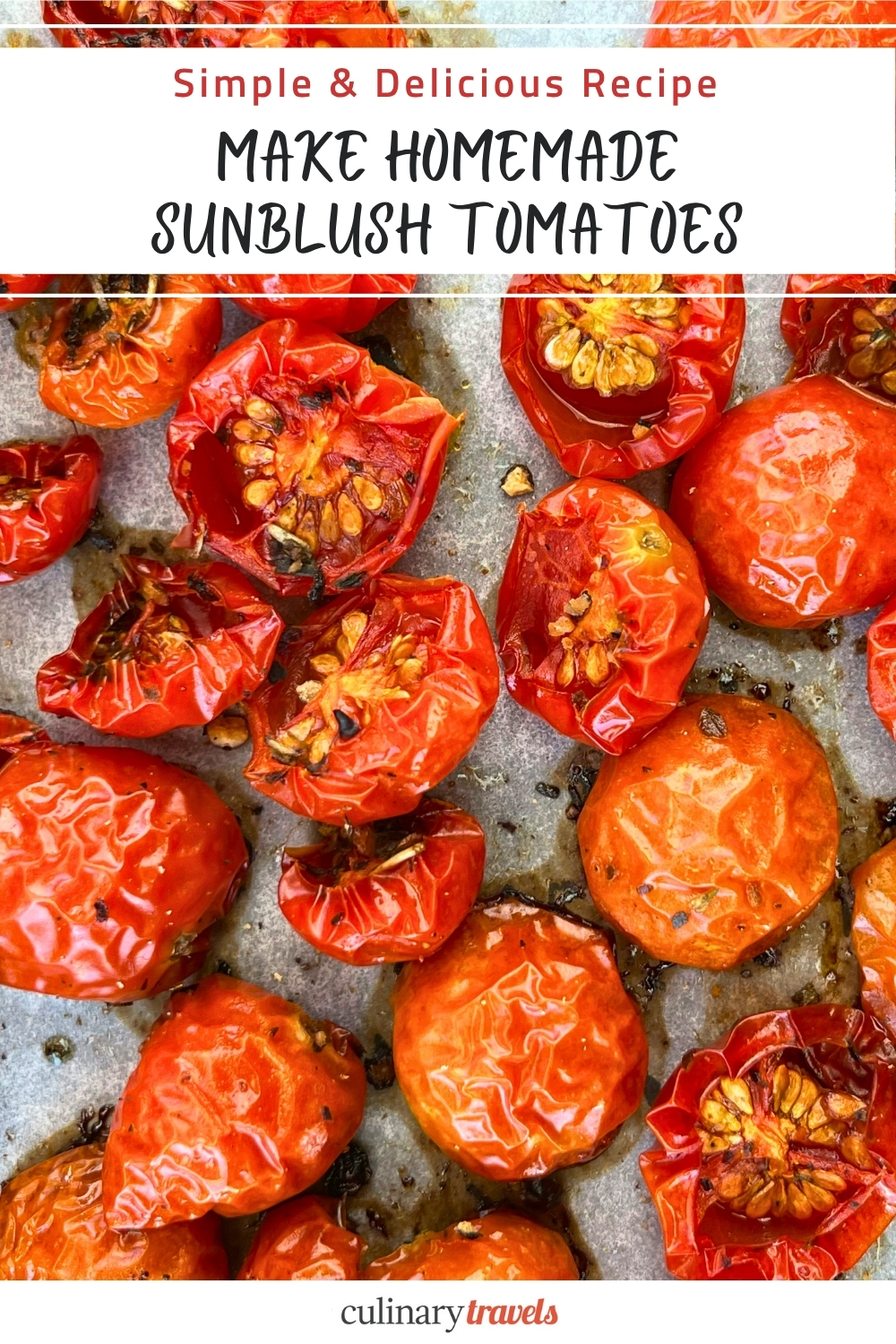
Bad, very bad, things have been done to the humble tomato over the years. The hard, watery supermarket sort has a lot to answer for. But when cherry tomatoes are properly ripe, sweet, and full of flavour, they need very little help to become something quietly spectacular.
These homemade sunblush tomatoes are slow-roasted until their edges wrinkle, their sweetness deepens, and their texture sits somewhere between fresh and fully dried. They stay soft, juicy, and intensely tomatoey, which makes them brilliantly useful for summer salads, quick lunches, antipasti plates, and pasta dishes such as this pappardelle with slow-roast tomato and pancetta ragù.
Keep a jar in the fridge and they become the kind of small-but-mighty ingredient that makes ordinary meals feel considered: spooned over toast, folded through grains, scattered across pizza, or served with good bread, cheese, and a generous glug of olive oil.
Some articles on Culinary Travels may contain affiliate links, meaning I may earn a small commission at no extra cost to you. I only recommend places, experiences and products that fit the editorial tone and standards of the site.
Update note: This recipe was originally published in June 2012 and has since been fully refreshed with clearer cooking guidance, updated storage advice, food-safety notes, serving ideas, and additional tips for making homemade sunblush tomatoes in the oven, air fryer, or dehydrator.
Quick Answer: What Are Sunblush Tomatoes?
Sunblush tomatoes are semi-dried tomatoes, usually made by slowly roasting ripe cherry tomatoes until their flavour becomes sweeter, deeper, and more concentrated. Unlike fully sun-dried tomatoes, they stay soft, juicy, and pliable, which makes them easy to use in salads, pasta, antipasti, sandwiches, pizzas, and quick summer lunches.
At home, the easiest way to make them is in a low oven with olive oil, salt, a little sugar, and herbs. They are best kept in the fridge and used within about one week, or frozen in small portions for longer storage.
Why This Homemade Sunblush Tomatoes Recipe Works
The beauty of homemade sunblush tomatoes is that the oven does most of the work. Slow roasting gently drives off some of the tomatoes’ moisture, which concentrates their natural sweetness and acidity without turning them dry or leathery.
A little sea salt sharpens the flavour, a small amount of sugar helps balance less-than-perfect tomatoes, and thyme adds a savoury herbal note without overwhelming the fruit. The result is softer and fresher than many jarred sun-dried tomatoes, but far more intense than raw cherry tomatoes.
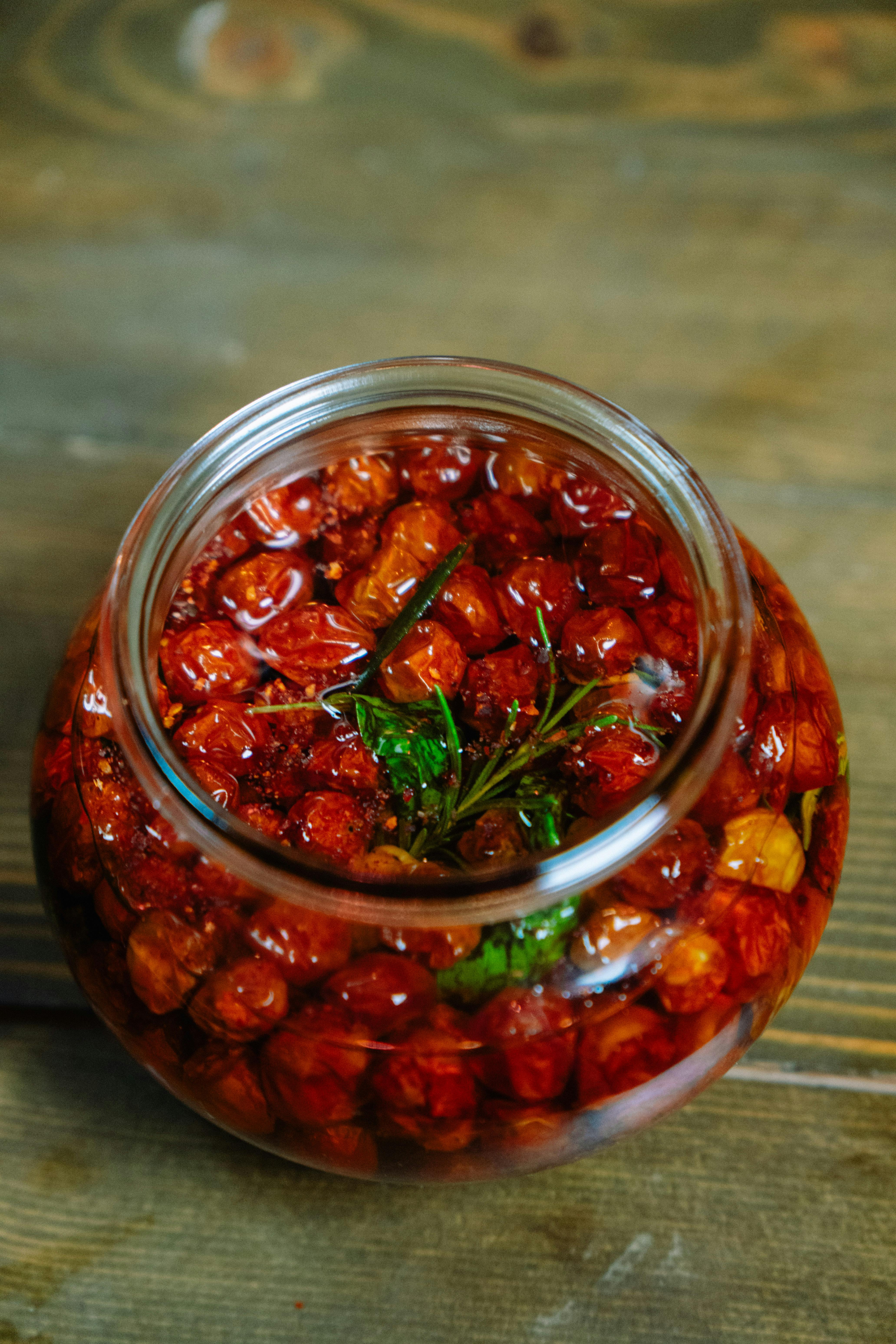
Photograph: Tivasee (Pexels)
Ingredient Notes
Cherry tomatoes are the best choice here because they are naturally sweet, quick to halve, and hold their shape well as they roast. Use the ripest, most flavourful tomatoes you can find; this is a simple recipe, so the finished jar will only ever be as good as the tomatoes you start with.
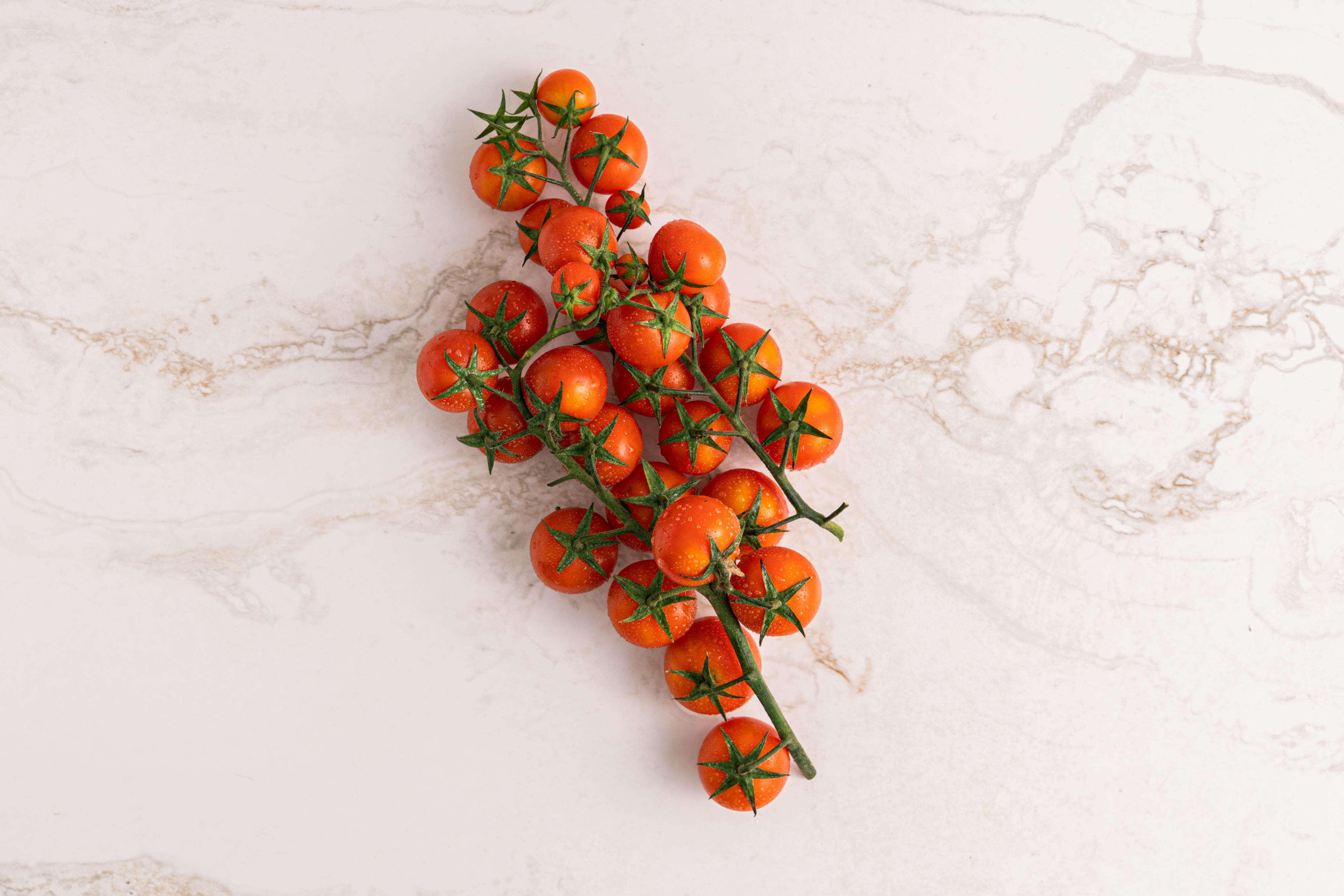
Photograph: Antoni Shkraba (Pexels)
The olive oil does two jobs: it helps the tomatoes roast gently and adds richness once they are stored in the fridge. Use an olive oil you enjoy the taste of, especially if you plan to spoon the tomatoes over bread, salads, or antipasti plates. For more background on choosing and using olive oil, see this guide to olive oil.
Thyme works particularly well because it has a savoury Mediterranean flavour that suits tomatoes, bread, cheese, and pasta. Rosemary, oregano, or a few chilli flakes can also be used, depending on how you want to serve the finished tomatoes.
Homemade Sunblush Tomatoes Recipe
Prep time: 10 minutes
Cook time: 3–4 hours
Makes: 1 small jar
Ingredients
500 g cherry tomatoes, ideally ripe and full-flavoured
2 tablespoons olive oil, plus extra for storing if needed
2–3 sprigs fresh thyme
1 teaspoon sea salt
½ teaspoon sugar
Method
1. Preheat the oven to 140°C fan / 160°C conventional / 285°F. Line one or two baking trays with baking parchment.
2. Halve the cherry tomatoes and arrange them cut-side up on the trays, leaving a little space between each one so they can dry rather than steam.
3. Drizzle the tomatoes with olive oil, then scatter over the sea salt, sugar, and thyme leaves. You can leave a few thyme sprigs whole if you prefer, but remove any woody stems before storing.
4. Bake for 3–4 hours, checking from the 3-hour mark. The tomatoes should look wrinkled and slightly collapsed, with concentrated flavour, but still soft and juicy rather than brittle or fully dried.
5. Leave to cool completely. Use straight away, or transfer to a clean jar, cover with olive oil, and store in the fridge. Use within about one week for best quality, and do not treat as a shelf-stable preserve.
Recipe note: Oven timing will vary depending on the size and water content of your tomatoes. Smaller cherry tomatoes may be ready closer to 3 hours, while larger or very juicy tomatoes may need the full 4 hours.
How to Prepare the Jar
Because these sunblush tomatoes are stored in oil, use a very clean glass jar with a tight-fitting lid. This recipe is not designed as a shelf-stable preserve, but starting with a clean jar still helps keep the tomatoes in good condition during their short fridge storage window.
The easiest method is to wash the jar and lid thoroughly in hot, soapy water, rinse well, then let them dry completely. You can also run the jar through a hot dishwasher cycle, provided the dishwasher is clean, not overloaded, and the jar is completely dry before filling. The Food Standards Agency cleaning advice explains why thorough cleaning matters when preparing and storing food, especially when equipment will come into contact with ready-to-eat ingredients.
Check the jar before using it and avoid any that are chipped, cracked, or damaged. Once filled, keep the sunblush tomatoes in the fridge, make sure they remain covered with oil, and use within about one week.
How to Tell When Sunblush Tomatoes Are Ready
The tomatoes are ready when they look wrinkled and slightly collapsed, with darker, more concentrated edges, but still feel soft and juicy in the centre. They should not be crisp, brittle, or leathery. Think semi-dried rather than dried.
If they still look very wet after three hours, give them longer in the oven and check every 20–30 minutes. If the smallest tomatoes are drying faster than the others, remove them from the tray and let the larger ones continue roasting.
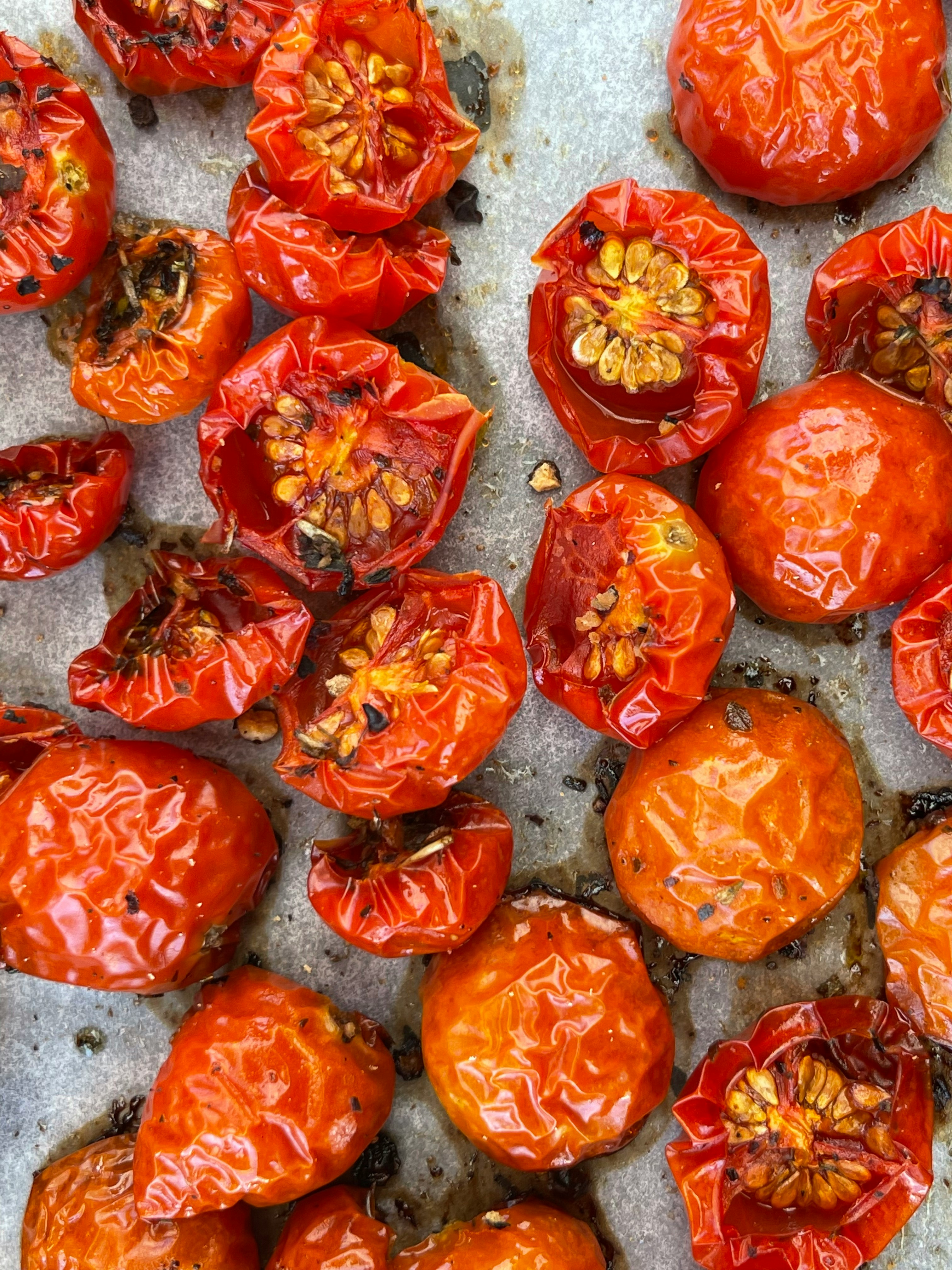
Photograph: John Cameron (Unsplash)
Air Fryer, Dehydrator and Freezer Notes
Can you make sunblush tomatoes in an air fryer?
Yes, you can make sunblush tomatoes in an air fryer, although the smaller space means you may need to work in batches. Halve the cherry tomatoes, toss them gently with olive oil, salt, sugar, and thyme, then arrange them cut-side up in the air fryer basket or tray. Cook at 120°C / 250°F for around 2–3 hours, checking regularly, until the tomatoes are wrinkled, concentrated, and semi-dried but still soft.
Air fryer models vary quite a lot, so treat the timing as a guide rather than a rule. If your air fryer runs hot, lower the temperature slightly or check more frequently so the tomatoes dry gently rather than scorch.
Can you dry tomatoes without an oven?
A dehydrator is the most reliable oven-free method because it gives steady, controlled low heat. Arrange the halved tomatoes cut-side up on the dehydrator trays and dry at a low temperature until they are wrinkled, sweet, and semi-dried, but still pliable.
Traditional sun-drying is much less predictable at home, especially in the UK. It needs consistently hot, dry weather, good airflow, and protection from insects and dust. For most home cooks, the oven, air fryer, or dehydrator will give safer and more consistent results.
Can you freeze sunblush tomatoes?
Yes. Freezing is the best option if you want to keep homemade sunblush tomatoes for longer than a few days. Once the tomatoes have cooled completely, pack them into small airtight containers or freezer bags and freeze in portions. You can then add them to pasta sauces, stews, pizzas, roasted vegetables, or warm grain bowls as needed.
If freezing, there is no need to cover the tomatoes in olive oil first. Freeze them as they are, then add olive oil, herbs, or fresh garlic later when you are ready to use them.
Ways to Use Sunblush Tomatoes
Once you have a jar of homemade sunblush tomatoes in the fridge, they become one of those small ingredients that quietly improves almost everything. Their sweetness is concentrated enough to bring depth to simple dishes, but because they stay soft and semi-dried, they are much more versatile than the tougher, fully dried tomatoes you often find in jars.
For easy lunches, scatter them through green salads, grain bowls, couscous, or pasta salads with rocket, basil, mozzarella, feta, olives, or toasted pine nuts. They are also excellent on toast, especially with ricotta, cream cheese, goat’s cheese, avocado, or a little cured ham.
For something more substantial, fold them through warm pasta, tuck them into omelettes and frittatas, spoon them over grilled chicken or fish, or use them as a quick topping for homemade pizza. They also work beautifully in richer tomato-based dishes, including this pappardelle with slow-roast tomato and pancetta ragù.
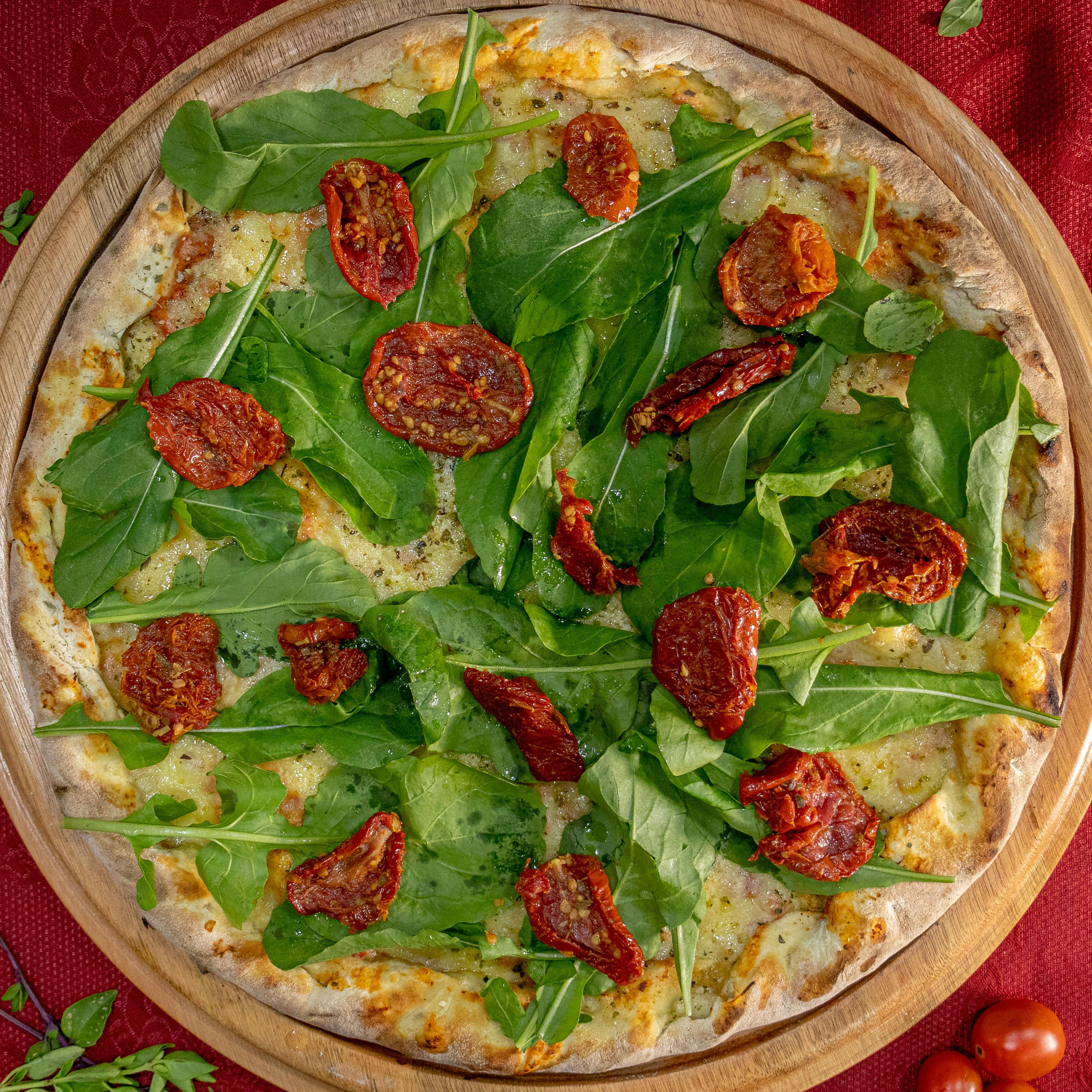
Photograph: Marcelo Oliveira Santana (Pexels)
They are particularly good for relaxed entertaining. Serve them as part of an antipasti-style spread with olives, cheese, cured meats, good bread, and something crisp alongside. For more ideas on building generous sharing boards, see this guide to charcuterie boards.
What to Serve With Sunblush Tomatoes
Sunblush tomatoes are lovely with soft cheeses, burrata, mozzarella, ricotta, goat’s cheese, olives, grilled vegetables, cured meats, and warm bread. They also sit beautifully alongside black olive focaccia, no-knead ciabatta, or a quick pizza, which makes them useful for easy summer lunches and informal antipasti-style suppers.
Useful Kit for Making Sunblush Tomatoes
You do not need much specialist equipment for this recipe, but a sturdy baking tray, baking parchment, a clean glass jar, and a good small spoon or silicone spatula make the process easier. If you often make simple preserving-style recipes, antipasti plates, or summer salads, it is worth keeping a few practical jars, small serving bowls, and a reliable olive oil bottle to hand.
For practical kitchen pieces I use for recipes like this, see my curated kitchen edit.
Recipe Variations: Herbs, Garlic and Different Tomatoes
Thyme is lovely here because it gives the tomatoes a gentle, savoury lift without overpowering their sweetness, but it is not the only option. Rosemary brings a more resinous, Mediterranean flavour, while oregano leans the recipe towards pizza, pasta, and antipasti-style dishes. Basil is best added after roasting rather than before, as its softer leaves can darken and lose their brightness in the oven.
For a little warmth, add a small pinch of chilli flakes before roasting. If you like garlic, add one or two very thin slices to the roasting tray for flavour, or stir fresh garlic through only when you are serving the tomatoes. If storing tomatoes in oil, keep the jar refrigerated and use within the recommended storage window rather than treating it as a shelf-stable preserve. The Food Standards Agency’s botulism guidance notes that home bottling ingredients such as herbs or garlic in oil can be risky, so this is a fridge recipe, not a long-life preserve.
You can also use mixed cherry tomatoes for a more colourful jar. Red, orange, yellow, and dark-skinned varieties all roast slightly differently, which gives the finished tomatoes a beautiful mix of sweetness, acidity, and colour. Just try to keep the tomatoes a similar size so they semi-dry at roughly the same rate.
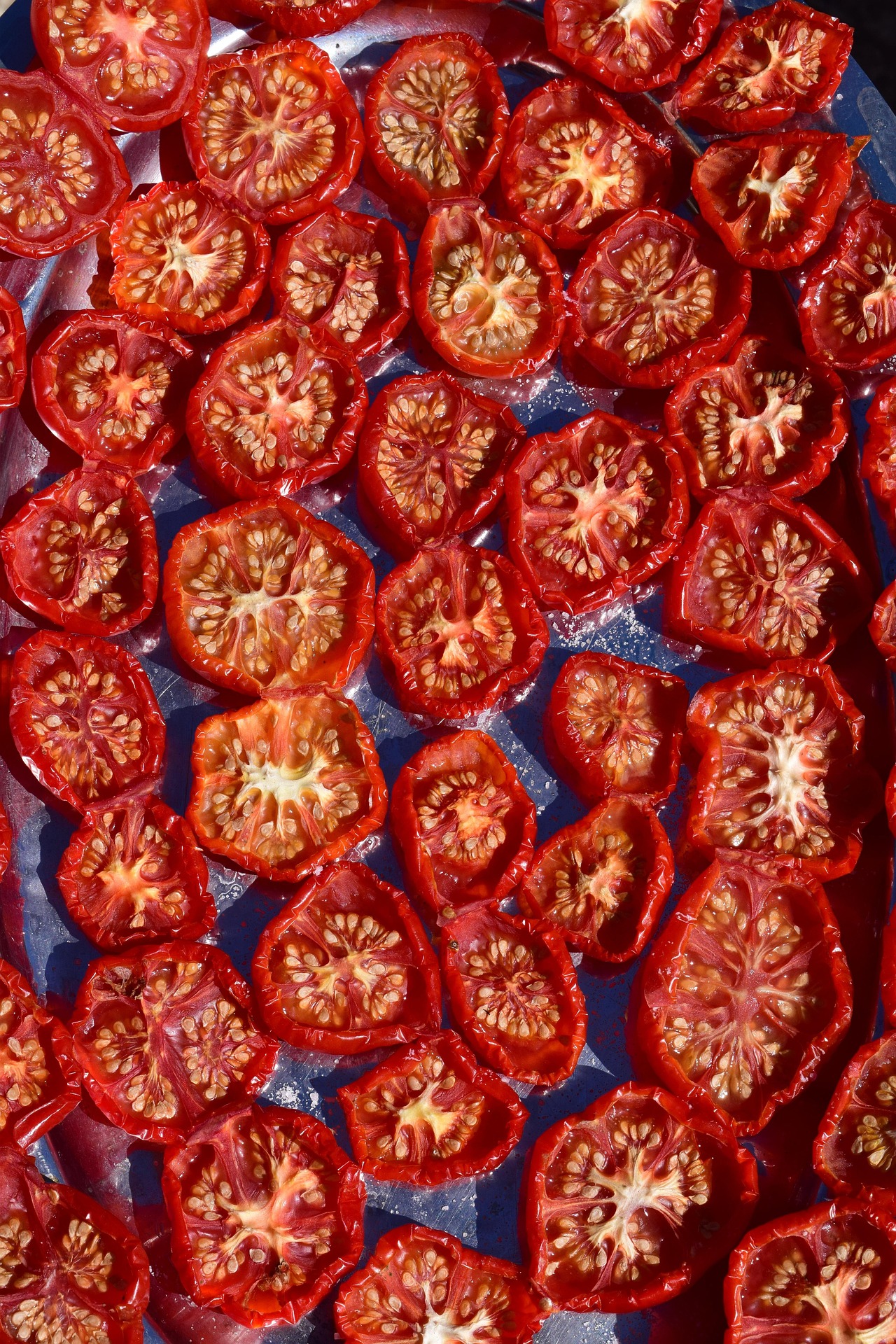
Photograph: Ulleo (Pixabay)
Sunblush Tomatoes FAQs
Can I use larger tomatoes?
Yes, you can use larger tomatoes, but cherry tomatoes are usually better for this recipe. They are naturally sweet, easy to halve, and hold their shape well as they slowly semi-dry. If using larger tomatoes, cut them into wedges or thick slices and expect the cooking time to vary depending on their water content.
Why make semi-dried tomatoes instead of fully sun-dried tomatoes?
Semi-dried tomatoes stay softer, juicier, and more immediately usable than fully dried tomatoes. They still have that concentrated tomato sweetness, but they are plump enough to spoon straight into salads, pasta, sandwiches, antipasti plates, and quick lunches without needing to be rehydrated first.
Can I make sunblush tomatoes without an oven?
A dehydrator is the best oven-free option because it gives you steady, controlled low heat. A sunny windowsill can work in very warm, dry conditions, but it is less predictable in the UK and should be treated as a short-term drying method rather than a preserving method. The tomatoes still need to be stored safely afterwards.
How long do homemade sunblush tomatoes keep?
These homemade sunblush tomatoes should be kept in a clean jar in the fridge, fully covered with olive oil, and used within about one week for best quality. For longer storage, freeze them in small portions once cooled. They are not a shelf-stable preserve, and should not be kept at room temperature.
Can I add garlic?
You can add a little garlic to the roasting tray for flavour, but avoid treating garlic-in-oil as a long-life storecupboard ingredient. If you want a stronger garlic flavour, add freshly grated or finely sliced garlic when serving the tomatoes rather than storing it in the jar.
Can I freeze sunblush tomatoes?
Yes. Once the tomatoes have cooled completely, freeze them in small airtight containers or freezer bags. Freezing is the better option if you want to keep them for longer than a few days, and it makes it easy to add a handful to pasta sauces, stews, pizza toppings, or roasted vegetables later.
Final Thoughts
Homemade sunblush tomatoes are one of those small recipes that make a kitchen feel better stocked. They take very little hands-on effort, but the reward is a jar of soft, sweet, deeply flavoured tomatoes that can pull a simple lunch, pasta dish, salad, or antipasti plate together in minutes.
They are especially worth making when cherry tomatoes are properly ripe and full of flavour, but they are also a useful way to improve less-than-perfect supermarket tomatoes. Slow roasting gives them depth, sweetness, and that lovely semi-dried texture without turning them tough or chewy.
Use them within the fridge storage window, freeze a batch for later, or fold them into something more substantial, such as this pappardelle with slow-roast tomato and pancetta ragù. However you use them, they are a simple way to bring a little concentrated summer flavour to the table, even when the weather outside has other ideas.
Stay in Touch
Culinary Travels publishes destination guides, seasonal recipes, and food-led travel features from the UK and beyond.
Follow for new articles and updated travel resources:
Facebook | Instagram | Pinterest
Newsletter
Receive new guides, recipes, and occasional travel planning notes by email: Subscribe here
Reader feedback and local recommendations are always welcome via the contact page.
©2026 Culinary Travels. Culinary Travels is written and edited by Georgina Ingham | Website designed by The Smarter Web Company
What Our Followers Say
Our list of things to do in Cork has just expanded hugely thanks to Culinary Travels.
Triskel Art Centre Cork, via Twitter
“Tried this last night and it was delicious!”
Reader feedback via Pinterest, Yangzhou Fried Rice Recipe
"Oh yum!!! I could eat one or two right now!"
Sami Tamimi, via Instagram, on Ma’amoul Cookies
"Georgina was great to work with, quick to respond, and is a excellent content writer - would highly recommend"
Nick S - Get Blogged
“A simple no-knead dough transformed into beautiful, rustic rolls.”
Reader feedback via Pinterest, No-Knead Ciabatta Rolls Recipe