
Articles


Curry in a Hurry: 20-Minute Thai Chicken Curry
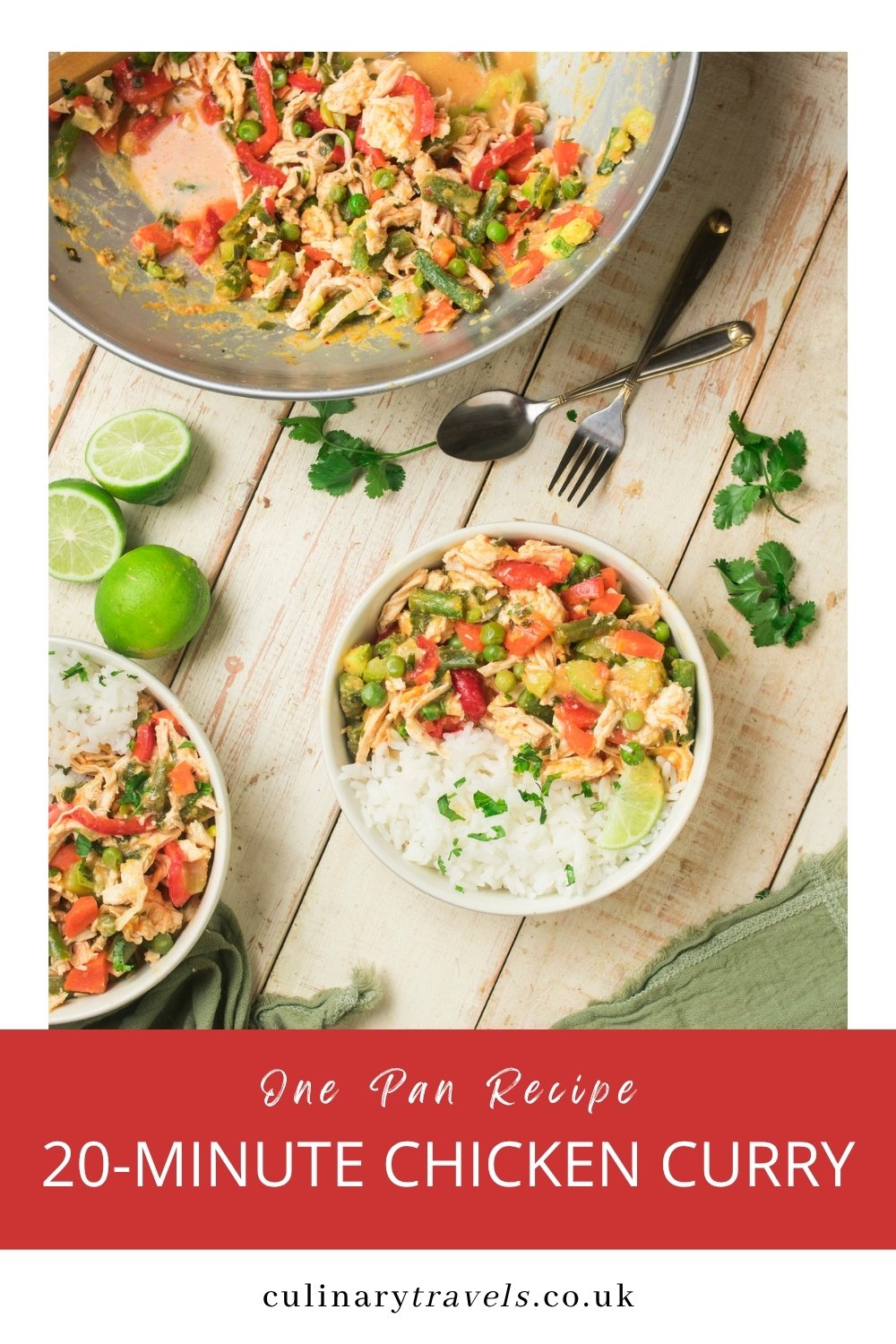
RECIPE
This quick Thai-inspired chicken curry turns cooked or leftover chicken into a creamy coconut curry in around 20 minutes. Use red or green Thai curry paste, whatever vegetables you have to hand, and adjust the stock to make the sauce as thick or loose as you like.
Some articles on Culinary Travels may contain affiliate links, meaning I may earn a small commission at no extra cost to you. I only recommend places, experiences and products that fit the editorial tone and standards of the site.
Update note: This recipe was originally published in January 2016 and has been fully updated in September 2026 with a new recipe, method and original photography.
Some recipes earn their place because they are impressive. Others earn it because they save dinner. This Curry in a Hurry is very firmly in the second camp.
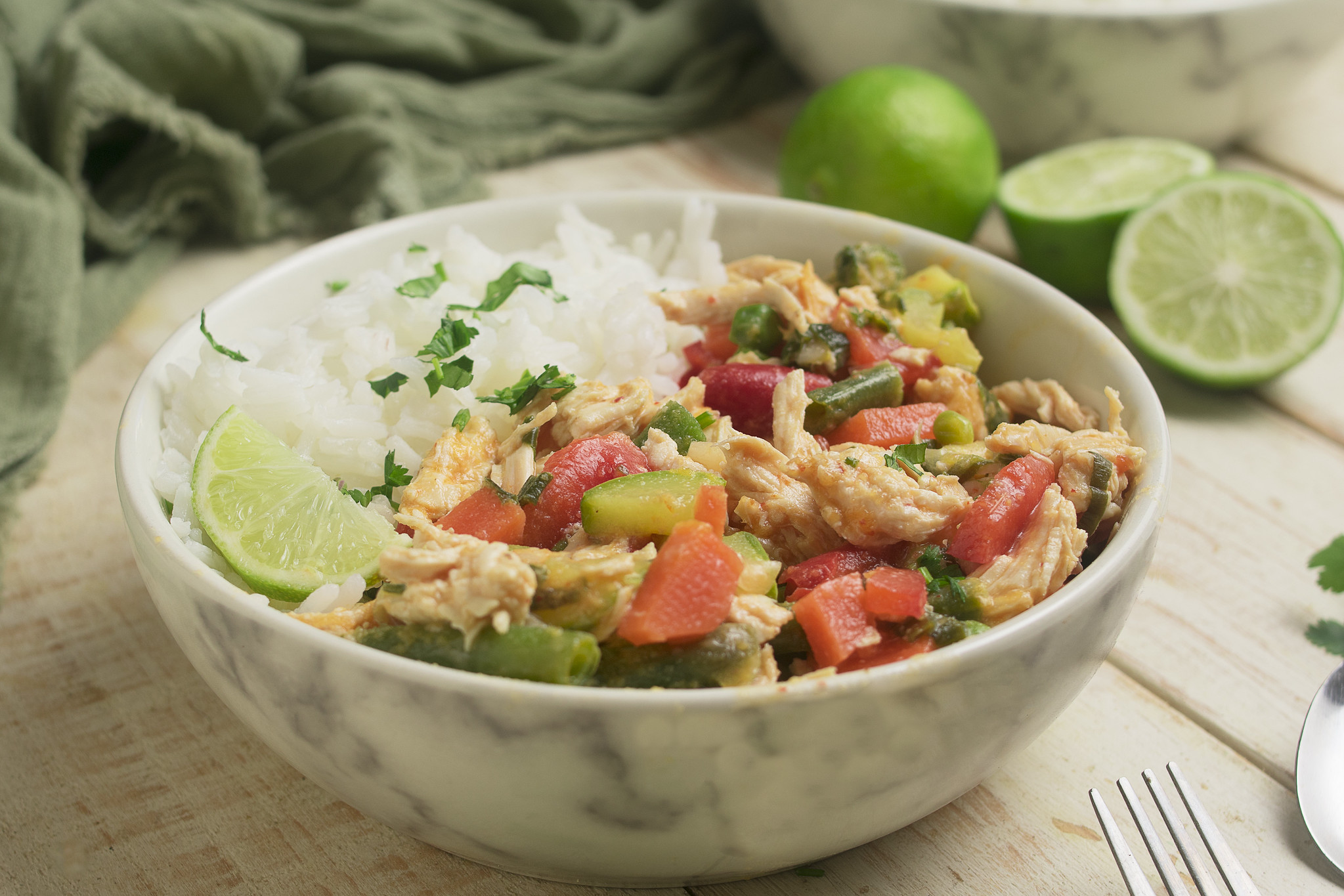
Photograph: Max Gagliano
Using cooked chicken means there is no waiting around for meat to cook through, while shop-bought Thai curry paste, coconut milk and a few vegetables do most of the heavy lifting. From chopping board to table, the whole thing can be ready in around 20 minutes.
It is particularly useful after a roast chicken, when there is enough meat left for another meal but perhaps not quite enough enthusiasm for anything complicated. Frozen vegetables work perfectly well too, making this one of those recipes that can rescue dinner without a special shopping trip.
This recipe takes its name and inspiration from Nigella Lawson's Curry in a Hurry from Nigella Express. My version has evolved considerably over the years and now uses cooked chicken, either red or green Thai curry paste and a deliberately quick method designed for busy weeknights.
Quick Answer: How Do You Make Curry in a Hurry?
This is a Thai-inspired weeknight curry rather than a traditional Thai curry recipe: the emphasis is on speed, flexibility and making good use of cooked chicken.
To make Curry in a Hurry, briefly cook spring onions and Thai red or green curry paste, then add coconut milk, chicken stock and vegetables. Once the vegetables are almost tender, stir in cooked chicken and heat until piping hot throughout.
Season with fish sauce, finish with fresh lime, then serve with jasmine rice, herbs and sliced chilli. Because the chicken is already cooked, the whole curry can be on the table in around 20 minutes.
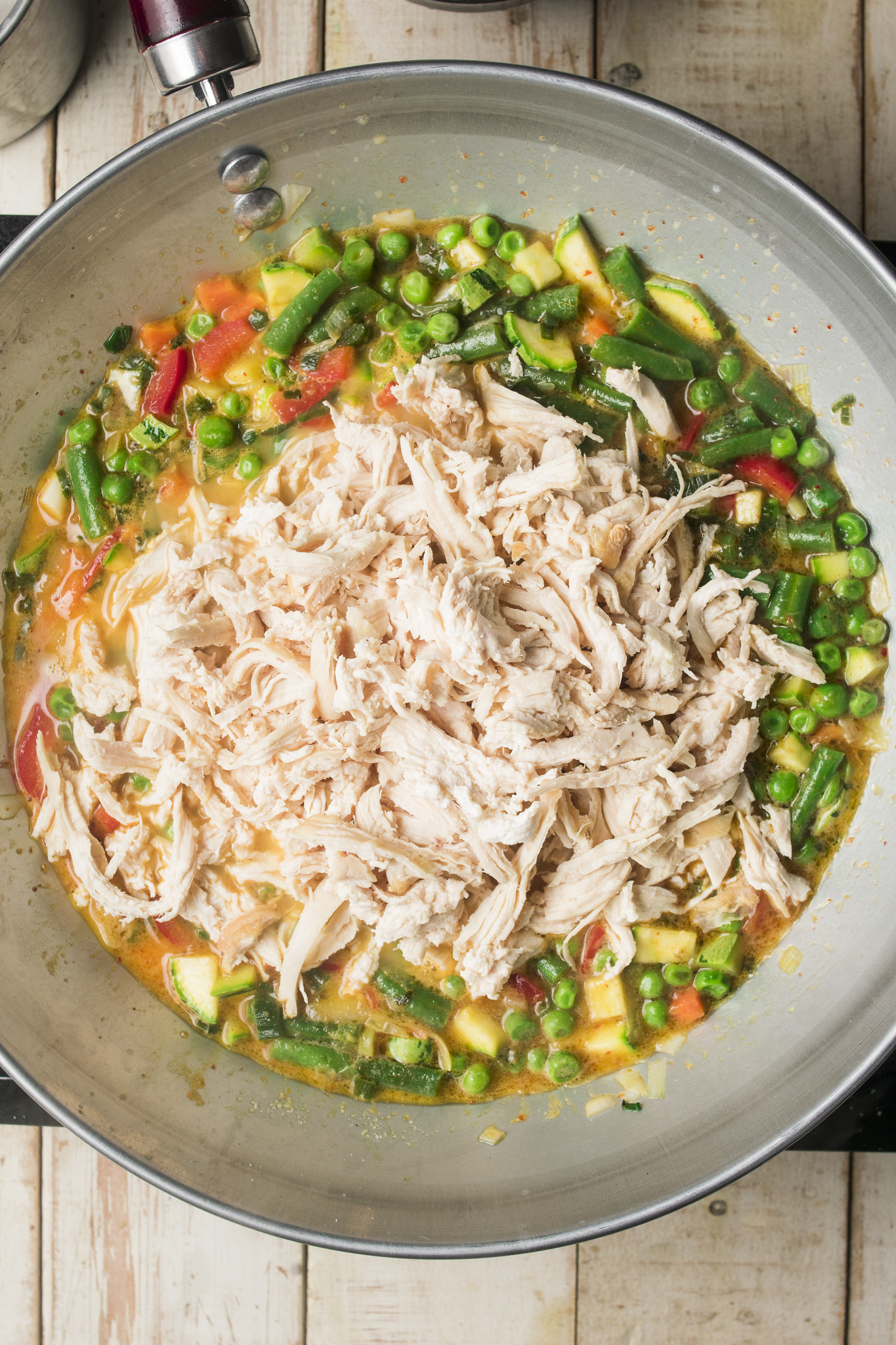
Photograph: Max Gagliano
How This Curry Comes Together in 20 Minutes
The biggest shortcut is starting with chicken that is already cooked. Shredded roast chicken is ideal, but diced or sliced chicken works just as well. It only needs enough time in the sauce to become piping hot, rather than cooking from raw.
Shop-bought Thai curry paste takes care of the aromatic base, while coconut milk gives the sauce richness and body. A little fish sauce adds savoury depth, lime brings freshness, and an optional teaspoon of brown sugar helps balance the flavours.
The vegetables can be equally straightforward. Green beans, peas, peppers and courgette all work particularly well, and frozen vegetables are absolutely fine. There is no need for a precise vegetable mix: use whatever works with what you already have.
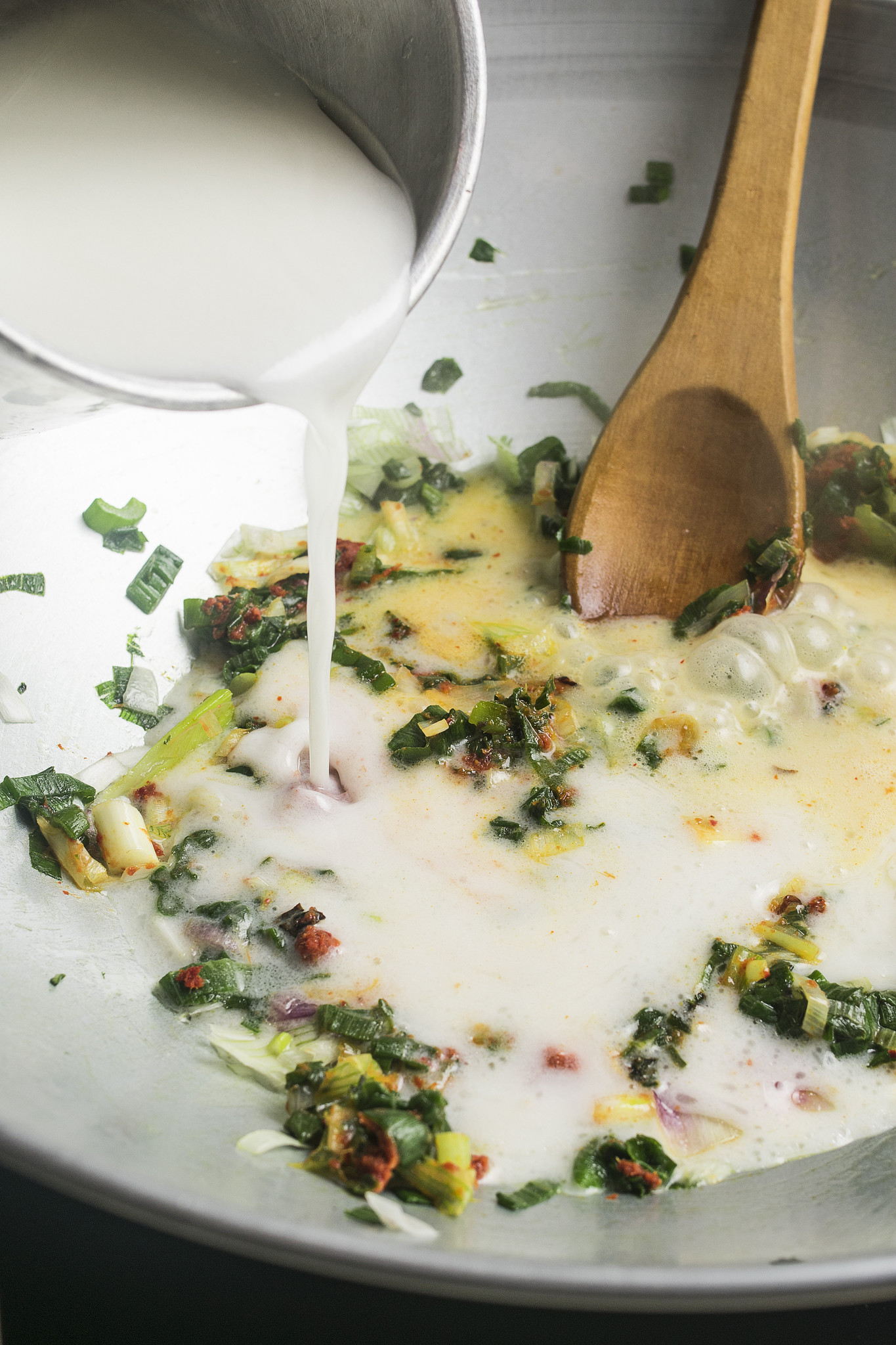
Photograph: Max Gagliano
Red or Green Thai Curry Paste?
Either works here. The photographs show the curry made with red Thai curry paste, but you can use green curry paste instead without changing the method.
There is a difference in flavour. Red curry paste is traditionally made with dried red chillies and tends to have a deeper, rounder flavour, while green curry paste uses fresh green chillies and herbs, giving it a brighter, fresher and more aromatic character. Both work well with coconut milk and chicken, so it really comes down to what you enjoy or already have in the fridge.
The heat of shop-bought Thai curry pastes varies considerably between brands, so do not assume green will always be hotter than red, or vice versa. If you know your chosen paste, use 2 tablespoons for a gentler curry or 3 tablespoons for a stronger flavour. If you are trying a new brand, I would start with 2 tablespoons.
Because the curry paste provides much of the flavour, use a brand you already know and like if possible. There is no need to make curry paste from scratch here: this is deliberately a quick weeknight recipe, and a good shop-bought paste does the job perfectly well.
Ingredient Notes
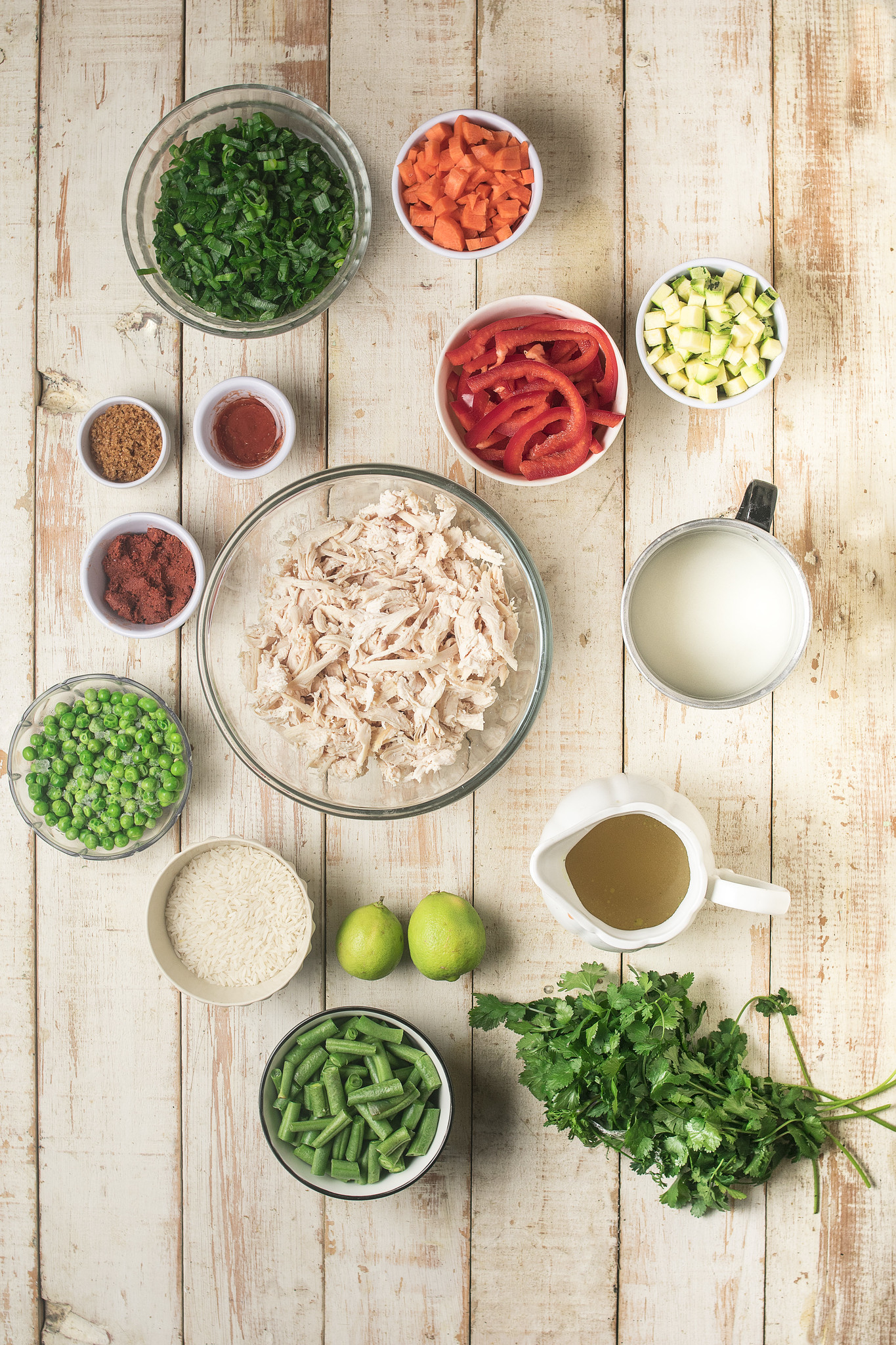
Photograph: Max Gagliano
Cooked chicken: Leftover roast chicken is ideal, but any simply cooked chicken can be used. Shred, slice or dice it into bite-sized pieces before adding it to the curry.
Thai curry paste: Use red or green according to what you have and the flavour you prefer. Shop-bought pastes vary considerably in heat and saltiness, so adjust the amount to suit your chosen brand.
Coconut milk: Full-fat coconut milk gives the sauce the best richness and texture. Give the can a good shake before opening if the coconut cream has separated.
Fish sauce: A small amount adds saltiness and savoury depth. Taste before adding more, particularly if your curry paste or stock is already quite salty.
Lime: Add the juice at the end of cooking so its fresh acidity stays bright rather than becoming muted by prolonged heat.
Vegetables: Fresh or frozen both work. Peas, green beans, peppers, courgette and broccoli are all good choices for this quick method.
How Thick Should This Curry Sauce Be?
I prefer this curry with a relatively thick sauce that coats the chicken and vegetables, so I use just 100ml of stock alongside the coconut milk.
If you prefer a looser curry with more sauce, add another 50–100ml of stock. Add it gradually until you reach the consistency you like.
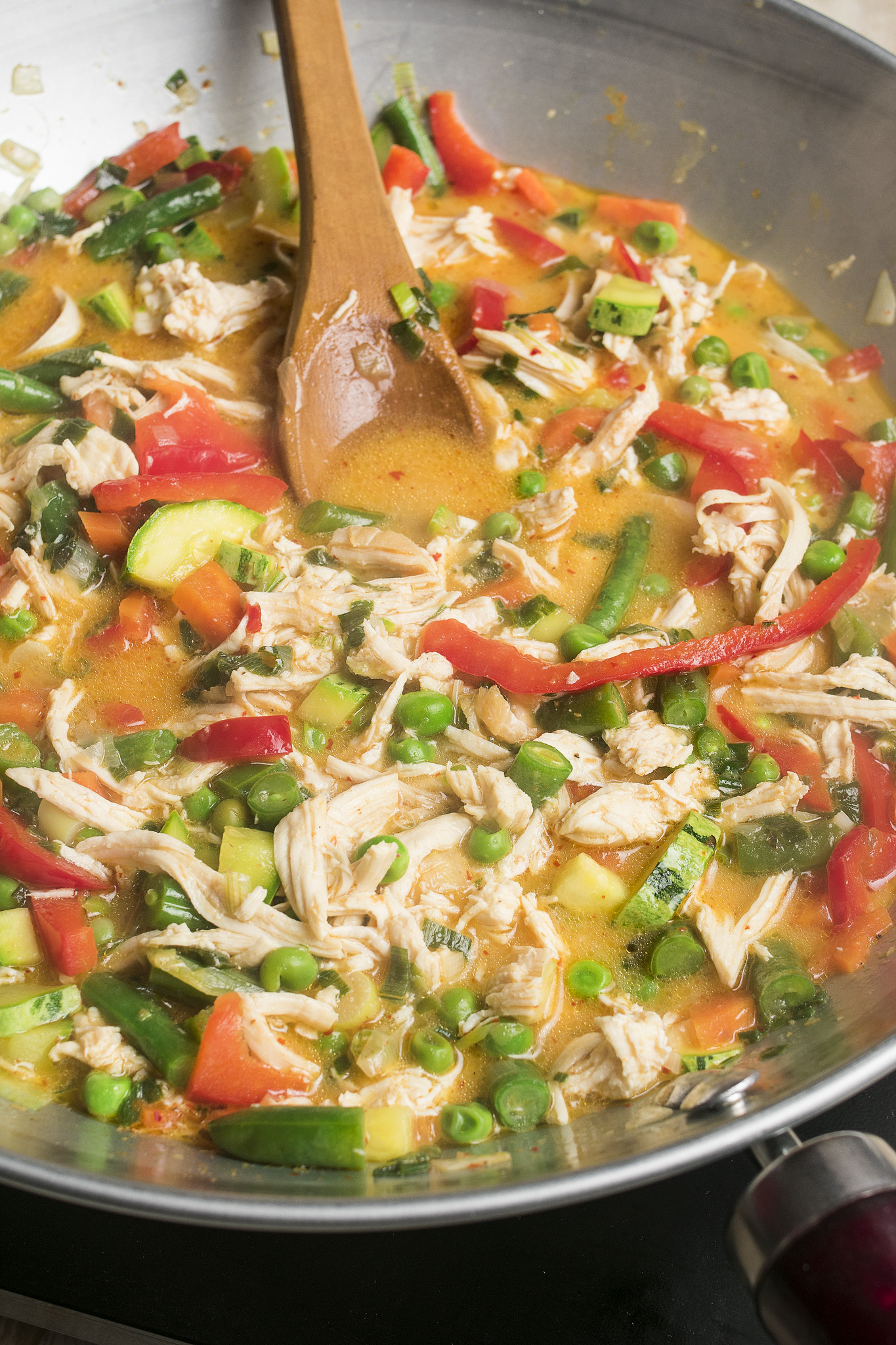
Photograph: Max Gagliano
Curry in a Hurry: 20-Minute Thai Chicken Curry
Inspired by Nigella Lawson's Curry in a Hurry from Nigella Express.
A quick Thai-inspired chicken curry made with cooked chicken, coconut milk and red or green curry paste. Ideal for using leftovers and ready in around 20 minutes.
Serves: 4
Prep time: 5 minutes
Cook time: 15 minutes
Total time: 20 minutes
Ingredients
1 tbsp neutral cooking oil
4 spring onions, finely sliced
2–3 tbsp Thai red or green curry paste
1 x 400ml can full-fat coconut milk
100ml chicken stock, plus extra if needed
300–400g mixed vegetables, such as green beans, peas, peppers or courgette
350–400g cooked chicken, shredded, pulled or diced
1 tbsp fish sauce
1 tsp soft brown sugar, optional
Juice of ½ lime
Fresh coriander or Thai basil, to serve
Fresh red chilli, thinly sliced, to serve
Lime wedges, to serve
Cooked jasmine rice, to serve
Method
1. Heat the oil in a large frying pan, sauté pan or wok over a medium-high heat. Add the spring onions and cook for around 1 minute.
2. Add the curry paste and cook for 30–60 seconds, stirring, until fragrant.
3. Pour in the coconut milk and 100ml chicken stock. Stir until the curry paste is evenly combined with the liquid.
4. Add the vegetables and simmer for around 5 minutes, or until almost tender.
5. Stir in the cooked chicken, fish sauce and brown sugar, if using. Simmer for another 3–5 minutes, until the chicken is piping hot throughout and the vegetables are cooked.
6. Remove from the heat and stir in the lime juice. Taste and adjust with a little more fish sauce or lime if needed.
7. Serve immediately with jasmine rice, finished with fresh coriander or Thai basil, sliced chilli and lime wedges.
Recipe Notes
For a looser sauce: Add another 50–100ml chicken stock, a little at a time, until you reach the consistency you prefer.
For a milder curry: Use 2 tablespoons of curry paste rather than 3. The heat varies considerably between brands, so take that into account if you are using a paste you have not tried before.
Using leftover chicken: Cooked roast chicken works particularly well. Keep it chilled until needed and heat it in the curry until steaming hot throughout. See the storage and food-safety advice below if you are cooking with leftovers.
Vegetables: Fresh or frozen vegetables both work. Green beans, peas, peppers and courgette are particularly good choices.
How to Adapt This Curry
This recipe is deliberately flexible. Roast chicken is my usual choice, but you can easily change the vegetables according to what you have. Frozen peas and green beans are particularly convenient, while peppers, courgette and broccoli all work well too.
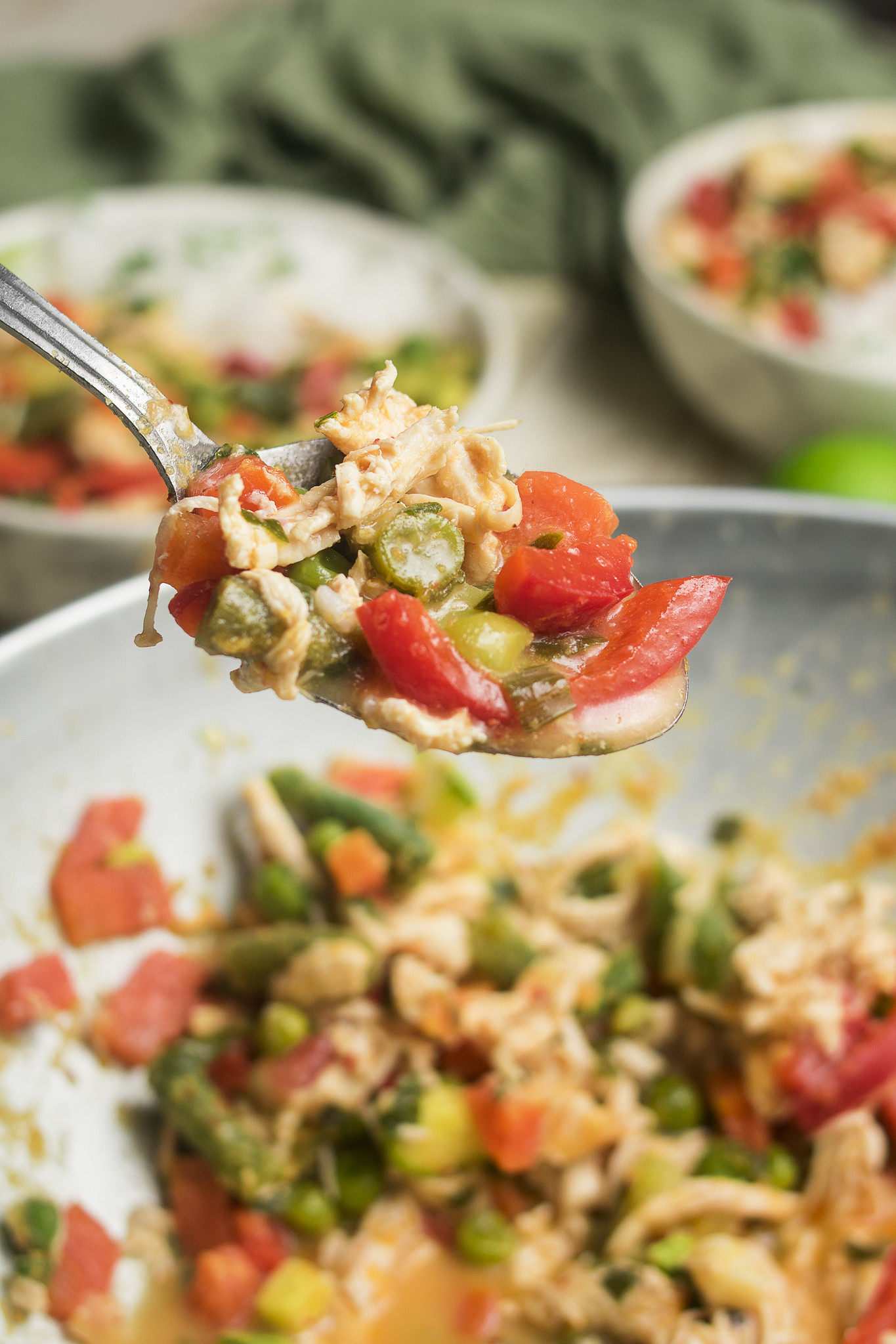
Photograph: Max Gagliano
For a meat-free version, replace the chicken with firm tofu or extra vegetables, use vegetable stock and swap the fish sauce for soy sauce or tamari. If you are cooking for vegetarians or vegans, check the ingredients on the curry paste as some contain fish or shrimp.
What to Serve With Curry in a Hurry
Steamed jasmine rice is my first choice because it keeps the meal simple and lets the curry do the talking. Cook the rice while the curry is simmering and everything should be ready at roughly the same time.
For something a little richer, coconut rice works beautifully with the creamy coconut sauce.
Plain rice noodles are another easy option. Whichever you choose, serve the curry with lime wedges, fresh coriander or Thai basil and sliced chilli so everyone can add a little extra freshness and heat at the table.
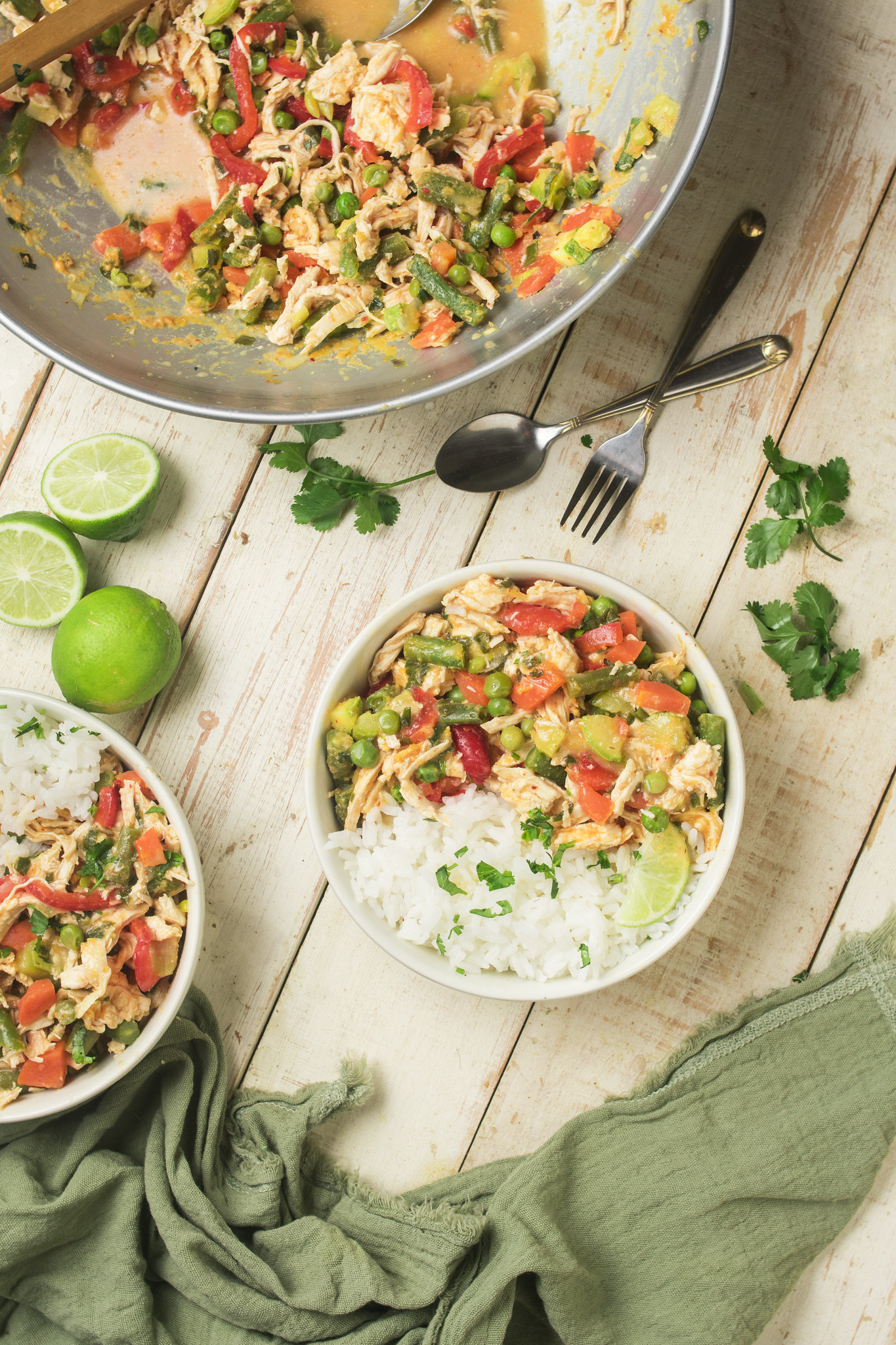
Photograph: Max Gagliano
Storage and Food Safety
Because this recipe is designed to use previously cooked chicken, there is one important difference from a curry made with raw chicken: adding the chicken to the hot curry counts as reheating it.
Keep the cooked chicken refrigerated until you are ready to use it, then heat it in the curry until it is steaming hot throughout. The Food Standards Agency advises that reheated food should be steaming hot all the way through and should only be reheated once, so I would not chill the finished chicken curry with the intention of reheating it again later.
For that reason, make only as much curry as you expect to eat. If you have more cooked chicken than you need, keep the unused portion chilled separately and use it within its safe storage time rather than adding all of it to the curry.
Frequently Asked Questions
Can I use light coconut milk?
Yes, although the finished curry will be a little less rich and the sauce may be thinner. Full-fat coconut milk gives the best creamy texture, but light coconut milk is fine if that is what you prefer or already have.
Can I make Curry in a Hurry without fish sauce?
Yes. Soy sauce or tamari can be used instead, although the flavour will be slightly different. If you are cooking for vegetarians or vegans, remember to check the curry paste too, as some contain fish or shrimp.
Can I use cooked turkey instead of chicken?
Yes. Cooked turkey works very well and can be used in exactly the same way as cooked chicken, making this a useful recipe for using up leftovers after a roast or festive meal.
Can I use raw chicken instead?
This version of Curry in a Hurry is written specifically for cooked chicken, which is what keeps the cooking time so short. Raw chicken is not a direct swap because it needs additional cooking time and must be cooked through before serving.
Can I use curry powder instead of Thai curry paste?
I would not recommend it. Thai red or green curry paste contains aromatics as well as spices and gives this curry its characteristic flavour. Curry powder has a very different flavour profile and will not give the same result.
How spicy is Curry in a Hurry?
The heat depends largely on the curry paste you use, as brands vary considerably. Start with 2 tablespoons for a gentler curry, or use 3 tablespoons if you prefer more heat and a stronger curry flavour.
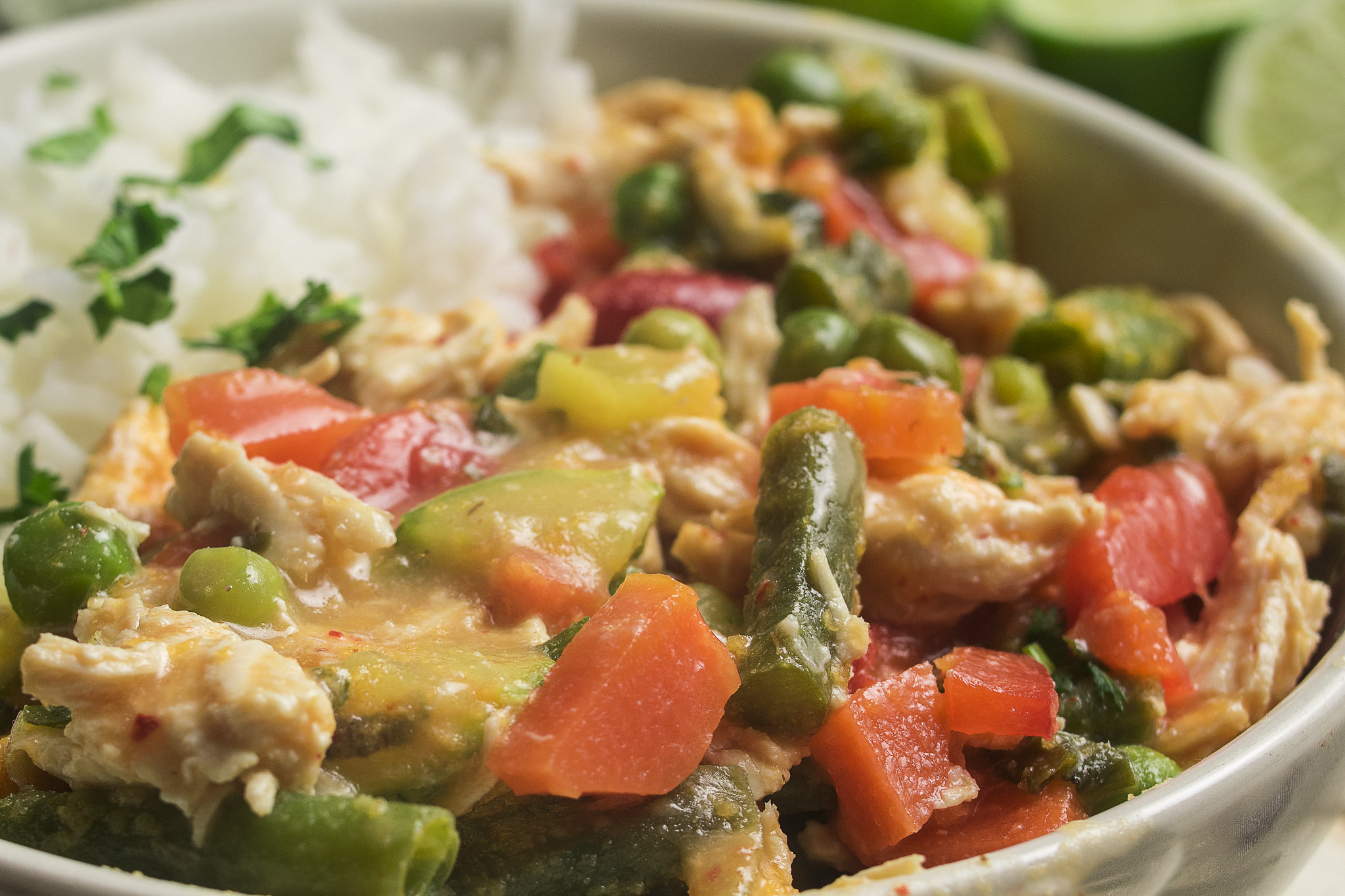
Photograph: Max Gagliano
Final Thoughts
Curry in a Hurry has been part of Culinary Travels for a long time, but this updated version finally feels like the recipe I actually want it to be: quick, flexible and genuinely useful on a busy evening.
Starting with cooked chicken is what makes the 20-minute promise realistic, while red or green curry paste, coconut milk and whatever vegetables you have to hand keep it adaptable rather than prescriptive.
For me, it is exactly the sort of recipe worth keeping in the back pocket for nights when dinner needs to happen quickly but you still want something warm, colourful and full of flavour. If there is leftover roast chicken in the fridge, even better.

Photography for this recipe was commissioned by Culinary Travels and shot by Max Gagliano. Culinary Travels holds full usage rights for website, social media and print use.
Stay in Touch
Culinary Travels publishes destination guides, seasonal recipes, and food-led travel features from the UK and beyond.
Follow for new articles and updated travel resources:
Instagram | X | Facebook | Pinterest
Newsletter
Receive new guides, recipes, and occasional travel planning notes by email: Subscribe here
Reader feedback and local recommendations are always welcome via the contact page.
.png)
©2026 Culinary Travels. Culinary Travels is written and edited by Georgina Ingham | Website designed by The Smarter Web Company
What Our Followers Say
"A highly complimentary article ... showcasing why the English Market remains one of Ireland's premier food destinations"
Cork City Council via Facebook
"Our list of things to do in Cork has just expanded hugely thanks to Culinary Travels."
Triskel Art Centre Cork, via Twitter
“Tried this last night and it was delicious!”
Reader feedback via Pinterest, Yangzhou Fried Rice Recipe
"Oh yum!!! I could eat one or two right now!"
Sami Tamimi, via Instagram, on Ma’amoul Cookies
"Georgina was great to work with, quick to respond, and is a excellent content writer - would highly recommend"
Nick S - Get Blogged
“A simple no-knead dough transformed into beautiful, rustic rolls.”
Reader feedback via Pinterest, No-Knead Ciabatta Rolls Recipe