
Blog


Traditional Hot Cross Buns Recipe

Some posts on Culinary Travels may contain affiliate links, meaning I may earn a small commission at no extra cost to you. I only recommend products, places and experiences that fit the editorial tone and standards of the site.
Update Note: Originally published March 2016. Fully revised and retested in February 2026 with clearer instructions, updated timings and improved baking guidance.
Hot cross buns are one of those bakes people assume are complicated until they make them once. This is a traditional British hot cross buns recipe: a soft, enriched yeasted dough scented with spice and dried fruit, proved slowly and baked until tender enough to pull apart while still warm. I make them every Easter, and the moment the orange zest and cinnamon hit the oven the kitchen smells unmistakably like Good Friday.
They don’t require a stand mixer, specialist flour, or any unusual technique — just time for the dough to rise properly and a little patience when shaping. Below you’ll find the step-by-step method I use at home, including how the dough should feel after kneading and how to tell when it has proved enough. Once you’ve baked them once, they stop feeling like a seasonal project and start becoming a habit.
In parts of Britain, Easter baking took other forms too. In Cornwall, a saffron-rich fruit loaf played a similar role at the spring table, and I’ve included my version further down the page as a regional companion to the buns.
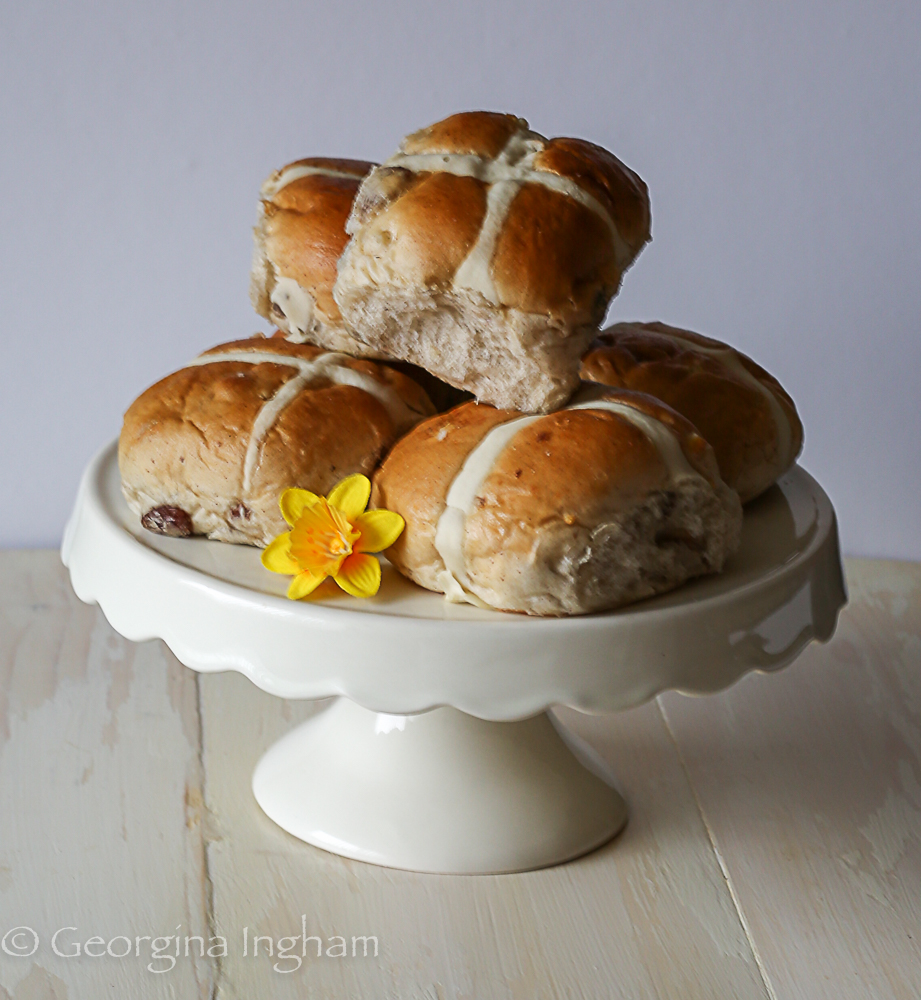
What Are Hot Cross Buns?
Hot cross buns are traditional British sweet buns made from an enriched yeast dough containing butter, eggs, warming spices and dried fruit. They are marked with a cross before baking and glazed while hot, giving them their distinctive soft, slightly sticky finish.
Unlike ordinary bread rolls, the dough is richer and slower-risen, which creates a tender crumb rather than a crusty loaf. The spices — usually cinnamon and nutmeg — and citrus zest give the buns their recognisable Easter aroma. They are traditionally eaten on Good Friday, although most British bakeries now sell them throughout spring.
The cross originally had religious symbolism, but in baking terms it also helps identify the buns and provides a slightly softer top where the glaze settles. The combination of enriched dough, fruit and spice places them closer to a light brioche than to everyday bread.
Before You Start Baking
These are traditional hot cross buns made with an enriched yeast dough, so the key to success is time rather than difficulty. The dough should feel soft and slightly tacky after kneading — not dry and not sticky enough to cling to your hands. A slow rise is what gives the buns their light texture.
I use fast-action (instant) yeast, which can be mixed straight into the flour. If you are using dried active yeast instead, dissolve it first in warm milk or water and allow it to foam before adding. The liquid should feel warm to the touch, not hot; too much heat will kill the yeast and prevent the buns rising.
Don’t reduce the butter or eggs. They enrich the dough and create the tender crumb that makes hot cross buns different from ordinary bread rolls. When the buns are properly proved they will look slightly puffy and spring back slowly when pressed with a fingertip.
Bake until golden, then glaze while still hot — that final step gives the characteristic soft, shiny top and helps keep the buns tender.
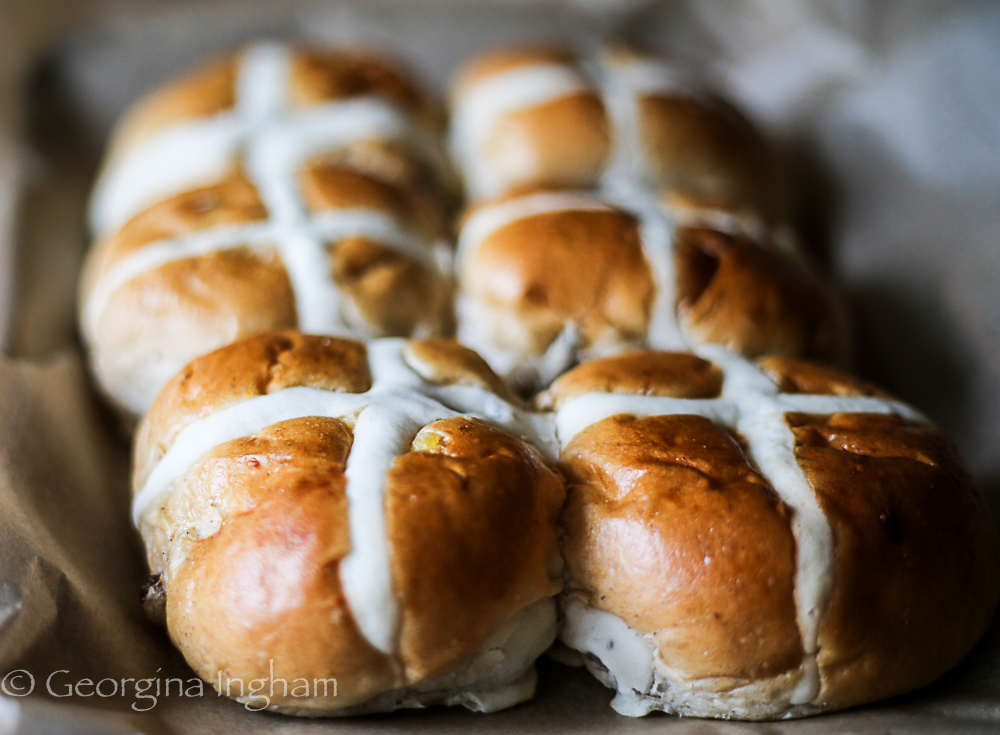
Traditional Hot Cross Buns Recipe
Makes 12 buns
Prep time: 30 minutes
Proving time: about 3 hours
Bake time: 25 minutes
These are soft, lightly spiced British hot cross buns made from an enriched yeast dough with citrus, dried fruit and marzipan. They are designed to be pulled apart and eaten warm.
Ingredients
For the dough
250 ml full-fat milk
Zest of 2 oranges
50 g butter, plus extra for greasing
500 g strong white bread flour (plus extra for dusting)
½ teaspoon ground cinnamon
85 g caster sugar
7 g sachet fast-action dried yeast
1 teaspoon fine salt
1 egg, beaten
200 g marzipan
100 g mixed dried fruit
50 g mixed peel
For the crosses
140 g plain flour
Water, to make a thick paste
For the glaze
1 tablespoon blood orange curd
1–2 teaspoons warm water
Method
1. Warm the milk with the orange zest in a small saucepan until steaming but not boiling. Remove from the heat, add the butter and stir until melted. Leave to cool until just warm to the touch (hot liquid will kill the yeast).
2. In a large bowl or stand mixer, combine the flour, cinnamon, sugar, yeast and salt. Add the warm milk mixture and beaten egg.
3. Knead for about 10 minutes (or 12–15 minutes by hand) until the dough becomes smooth and elastic. It should feel soft and slightly tacky but not stick heavily to your hands.
4. Place the dough in a lightly greased bowl, cover, and leave in a warm place for about 2 hours or until doubled in size.
5. Tip the dough onto a lightly floured surface and gently press out the air. Roll into a rectangle roughly 30 × 40 cm.
6. Grate the marzipan evenly over the dough, then scatter over the dried fruit and mixed peel. Roll up tightly from the long side into a log.
7. Cut into 12 equal pieces. Shape each piece into a smooth ball and arrange on a lined baking tray, leaving a small gap between each bun.
8. Cover loosely and leave to prove for about 1 hour, until noticeably puffed and slowly springing back when pressed with a fingertip.
9. Heat the oven to 180°C (fan 160°C).
10. Mix the flour for the crosses with enough water to form a thick paste. Spoon into a piping bag (or freezer bag with a corner snipped) and pipe a cross over each bun.
11. Bake for 22–25 minutes until deep golden brown and the buns sound hollow when tapped underneath.
12. Stir the blood orange curd with warm water to loosen slightly, then brush over the buns immediately after baking to glaze.
Serve warm with butter, or toast lightly the following day.
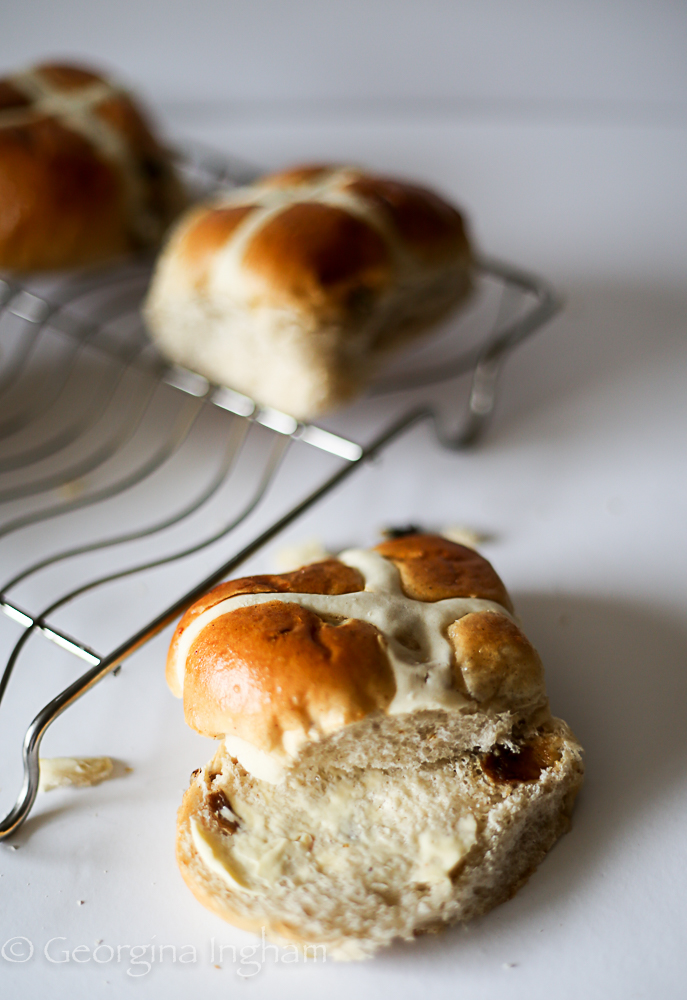
Hot Cross Buns Troubleshooting
Do I need a stand mixer?
No. Hand kneading works well and takes about 12–15 minutes. The dough should become smooth and elastic and slowly spring back when pressed.
Can I use regular yeast instead of fast-action yeast?
Yes. Activate it in warm milk with a little sugar until foamy before mixing.
Why didn’t my buns rise?
Usually the liquid was too hot or the room too cold. The dough should double in size; proving time matters more than the clock.
Why is the dough sticky?
It should be slightly tacky. Lightly flour hands rather than adding large amounts of flour, which makes dense buns.
Can I prove the dough overnight?
Yes. After the first rise, shape the buns, cover, and refrigerate. Let them sit at room temperature for 45–60 minutes before baking. The slower fermentation often improves flavour.
Can I swap the dried fruit?
Yes. Use raisins, currants, chopped apricots or dates. Keep roughly the same quantity to maintain the dough balance.
How do I get a neat cross?
Pipe a simple flour paste just before baking. It will expand naturally in the oven.
Can I make a smaller batch?
Halve the quantities and watch baking time — smaller batches bake slightly faster.
Can I make the buns ahead of time?
Yes. Bake them a day in advance and keep in an airtight container. Reheat briefly in a low oven to refresh the crumb.
Can I freeze hot cross buns?
Yes. Freeze once fully cooled, ideally without glaze. Defrost at room temperature and warm for a few minutes before serving.
Can I refrigerate them?
Avoid refrigeration — cold temperatures make bread stale faster by firming the starches.
How to Store Hot Cross Buns
Hot cross buns are at their best the day they are baked, when the crumb is still soft and the spices are warm. Store leftovers in an airtight container at room temperature for up to two days.
To refresh them, warm in a low oven (about 150°C) for 5–8 minutes or toast lightly. A little butter added while warm restores the softness.
For longer storage, freeze the buns once completely cool. Freeze without glaze if possible, then defrost at room temperature and warm briefly before serving. They reheat surprisingly well and regain much of their fresh texture.
Avoid refrigerating them — the cold temperature actually makes bread stale faster by firming the starches in the crumb.
Variations & Family-Friendly Twists
Once you’re comfortable with the basic dough, hot cross buns adapt surprisingly well. The structure is an enriched bread rather than a delicate cake batter, so small changes won’t ruin the bake as long as the dough still feels soft and elastic after kneading.
For a chocolate version, replace one tablespoon of the flour with cocoa powder and add a handful of chocolate chips after the first rise. The buns will be slightly darker and a touch softer, so bake until properly golden rather than judging only by colour.
If you dislike candied peel, simply leave it out and replace it with extra dried fruit such as sultanas, raisins or chopped dried apricots. The important thing is keeping roughly the same overall quantity of fruit so the dough balance stays the same.
For children helping in the kitchen, shaping is the easiest stage to join in. After the first rise, divide the dough and let small hands roll the pieces into balls. They don’t need to be perfectly smooth — slightly rustic buns still bake beautifully. Piping the crosses and brushing the glaze are also forgiving jobs and make the recipe feel participatory rather than precise.
You can also add chopped nuts, dried cherries, or extra citrus zest. If adding wetter ingredients such as fresh orange zest in quantity, dust the dough lightly with flour while kneading so it doesn’t become sticky.

Why Are Hot Cross Buns Eaten at Easter?
Hot cross buns have been associated with Good Friday in Britain for several centuries. The cross on top traditionally symbolises the crucifixion, and the enriched dough marked the end of the Lenten fasting period when richer foods were once avoided.
Records of spiced buns appear in England by at least the Tudor period, and by the 18th century they were widely known — even referenced in the nursery rhyme “One a penny, two a penny, hot cross buns”, with later traditions documented by organisations such as English Heritage. Some early bakeries were said to bake them only on Good Friday, and folklore held that buns made that day would stay fresh longer or bring good luck if shared.
The spices also had practical origins. Imported cinnamon, nutmeg and dried fruit were expensive ingredients, so using them signalled a festive occasion rather than everyday bread. Over time the buns became less strictly religious but remained a seasonal ritual, appearing in bakeries every spring.
Regional baking traditions developed alongside them. In Cornwall, saffron-enriched fruit loaves fulfilled a similar celebratory role, which is why the two bakes are often associated.
Serving Suggestions & Perfect Pairings
Hot cross buns are best eaten warm on the day they are baked. Split and buttered while still slightly warm, the crumb stays soft and lightly spiced. If they have cooled, a few minutes in a low oven or a quick toast brings them back to life.
Traditionally they’re served simply with butter, but they also work well with blood orange curd, marmalade or a little clotted cream. The gentle spice pairs naturally with tea or coffee, especially a strong breakfast tea.
They also make an excellent base for breakfast: toasted halves with butter and honey, or even lightly grilled and served with yogurt and fruit. Leftover buns the next day can be turned into a quick bread-and-butter pudding or French-toast style bake.
Baking Memories, One Bun at a Time
Hot cross buns have lasted not because they are elaborate, but because they are repeatable. After the first bake you stop worrying about technique and start recognising the feel of the dough, the familiar scent of spice in the oven, and the small satisfaction of pulling apart a bun while still warm.
They mark Easter for many kitchens, but they also become something simpler — a reason to put the kettle on and share fresh bread with whoever happens to be nearby. Traditions survive when they are easy to return to, and this is one of those bakes that quickly becomes a habit rather than an occasion.
A Related British Easter Bake: Cornish Saffron Loaf
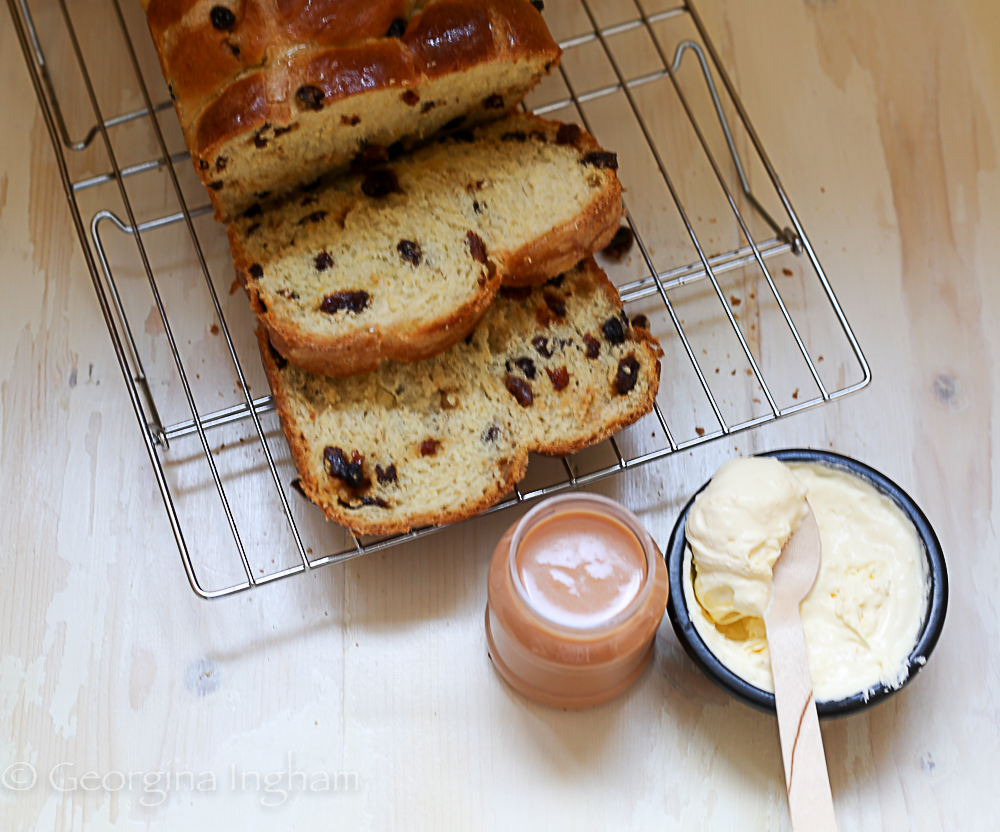
While hot cross buns are the best-known Easter bake across Britain, Cornwall has its own long-standing tradition: the saffron loaf (often called saffron cake), a regional bake with a documented history in local food culture described by the official Cornwall site. Despite the name, it is not a cake but an enriched yeasted bread similar in structure to the bun dough.
The distinctive golden colour comes from saffron steeped into warm milk before mixing, giving the loaf a gentle honeyed aroma rather than a strong spice flavour. Historically it was baked as a large round or oblong loaf and sliced generously, thickly buttered and served with tea.
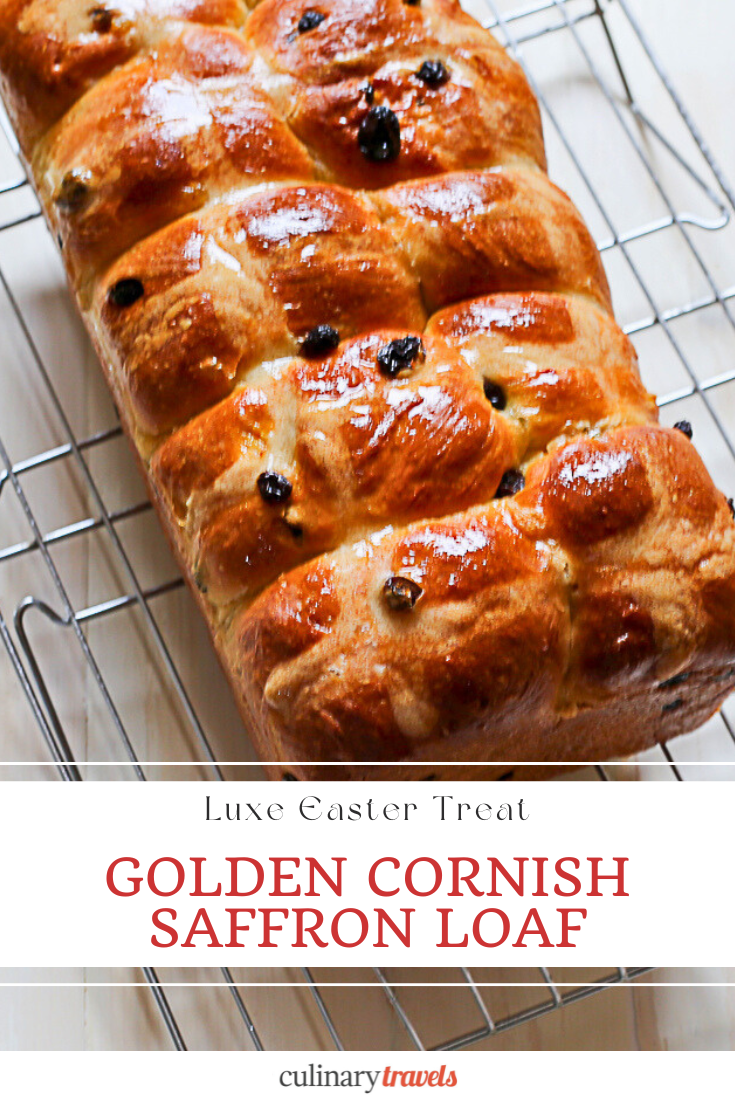
I sometimes shape the dough into a cross-marked loaf as a nod to the buns, and I’ve included my version below. If you enjoy baking the buns, this is a natural next step — a regional variation rather than a completely different recipe.
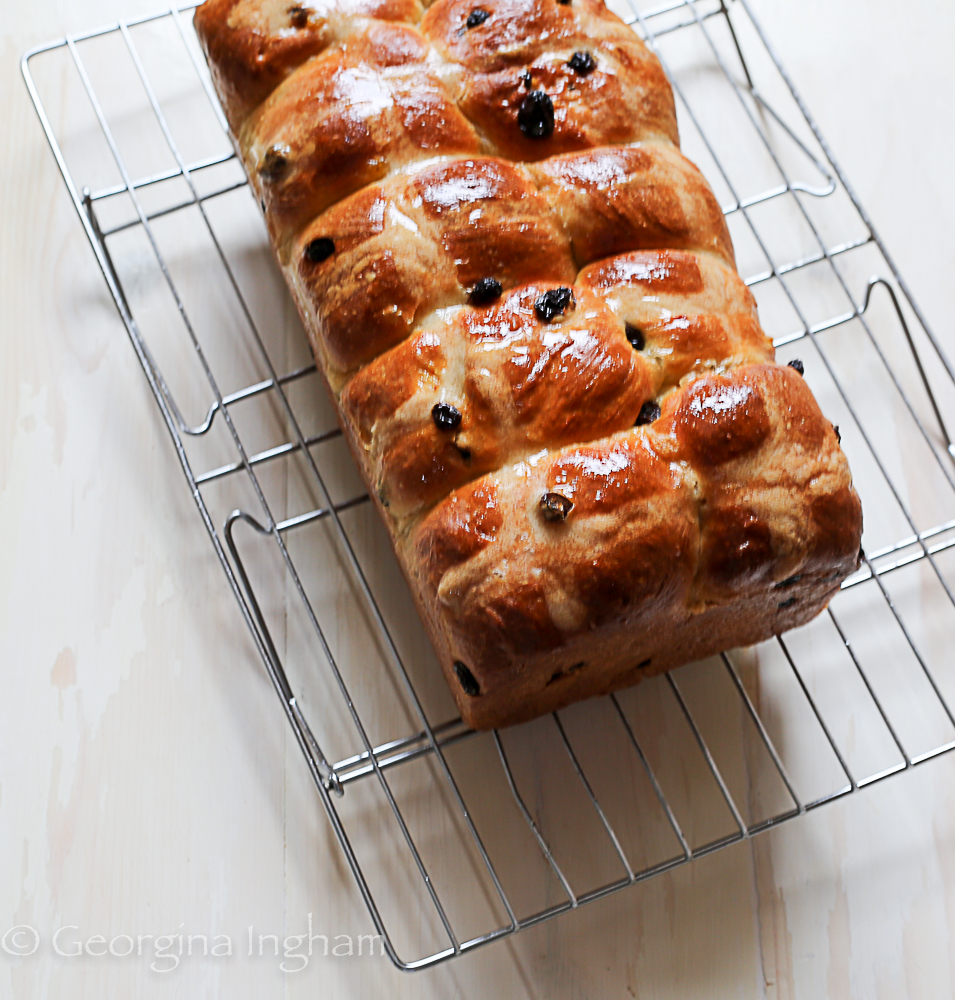
Cornish Saffron Loaf Recipe
Makes 1 × 900 g loaf
Prep time: about 30 minutes
Proving time: 3–4 hours
Bake time: 35–40 minutes
A traditional Cornish-style saffron fruit loaf made from enriched dough and baked in a tin. The saffron gives a gentle honeyed aroma and a distinctive golden crumb rather than a strong spice flavour.
Ingredients
For the dough
1 teaspoon saffron strands
2 tablespoons hot water
200 ml full-fat milk
75 g butter
500 g strong white bread flour
75 g caster sugar
7 g sachet easy-blend dried yeast
2 medium eggs, beaten
200 g mixed dried fruit
For the cross decoration
25 g plain flour
1 teaspoon sunflower oil
2–3 teaspoons cold water
For the glaze
2 tablespoons blood orange curd
1–2 teaspoons warm water
Clotted cream or extra curd, to serve
Method
1. Place the saffron in a small bowl with the hot water and leave to infuse for at least 5 minutes. The liquid should turn deep golden.
2. Warm the milk until steaming but not boiling. Remove from the heat, add the butter and stir until melted. Allow to cool until just warm.
3. In a large bowl or stand mixer, combine the flour, sugar and yeast. Add the saffron liquid, warm milk mixture and beaten eggs.
4. Knead for about 10 minutes (or 12–15 minutes by hand) until smooth and elastic. The dough will feel softer than ordinary bread dough.
5. Place in a greased bowl, cover and leave somewhere warm for about 2 hours, or until doubled in size.
6. Grease a 900 g loaf tin. Tip the dough onto a lightly floured surface and gently press out the air.
7. Work in the dried fruit, kneading lightly just until evenly distributed. Divide the dough into 10 pieces and shape into smooth balls.
8. Arrange the balls in the tin, seam-side down, leaving a small gap between each. Cover and prove for about 1 hour until puffy and touching.
9. Heat the oven to 180°C (fan 160°C). Brush lightly with beaten egg.
10. Mix the flour, oil and water to form a thick paste and pipe crosses across the top.
11. Bake for 35–40 minutes until deep golden and the loaf sounds hollow when tapped on the base.
12. Mix the curd with warm water and brush over the loaf while hot. Cool for at least 10 minutes before slicing.
Serve thickly sliced and buttered or with clotted cream.
More Traditional Baking & British Food
If you enjoy traditional baking, you might also like my blood orange curd recipe for spreading on warm buns, a classic steak pie, or a simple apple jelly made for toast and teatime. I’ve also written about regional food culture and traditions in my Cornwall travel guide.

Stay in Touch
Culinary Travels publishes destination guides, seasonal recipes, and food-led travel features from the UK and beyond.
Follow for new articles and updated travel resources:
Facebook | Instagram | Pinterest
Newsletter
Receive new guides, recipes, and occasional travel planning notes by email: Subscribe here
Reader feedback and local recommendations are always welcome via the contact page.
©2026 Culinary Travels. Culinary Travels is written and edited by Georgina Ingham | Website designed by The Smarter Web Company
What Our Followers Say
"Oh yum!!! I could eat one or two right now!"
Sami Tamimi
"Georgina was great to work with, quick to respond, and is an excellent content writer - would highly recommend collaborating with her!"
Nick S, Get Blogged
Our list of things to do in Cork has just expanded hugely thanks to Culinary Travels.
Triskel Art Centre Cork